AI Data Collection is becoming a practical part of precision farming, not because algorithms replace agronomy, but because they can organize field observations faster than traditional reporting systems. The strongest evidence from 2025 and 2026 points to gains in productivity, yield forecasting, irrigation management and nutrient planning. The same evidence also shows a clear caution: results depend on data quality, local validation and whether farmers can use the tools without adding cost or reporting burden.
Why AI Data Collection Is Moving From Models To Datasets
AI Data Collection Starts With Field-Level Signals
For precision farming, AI Data Collection usually begins with field-level signals: satellite imagery, crop sensors, weather records, machinery data, pest observations, soil tests and yield maps. Machine learning systems can compare these signals across time and space, then generate forecasts or management suggestions. That process is useful only when the underlying records are accurate enough for the decision being made.
A 2026 global evidence synthesis covering 1,276 studies across 112 countries found that AI technologies increased agricultural productivity by 24.8% on average compared with conventional management. The same synthesis reported productivity gains of 27.4% for precision irrigation, 22.9% for machine-learning yield forecasting models and 19.8% for remote-sensing platforms, according to Frontiers in Sustainable Food Systems. These figures are meaningful, but they should not be read as guaranteed farm-level outcomes. Averages across countries, crops and production systems can mask large differences in soil, labor access, connectivity and climate risk.
Data-Centric Work Changes The Farm Question
Recent reviews of AI in agrifood systems describe a shift from model-centered work toward data-centered work. In practical terms, that means less emphasis on using the most advanced algorithm for its own sake, and more emphasis on dataset quality, missing values, labeling, measurement consistency and the fit between a dataset and a farm decision. Crop monitoring, pest detection and soil quality assessment have been among the most common applications in recent research.
This shift matters for growers. A yield forecast is not useful if the field boundary is wrong, the rainfall data are too coarse or the training data come from a different production system. A nitrogen recommendation may be risky if the model does not reflect planting date, variety, soil organic matter or irrigation practices. At a practical level, AI Data Collection is best treated as a system for improving the quality and timing of farm information, not as a shortcut around field checks.
What Recent Evidence Shows About Farm Decisions
Wheat Management Shows Input Efficiency Potential
One of the clearest recent examples comes from wheat management. A study published in August 2026 described an intelligent data-driven decision framework that showed a roughly 19.6% yield increase while reducing nitrogen input by 18.2%. The authors also reported that total nitrogen application could fall by 13% without yield loss in the tested framework, as reported in Computers and Electronics in Agriculture.
That finding is important for precision farming because nitrogen is both a cost center and an environmental concern. If a model can help identify where and when crops need nitrogen, it may support higher nutrient-use efficiency. Still, the result should be interpreted within its study context. Nitrogen response varies with crop stage, soil type, rainfall, temperature and management history. A model that performs well in one wheat production system still needs testing before it is applied elsewhere.
Remote Sensing And Crop Forecasts Need Local Testing
Other 2026 research points in the same direction. In India, a machine-learning model using MODIS-derived NDVI and historical state data achieved high accuracy for foodgrain yield prediction on a 2024-2026 hold-out dataset, with a Random Forest model reporting R² of 0.982 and MAPE of 11.4%. Linear regression performed much worse in that comparison. The result supports the value of non-linear models for crop forecasting, but it does not remove the need for local calibration.
In Bangladesh, auto-ML and explainable AI were used to predict rice yields across the Aus, Aman and Boro seasons. The reported yield drivers included rice type, field duration and nitrogen, phosphorus and potassium fertilizer rates. The same research noted that greenhouse gas emissions were spatially variable and tied to those management factors. This is a useful reminder that data systems can support both production and sustainability questions when they include management variables, not only remote imagery.
Evidence from data-scarce regions also argues for caution. In Sierra Leone, models trained only on crop statistics did not outperform simple persistence. When satellite climate data such as rainfall and temperature were added, forecast errors fell by roughly one third in the reported comparison. That finding is especially relevant for governments and development groups: better algorithms cannot fully compensate for missing weather, crop and management data.
Governance, Access And Adoption Risks
Farm Data Systems Must Reduce Burden
On September 1, 2026, the U.S. Department of Agriculture announced its Data Modernization Plan at the Farm Progress Show in Boone, Iowa. The plan was described as an effort to reduce unnecessary burdens on producers and improve the timeliness, accuracy and usefulness of data tied to crops, livestock, risk management and disaster assistance. Our related coverage of USDA data modernization explains why reporting systems are now part of the precision farming discussion, not just an administrative issue.
For farms, modernization will be judged by whether it reduces duplicate reporting, improves trust in official data and supports decisions during weather or market stress. A faster data system is not automatically a better one. Producers need to know what data are collected, how they are used, who can access them and whether participation creates new costs or risks.
Smallholders Need Usable And Fair Data Tools
The global evidence base suggests that AI tools can raise productivity, but adoption conditions are uneven. Small farms may lack broadband access, trained support staff, reliable sensors or the cash flow to test new platforms. In low- and middle-income farming environments, reported benefits can include income gains and lower input costs, yet those outcomes depend on whether the tools fit local farm size, language, input markets and advisory systems.
Data ownership is another concern. Precision farming systems often combine private field data with satellite imagery, weather data and software analytics. Farmers should have clear terms for storage, sharing, portability and deletion. If a system cannot explain these terms in plain language, it may weaken trust even if its technical performance is strong. For teams documenting field trials or data projects for producers, related visual publishing resources from the website Finest Image can support clearer communication without changing the need for transparent data practices.
How Farms Can Build Better Data Pipelines
Start With A Measured Question
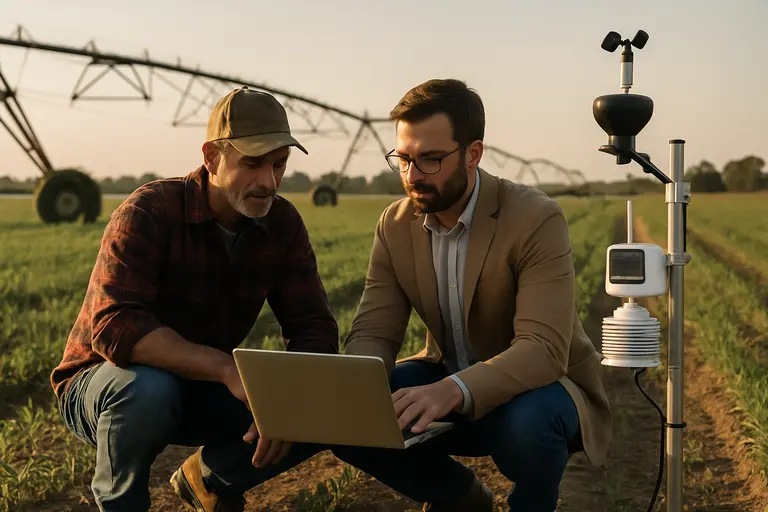
The best starting point is not the software. It is the decision. A grower may want to reduce nitrogen loss, improve irrigation timing, detect disease earlier or compare hybrid performance by soil zone. Each goal requires different data. A disease detection system may need image records, scouting notes and weather conditions. A nutrient system may need yield maps, soil tests, fertilizer applications and crop stage data.
Farms can reduce risk by building data pipelines around specific questions:
- Define the agronomic decision before selecting a model or platform.
- Check whether the data source is consistent across fields and seasons.
- Compare model outputs with scouting, yield maps or trial strips.
- Track input changes and crop response, not only the recommendation.
- Review data access terms before sharing farm records with a vendor.
Keep Human Review In The Loop
Machine learning is strongest when it extends, rather than replaces, agronomic judgment. A model may flag a field as water-stressed, but a manager still needs to consider irrigation capacity, rainfall forecasts, crop stage and soil profile. A forecast may suggest strong yield potential, but disease pressure or late-season heat can still change the outcome.
This is why AI Data Collection should be paired with field validation. Trial strips, sensor checks, calibrated yield monitors and consistent scouting notes help determine whether a recommendation is useful. The goal is not to accept every output. The goal is to learn which outputs are reliable enough to influence input decisions.
AI Data Collection In Farm Modernization
AI Data Collection will shape the next stage of precision farming through better measurement, faster analysis and more targeted farm decisions. The evidence from 2025 and 2026 supports real potential, especially in irrigation, yield forecasting, remote sensing and nitrogen management. It also shows why caution is needed. Poor data quality, weak local calibration and unclear governance can limit the value of even strong models.
The practical path is measured adoption. Farms, researchers and public agencies should focus on reliable datasets, transparent methods and field-tested recommendations. That approach gives growers a better chance to reduce input waste, protect yield potential and use precision farming tools in ways that fit real production conditions.