Forget those dystopian movie scenes where machines take over the world. The real robot revolution is happening somewhere much more unexpected: America’s heartland.
While most people picture vacuum cleaners eating socks, John Deere is quietly becoming a tech giant. Their AI-powered harvesters work 24/7 without coffee breaks or complaints.
This isn’t science fiction—it’s happening from Kansas to California right now. We’re talking precision agriculture that makes Swiss watches look sloppy. GPS-guided systems place every seed in its perfect spot.
Robotic farming solves real problems: labor shortages and climate challenges. It gives farmers superhero vision to spot thirsty plants or pesky weeds from miles away. The question isn’t whether robots are coming to agriculture—it’s whether agriculture can survive without them.
Popular Applications (Seeding, Weeding, Harvest)
Remember that scene in The Matrix where machines took over the world? Now, they’re planting tomatoes instead of hunting humans. Welcome to the new era of automation in agriculture, where robots are mastering farming with precision.
Seeding starts every farm story. These aren’t your grandfather’s seed drills. Modern seeding robots analyze soil conditions with precision. Companies like Precision Planting have turned planting into a science.
Weeding is like finding needles in haystacks. Today’s weed-killing robots are like Terminators, reducing herbicide use by 90%. They use laser technology and AI vision to spot and eliminate weeds.
The harvesting robots are impressive. They work 24/7 without breaks. Agrobot’s harvesters can identify ripe produce better than humans.
This revolution is beautiful because of specialization. Carbon Bee’s spot spraying targets only what needs treatment. Sabanto’s autonomous equipment moves with purpose. PTx Trimble’s guidance systems navigate fields with GPS accuracy.
This level of automation in agriculture is more than just efficiency. It’s a fundamental shift in food production. The machines aren’t coming for our jobs—they’re improving farming.
The real beauty of this transformation? It’s not about replacing farmers—it’s about giving them superpowers. With this level of automation in agriculture, farmers can focus on strategy while robots handle the details. It’s like having an army of perfectly trained interns.
Cost & Efficiency Benefits
Let’s dive into the financial side of ag robots. In farming, the only thing that really matters is ROI. The initial cost can be steep, with prices ranging from €150,000 to €500,000 per machine. But there’s a twist.
These machines can pay for themselves in just 2-3 years. How? Traditional harvesting costs can be over €80,000 per hectare. Robots work non-stop, without needing breaks or benefits. It’s like having the ultimate dedicated farmhand.
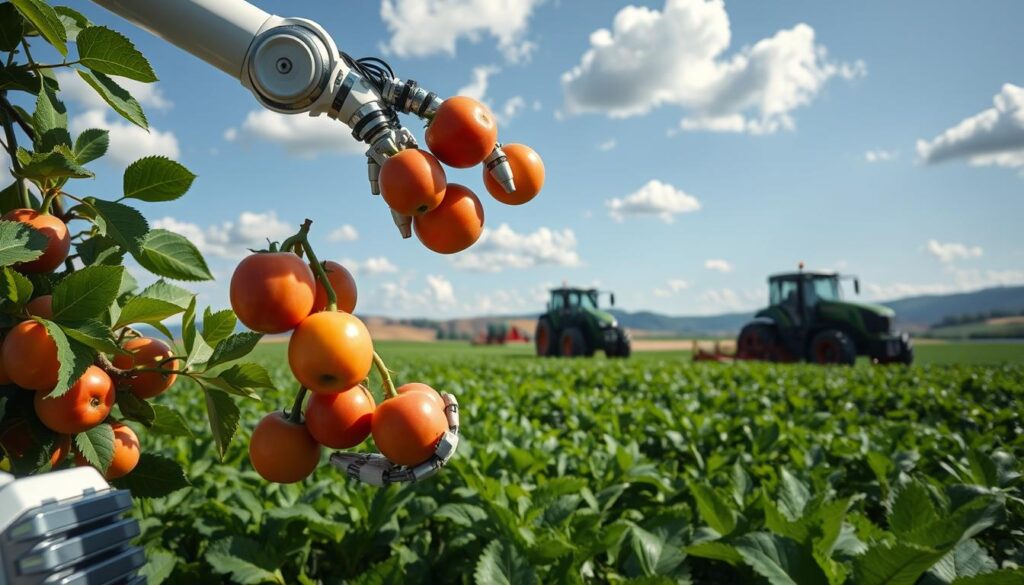
- 20-30% reduction in chemical usage
- 15-25% water conservation
- Yield increases that would make King Midas jealous
Many companies now offer ag robots through subscription models. This makes the high upfront cost more manageable. It’s like the Spotify model for farming – why buy the whole album when you can stream it?
The numbers are clear. A Rabobank survey shows digitally advanced farms are growing revenue faster than traditional ones. They’re not just keeping up – they’re setting new standards.
| Investment Type | Traditional Approach | Robot-Assisted Farming |
|---|---|---|
| Initial Cost per Hectare | €80,000+ | €150,000-500,000 |
| Payback Period | N/A (Recurring) | 2-3 Years |
| Operational Hours | Limited | 24/7 |
| Resource Savings | Standard | 20-30% |
In the fight between humans and machines, the spreadsheet clearly favors the machines. These aren’t just tools – they’re assets that make money and look cool doing it.
Barriers to Adoption
The journey to adopting robotic farming is not easy. It’s like driving on a bumpy road with many obstacles. Farmers face real challenges that go beyond just being afraid of new technology.
High costs are a big issue. Farmers need to spend a lot of money to start using robots. This can be as expensive as a house.
Learning to use new technology is hard. Farmers are not afraid of change, but they are careful. They need special training to use these new tools.
Many think robots will take jobs away. But, robots actually help farmers do their jobs better. They don’t replace people, but make their work easier.
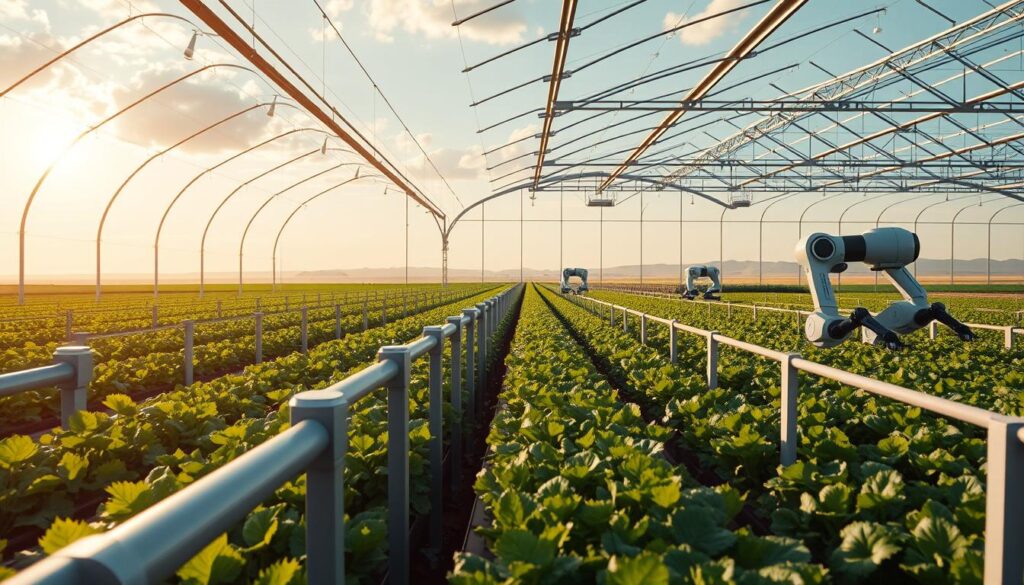
Internet access in rural areas is often poor. This makes it hard to use cloud-based technology. It’s like trying to watch Netflix in a place with no signal.
It’s not just the cost of the robot. There are also ongoing expenses for maintenance and updates. It’s like buying a new car, but it keeps needing repairs.
There are also legal questions. Who is responsible if a robot makes a mistake? We need clear rules before we can use robots more widely.
| Barrier | Impact Level | Potential Solutions | Timeline for Resolution |
|---|---|---|---|
| High Initial Costs | High | Leasing programs, government subsidies | 2-3 years |
| Technological Knowledge Gap | Medium-High | Training programs, simplified interfaces | 1-2 years |
| Infrastructure Limitations | Medium | 5G expansion, satellite internet | 3-5 years |
| Job Displacement Concerns | Medium | Education on job transformation | Ongoing |
| Regulatory Uncertainty | Low-Medium | Industry standards development | 2-4 years |
Despite the challenges, the Smart Agriculture market is expected to grow to $43.37 billion by 2030. The benefits of using robots in farming are clear. It’s just a matter of time before we overcome these obstacles.
Farmers are not opposed to change. They are practical and make informed decisions. Once we solve these problems, farming will change as much as it did with the tractor a century ago.
Farmer Success Stories
Kansas farmers are changing the game with Ag Leader’s AI systems. They monitor thousands of acres like it’s a real-time strategy game. This is more than just automation in agriculture—it’s precision farming on steroids.
Oklahoma producers found a solution to herbicide-resistant weeds with Carbon Bee’s spot spraying tech. It’s like hitting only the villains in a crowded room without harming others. This shows how automation in agriculture works smarter, not harder.
Missouri farmers solved their labor crisis with Sabanto’s autonomous equipment. It works all night without needing overtime. These machines don’t get sick or complain about the heat—they just do the job.
Nebraska growers used AI and autonomy to manage water with incredible precision. One ModernAg partner cut herbicide use by 85% while keeping yields the same. Another reduced labor costs by 40% during peak season.
These stories show automation in agriculture isn’t about replacing farmers—it’s about giving them superpowers. Farmers using this tech aren’t losing their jobs; they’re gaining freedom, efficiency, and profit. It’s like they have Warren Buffett’s approval.