The world of eco-friendly materials can seem like a magic show. The rabbit is made of cornstarch, and the hat is a landfill. We’re here to reveal the truth.
This isn’t just about feeling good. It’s about science. We’re examining the “green” scene closely. When something is labeled as “biodegradable,” does it really go back to nature?
Forget the vague marketing. We’re meeting the innovators. Imagine protective layers grown from mushroom mycelium as if by magic. Picture edible seaweed wraps that dissolve with your guilt.
Then, meet the supporting cast: wheat straw and sugarcane bagasse—agricultural leftovers getting a spectacular second act.
We’ll even break down the heavyweight bout: hemp versus bamboo for the title of most renewable resource. It’s a deep dive into what biodegradable polymers actually mean for our future, served with a side of ecological reality. The show is about to start.
Bulk vs. Retail Packaging
The debate between bulk and retail packaging is more than just about boxes. It’s about whether to focus on the collective or the individual. Bulk packaging is all about efficiency, offering massive, generic solutions. On the other hand, retail packaging is about telling your brand’s story directly to the consumer. Which approach is better for sustainable packaging agriculture? Let’s explore this with a mix of business savvy and marketing flair.
Bulk purchasing is a hidden gem in farm economics. It can cut costs by 20-30% by buying in large quantities. This not only pleases your CFO but also helps the environment. For more on how bulk bags can help, check out our guide to utilizing bulk bags in agriculture.
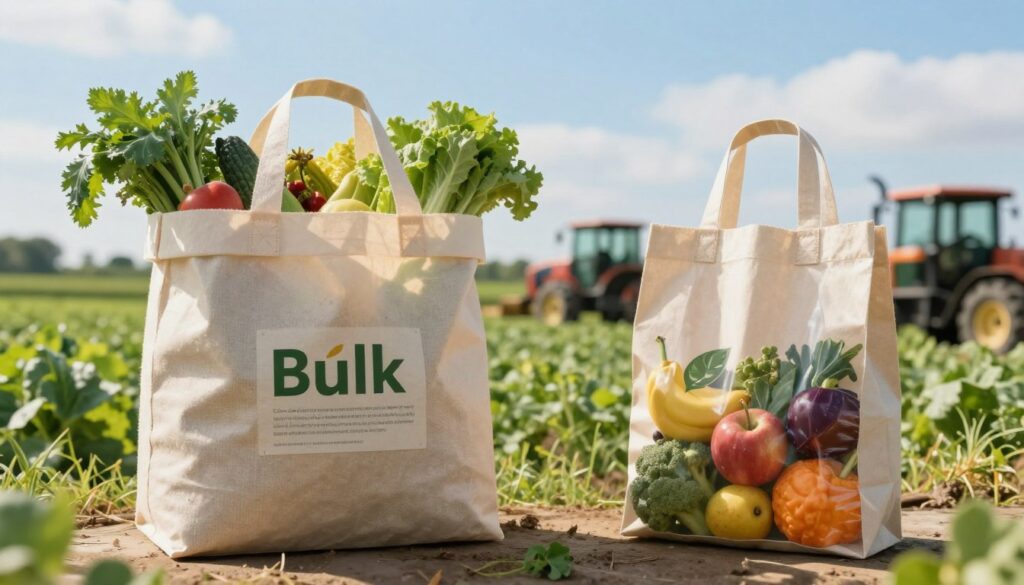
Retail packaging, however, focuses on the story. Does a bamboo clamshell make consumers feel closer to your farm than a plain kraft bag? Often, yes. This connection can lead to higher prices and stronger brand loyalty.
Custom, sustainable retail packaging might seem expensive at first. But, a careful cost-benefit analysis can reveal its value. Start with a small test of retail packaging alongside bulk options. See how consumers react and let their feedback guide your decisions.
| Consideration | Bulk Packaging Approach | Retail Packaging Approach |
|---|---|---|
| Primary Goal | Cost Efficiency & Operational Scale | Brand Building & Consumer Engagement |
| Cost Per Unit | Low (20-30%+ savings common) | High (Premium materials & design) |
| Carbon Footprint (Logistics) | Generally lower per item | Can be higher due to complex supply chains |
| Consumer Perception | Associates with value & practicality | Builds story, trust, & allows premium price |
| Best For | Inputs, wholesale goods, storage, low-margin volume | Finished goods, farmers’ markets, CSAs, high-margin items |
So, who wins the debate? The wise farmer knows it’s not a choice between two extremes. They use bulk for efficiency and retail for storytelling. This mix controls costs and builds a strong brand. The best package is one that’s good for the planet and your farm’s success.
Sourcing Suppliers
Looking for authentic sustainable farm packaging connects you with innovators. They see reducing waste as both science and art. It’s not just about finding vendors with brown boxes. You’re looking for partners who share your values.
Start by looking locally. Your regional eco-business network is like LinkedIn for those interested in sustainability. These groups are full of leads on suppliers of plant-based films and mushroom foam insulation.
Agricultural extension offices are also valuable. They know which local manufacturers are using biodegradable materials. This information is specific to your area and crops.
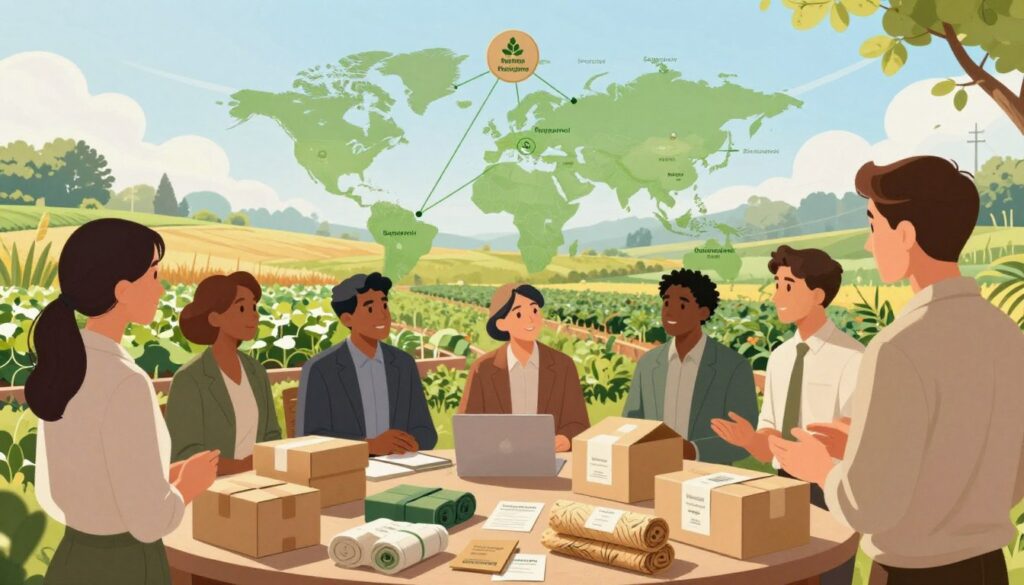
Green trade shows are like Comic-Con for the circular economy. You’ll find everything from seaweed-based pouches to packaging made from agricultural waste. It’s a place where you can see and smell the sustainable options.
Forming alliances with other farms is a smart move. Together, you can negotiate better prices and terms. This approach can change your supply chain impact and move markets towards sustainability.
But how do you ask the right questions without being too pushy? It’s important to get the truth about their sourcing. Ask for transparency, not just marketing promises.
Begin with simple, direct questions. Ask about the origin of their raw materials and the percentage of post-consumer or agricultural waste. They should be able to trace their supply chain back to the source.
Request certifications, but understand what they mean. Some labels are more meaningful than others. A good supplier will explain the differences between certifications like BPI, TUV, and OK Compost.
Building a network is about relationships, not just transactions. Your ideal supplier should be a partner in solving problems. They should help you find solutions for unique storage needs and work with you to fix any issues.
This process turns your procurement into a value statement. Every shipment of eco-friendly packaging shows your commitment to sustainability. It’s not just about the packaging; it’s about your brand’s values.
Ultimately, sourcing sustainable farm packaging is about values-based logistics. It’s not just about buying containers. It’s about building a supply chain that reflects your farm’s identity. Every item, from cardboard to cornstarch liner, tells a story about your business.
Case Study: Impact on Sales and Waste
Let’s get real about the greenwashing. Does sustainable packaging agriculture really make a difference? The numbers from Canada’s heartland say yes.
The Thompson family farm cut delivery times by 40% and fuel use by 30%. Red Deer Valley Co-op’s cold storage saved a third on energy. Root crops in breathable crates reduced spoilage by 15%. It’s not just dreams; it’s real numbers.
Customers also make choices based on packaging. Janssen Farm’s CSA program, with a $5 deposit return, saw a 25% increase in members. Packaging costs dropped 40%. People choose products that tell a good story. A “Certified Compostable” label is more than a sticker; it’s a marketing tool.
The return on investment goes beyond money. This method aligns with sustainable agriculture, where precision tools increase productivity and reduce waste. It’s an investment in your brand and the planet. The numbers show it’s as green as the packaging.