The old ways of dealing with pests are like using a sledgehammer.
We’ve been using chemicals to fight pests, but it’s harming our soil, water, and beneficial insects. This is a big problem.
So, why change? It’s not just a trend. It’s a smart move away from a losing battle.
It’s like switching from being an exterminator to managing the ecosystem wisely. Sustainable agriculture is all about this change. It’s moving from killing everything to managing pests in a smart way.
Studies show you can save money and avoid harmful chemicals. You also boost biodiversity on your land. This approach is key to understanding sustainability’s importance today.
It’s about reducing chemical dependency and finding a better balance. This isn’t just right; it’s also very practical.
Integrated Pest Management (IPM)
Integrated Pest Management is like a chess game, not a quick attack. It’s a detailed plan, not a single move. It’s a smart way to manage pests in farming, aiming for control, not total defeat.
So, what are the core IPM principles? They form a continuous, four-step cycle:
- Prevention: Start by making your soil healthy. Use precision nutrient management and choose plants that resist pests. A stressed plant attracts pests.
- Monitoring: Keep an eye on your plants every week. Look for pests and understand their numbers. This step is crucial for making smart decisions.
- Intervention: Act only when pests are a real problem. Use natural methods first, then biological agents, and chemicals as a last resort.
- Evaluation: Check if your actions worked and what side effects they had. This helps you plan better for the future.
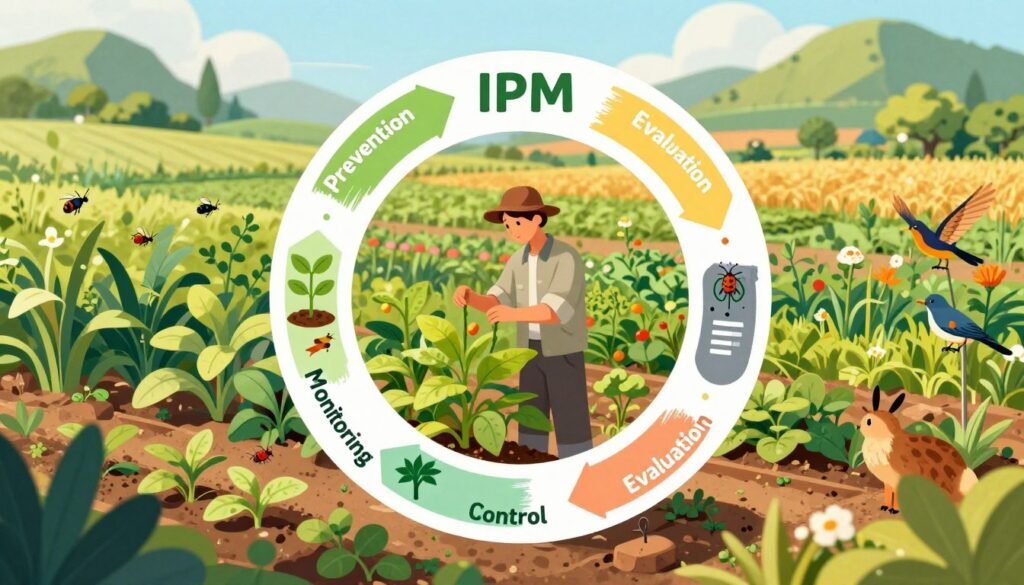
This approach turns chaos into a well-planned strategy. Knowing when to act is key. A few pests might be okay, but a lot is a problem.
For more on setting action plans, especially in small spaces, check out the urban IPM guide. It shows how to monitor pests weekly.
Integrated pest management works with nature, not against it. It requires patience and careful observation. It’s a smarter way to garden, one step at a time.
Natural Predators
Your garden doesn’t need pesticides. It needs a team of natural predators. Nature has a free army ready to work at dawn. They see pests as food, not enemies.
This is more than pest control. It’s about working with nature. You’re hiring a team of insects, birds, and bats to protect your garden.
The key is using biological pest solutions. It’s like hiring nature’s best pest control team. They’re experts in eating pests that harm your plants.
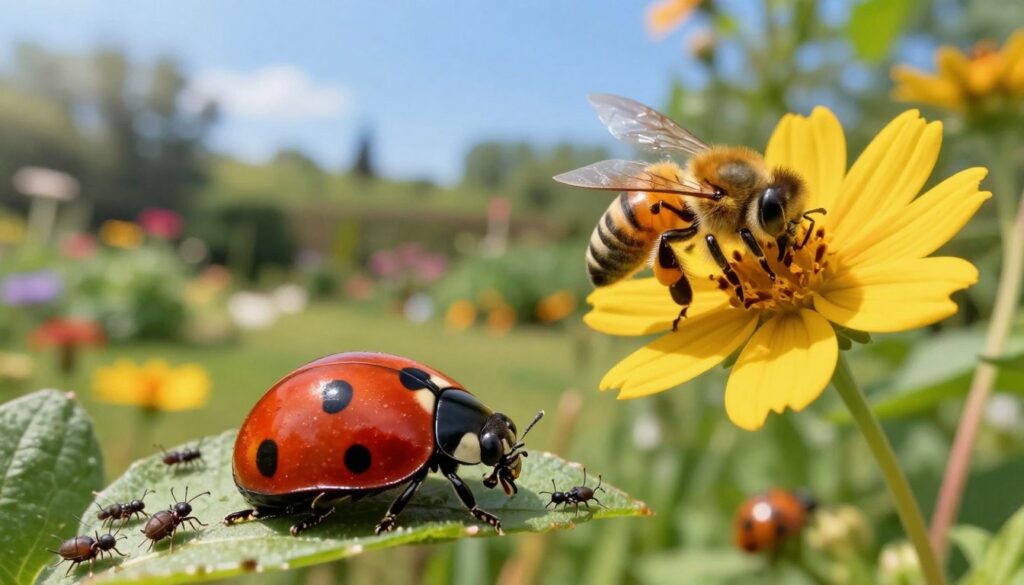
Meet the team. Lady beetles eat dozens of aphids a day. Green lacewing larvae are like aphid lions. Parasitic wasps lay eggs in pests. Praying mantises ambush larger insects.
Birds are the garden’s air support. A family of barn owls can kill over a thousand rodents in a season. Purple martins and bluebirds catch mosquitoes and beetles in mid-air.
Bats are the night shift heroes. One colony eats five pounds of insects every night. They control moths and caterpillars that damage crops.
To attract these heroes, create a welcoming environment. Offer housing and food. This attracts natural predators to your garden.
- Plant a Diverse Buffer: Use native flowers like yarrow and dill. They attract beneficial insects.
- Install Strategic Housing: Birdhouses and bat boxes provide shelter. An owl nest box controls rodents.
- Provide Infrastructure: Bird baths and perches help predators hunt. Leave some leaves for insects to hide in.
This system balances itself. When pests rise, so do predators. When pests fall, predators adjust. It’s more effective than chemicals.
By using these methods, your garden becomes a balanced ecosystem. For more help, check out biological pest control solutions. Make your garden a place where natural allies want to live and work.
Botanical Sprays
Botanical sprays are like the smart bombs in your eco-friendly pest control methods arsenal. They help when aphids or spider mites attack. These sprays are made from plants and work like nature’s own defense.
Insecticidal soap and horticultural oils are not harsh chemicals. Insecticidal soap removes the protective layers of pests. Horticultural oils smother pests and their eggs, especially early in the season.
Neem oil is a powerful tool in botanical pesticides. It’s made from the neem tree and disrupts pests’ hormones. It’s like confusing the enemy so they forget their mission.
Bacillus thuringiensis (Bt) targets caterpillars. It’s like a stomach bug for them. It’s safe for beneficial insects.
Using these organic interventions requires skill. It’s not about spraying everywhere. Spray at dawn or dusk and target only the affected areas. This way, you get the most impact with the least harm.
When to use these sprays is crucial. Spray insecticidal soap at the first sign of aphids or spider mites. Use horticultural oils during dormant seasons or early growth. Neem oil is best as a preventative or at the first sign of trouble. Bt should be used when caterpillars are small and feeding.
These tools have limits. They break down in sunlight and wash away in rain. They’re not magic bullets but tactical responses. Be careful not to harm beneficial insects by overusing them. The key is to use them as part of a broader strategy.
For a comprehensive approach to these eco-friendly pest control methods, check out this eco-friendly pest management guide. It has tips on mixing, application, and safety.
The beauty of botanical pesticides is they’re temporary. They do their job and then disappear. They’re the responsible choice for gardeners who want results without harming the environment. Used wisely, they help maintain ecological balance.
Case Studies
Forget the whiteboard; the most compelling proofs of concept are written in soil and sweat. Theory is for ivory towers. The dirt doesn’t lie.
Let’s move from the analytical to the anecdotal. These sustainable farming case studies prove these concepts have mud on their boots. They show the iterative, sometimes messy, process of real-world IPM.
Take Patrick Johnson of NANIH Farm in Virginia. Faced with relentless weeds, he didn’t reach for the herbicide tank. He reached for the phone.
His target? Local arborists with piles of free wood chips. Using a SARE grant, Patrick tested this locally sourced mulch for weed suppression. The result was a model of low-cost, closed-loop thinking.
The wood chips smothered weeds, retained crucial soil moisture, and—in a beautiful twist—boosted his okra yield. This wasn’t a fancy imported biological pest solution. It was a clever, hyper-local adaptation.
Then there’s Sam Anderson’s urban chess match. Partnering with NYC rooftop farms, the Cornell Cooperative Extension specialist faced a tiny, formidable foe: the two-spotted spider mite.
Sam’s approach wasn’t a single biocontrol release. It was a campaign. It started with meticulous scouting. He then deployed sentry plants—bush beans—as early warning systems.
The masterstroke was habitat manipulation. By interplanting marigolds, Sam and the farmers discovered they could boost populations of a native predator: the minute pirate bug. They didn’t introduce a foreign agent. They rolled out the welcome mat for a local hero.
What do these stories teach us? First, success in real-world IPM often looks like using what’s already there, for free. Second, it’s about observation and adaptation.
These sustainable farming case studies are the heart of the movement. They’re about farmers and researchers learning, adapting, and sometimes failing forward. This is where the sage’s analysis meets the farmer’s grit, creating truly resilient biological pest solutions.
Monitoring and Adjustment
Your garden is a story, not a single photo. The end of any eco-friendly pest control methods story is in the data, not just opinions.
This is the art of pest monitoring. It’s like a weekly walk with a notebook. You track populations, weather, and predator arrivals. You become the detective of your garden.
The data you collect helps in adaptive management. If you see a wasp scout, check the eaves. Ladybugs everywhere? Maybe hold off on the spray. It’s not just guessing. It’s a smart plan.
Services like Welcon Pest Control make this process official in their comprehensive IPM approach. They use seasonal tracking and exclusion methods. The aim is to find a balance, not just get rid of pests.
You start to see pests as signs, not enemies. The biggest change is how you view your garden. It becomes a managed space, and you’re its keen observer.