Farming is like a high-stakes poker game against Mother Nature and the market. Your utility bill is like the house rake, taking a big chunk of your profits.
What if you could fold that hand? Installing solar panels isn’t just about being green. It’s a smart move for financial stability. It’s like hedging against unpredictable utility rates.
The sun doesn’t send a bill. You get to lock in your power cost for decades. This turns a variable expense into a fixed, depreciating asset.
The financial benefits are strong. The federal Investment Tax Credit (ITC) is like a huge rebate. USDA REAP grants can cover up to half the project cost. It’s like a government cheat code for your bottom line.
It’s also about having control. No more worrying when the grid fails during a critical milking cycle. You’re building a reliable, on-site power plant.
In today’s world, being sustainable is key. This makes your farm look forward-thinking. It’s less “Old MacDonald” and more “Elon Musk meets the heartland.” It’s a big step in renewable energy agriculture. For those starting, a comprehensive guide is a great resource.
Types of Solar Installations
Forget the one-size-fits-all approach to solar; your farm deserves a custom fit, like a well-tailored pair of work jeans that moves when you do. The real magic happens when you match the technology to your terrain and daily grind. You’re not just installing panels; you’re hiring a silent, sun-powered workforce that clocks in at dawn.
Let’s break down your options. First, consider the roof-mounted system. This is your classic stealth operation. Got a sturdy, south-facing barn or machine shed? That roof is prime real estate. Think of it as installing a quiet tenant who pays rent in kilowatt-hours instead of cash.
For dairy or poultry operations, this setup is pure genius. Your refrigeration and ventilation systems are energy vampires, especially during peak afternoon hours. A roof-mounted solar panels farm array hits its stride right when utility rates spike. It’s like having your own power plant whispering from the rafters.
But what if your roofs are shaded, old, or just not suitable? Enter the ground mount. Yes, it uses land. But let’s reframe that thinking immediately. We’re not talking about sacrificing acres; we’re talking about layering productivity.
This is where innovation gets exciting. Imagine those ground-mounted panels as a high-tech, income-generating trellis. Beneath them, a whole new ecosystem can thrive. Welcome to the world of agrivoltaics.
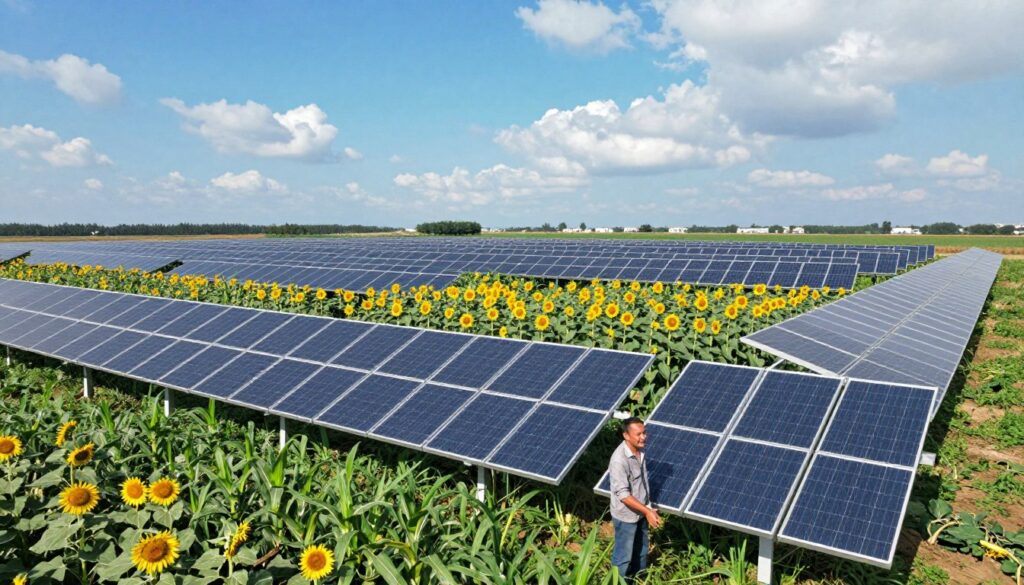
Agrivoltaics isn’t a sci-fi concept. It’s a practical, symbiotic relationship happening right now. Shade-tolerant crops like lettuce, herbs, or certain berries flourish under the partial canopy. Free-range chickens enjoy sheltered scratching grounds. The panels reduce soil water evaporation and can even protect against hail.
You’re creating a microclimate while harvesting photons. It’s farming in 3D. The land works twice as hard for you. For a deeper dive into this dual-purpose approach, explore our guide on agricultural solar energy for farmers.
The choice between roof and ground isn’t just about space. It’s about your farm’s personality. A proper installer acts like a consultant, not a salesman. They’ll evaluate your sun exposure, roof condition, soil, and even your daily chore schedule.
They ask questions you might not consider. How much afternoon sun hits the south side of your equipment shed? Could a ground array interfere with pivot irrigation? The goal is a design that syncs with your life, not disrupts it.
Here’s a quick comparison to help you visualize the fit:
| Installation Type | Ideal Location | Space Impact | Primary Benefit | Key Consideration |
|---|---|---|---|---|
| Roof-Mounted System | Existing barns, sheds, poultry houses | Uses otherwise wasted roof space | Zero land sacrifice, offsets peak building energy use | Requires structurally sound, well-oriented roof |
| Ground-Mounted System | Open fields, marginal land, pasture | Occupies land area | Maximum power output, easier maintenance access | Needs clear, unshaded acreage |
| Agrivoltaic System | Cropland or pasture with dual-use potential | Shared land use (solar + agriculture) | Generates two revenue streams from one plot | Requires planning for crop/animal compatibility |
Notice the theme? Flexibility. You don’t need a futuristic glass barn. You need a smart plan. Even in famously cloudy regions, modern photovoltaic technology captures diffuse light. The sun, it turns out, is a remarkably consistent business partner.
So, before you get lost in technical specs, ask the simpler question: What’s the personality of my land? Is it begging for a rooftop crown or ready for a high-tech canopy? Your solar panels farm installation should feel less like an add-on and more like it was always part of the landscape.
ROI & Funding Opportunities
If solar panels could talk, they’d whisper about compound interest and tax deductions. The switch to renewable energy agriculture makes sense when the numbers add up. And they do.
The initial cost seems high, like a combine harvester’s price. But, the government might pay for half of it. Welcome to the world of solar incentives, where your tax dollars work for you.
The Federal Investment Tax Credit (ITC) is key. It’s currently at 30%, so you deduct a third of your system cost from your federal taxes. Add 100% bonus depreciation, and you save a lot in the first year. It’s like finding money in your overalls.
The USDA’s REAP program is another secret. It offers grants that can cover up to 50% of project costs. Getting half off a capital improvement is a smart investment in your operation’s future.
Let’s look at a real example. A 100 kW system might cost around $238,600 before incentives. After the 30% ITC and bonus depreciation, it drops to about $114,147. That big number looks like a smart business move.
| Funding Source | Key Benefit | Typical Coverage | Best For |
|---|---|---|---|
| Federal ITC | Direct tax reduction | 30% of system cost | Operations with federal tax liability |
| USDA REAP Grant | Cash award, no repayment | Up to 50% of cost | Rural agricultural businesses |
| Bonus Depreciation | Accelerated tax savings | 100% first-year write-off | Maximizing immediate ROI |
| State Rebates | Additional upfront savings | Varies by state (5-25%) | Localized incentive stacking |
| PACE Financing | Low-interest, long-term | Up to 100% financing | Spreading costs over 20+ years |
The payback period is 5 to 10 years. It’s like pre-paying for a decade of electricity. After that, you get free power for 15-20 more years. It’s like planting an orchard.
State and local incentives add more benefits. Many states offer rebates, tax exemptions, or production credits. PACE financing lets you repay through property taxes over 20-30 years. This makes cash flow predictable.
The real ROI goes beyond utility bills. Your property value increases. You gain energy independence and create a legacy asset. As our piece on solar power as farmers’ new crop shows, it’s about diversifying revenue streams.
The financial case for agricultural solar is strong. Incentives cut costs in half, and payback periods are short. The question is, can you afford not to invest in renewable energy agriculture?
Your operation becomes more resilient, valuable, and sustainable. The incentives are here now, but they won’t last forever. The smart move? Calculate your ROI today.
Farmer Experiences
Talk to a farmer with solar panels and you won’t hear about kilowatts or tax credits. You’ll hear about sleeping through the night when storm clouds gather.
The real proof of renewable energy agriculture lives in the field, not the brochure. It’s in the diesel receipts that never arrive. The power bills that stop causing actual heartburn.
One dairy operator told me his ventilation fans became heroes. Not because they saved money (though they did). But because they kept running during a summer brownout. His cows never knew there was a problem. That’s the peace-of-mind dividend no utility can offer.
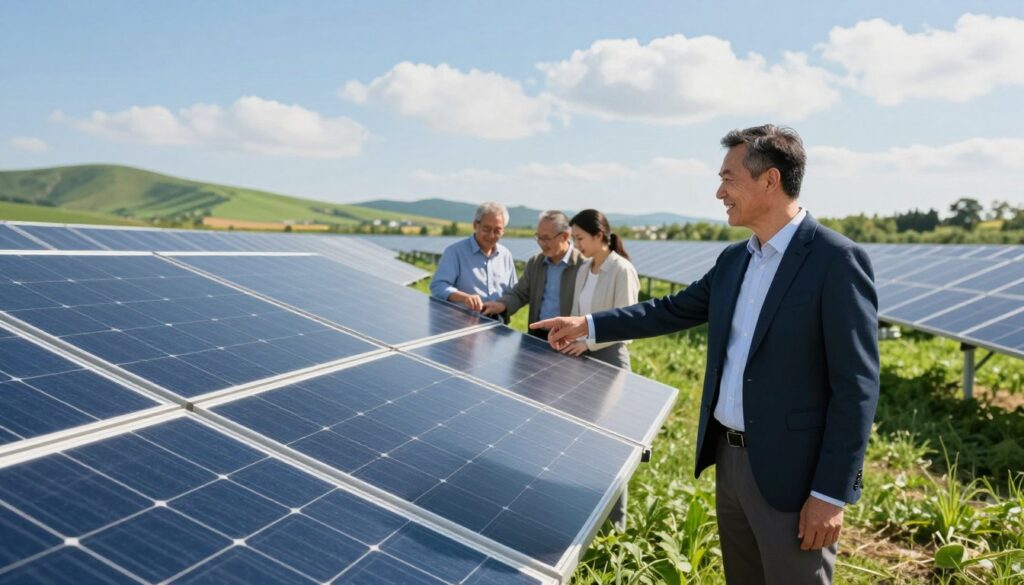
For crop farmers, the math is beautifully simple. Solar-powered irrigation turns a major variable into a fixed cost. No more anxiety about peak-season rate spikes. One study from Michigan State University shows how expert solar panel systems help farmers save while stabilizing energy costs. It’s like locking in fuel prices for 25 years.
The community shift is subtle but real. You become the neighbor who figured it out. The one who isn’t begging the utility for a rate break during planting season.
For multi-generational farms, the narrative changes completely. “How will the kids afford to run this place?” becomes “Look at the head start we’re giving them.” That’s the long game of renewable energy agriculture – building resilience for the next harvest, and the next generation.
Here’s what surprises farmers most about their solar panels farm installations:
- Maintenance is basically rainfall. Rain cleans the panels. That’s it. No weekly checks, no complicated servicing.
- The checks actually arrive. Net metering turns your farm into a mini power plant. Those credits on your bill? They’re real.
- It just works. After the install, the system becomes background infrastructure. Like a fence or a barn.
And let’s talk property value. A farm with a solar array isn’t just land. It’s a business with a built-in cost advantage. Think about it from a buyer’s perspective: which would you choose? The farm with unpredictable energy bills? Or the one with 25 years of locked-in power?
The best testimonial I’ve heard came from a wheat farmer in Kansas. “The panels don’t grow wheat,” he said. “But they sure make growing wheat less stressful.” That’s the untold story of solar in agriculture. It’s not about being green. It’s about being smart. It’s about removing variables in a business that already has too many.
So forget the glossy sustainability reports. The real measure of success is simpler. It’s a farmer who doesn’t flinch when the weather forecast shows another heat wave. Because he knows his cooling systems will run. His pumps will work. His business will survive.
That’s the quiet revolution happening in fields across America. One solar panel at a time.
Maintenance Tips
Your new solar panels farm is like a reliable friend. It doesn’t need constant care like your tractor does. It has no parts to oil or belts to swap. Just let nature take care of it.
Rain is your free cleaning service. In most places, a storm can clean off dust and pollen. If you live in a very dusty area, a quick hose-down might be needed. That’s all the physical work you’ll do.
The real upkeep is on your phone. Modern apps let you watch your energy production in real-time. It’s like seeing your money grow on your roof. If production drops, it might mean a problem like shading or a faulty panel. This digital watch is your best tool.
Make sure your panels are covered by a strong warranty. Look for guarantees on equipment, workmanship, and energy output. Paradise Energy’s Triple Ten Guarantee is a high standard. It’s like insurance against poor performance.
Your solar panels farm is built to last. Clear away big debris after a storm. Check the production data sometimes. Then, get back to farming. Your silent partner has the energy covered.