In the world of sustainable agriculture, biochar has become a hot topic. It’s filled with legitimate hope. Let’s dive into the basics.
Think of biochar as a soil architect. It’s the skeleton of a long-dead plant, created through pyrolysis. This means cooking organic material without much oxygen.
This isn’t just a lab experiment. It’s based on an Amazonian secret. The legendary Terra Preta soils have been around for millennia, showing its power. So, what’s the modern appeal?
The pitch is strong. It’s great for carbon farming, locking away CO2 for a very long time. We’re talking millennia-scale sequestration.
It also works as a top-notch soil amendment. It’s like a luxury condo for microbes and a super-sponge for water and nutrients. It makes your land better and gives carbon a permanent home.
How & When to Apply
The art of biochar agriculture is about treating soil as a living community. It’s not just dirt, but a place where carbon becomes a key part. You’ve learned about the importance of carbon sequestration. Now, it’s time to put that knowledge into action.
Think of the rhizosphere as soil’s VIP section. It’s where roots and microbes meet to exchange nutrients. Adding biochar here is like introducing a new member to a group. It changes the area’s properties, like pH levels and water retention.
The structure of biochar acts like a sponge and a hotel. It holds moisture and creates air spaces for roots. A study in Hunan showed tilling biochar into the top 15 centimeters of soil. This method ensures it meets the active root zone.
There are two main ways to apply biochar agriculture:
- Tilling directly into the topsoil layer (15-30 cm depth)
- Blending with compost first to “charge” it with nutrients and microbes
The compost method is smart. It loads biochar with nutrients and microbes before it settles in soil. Either way, you’re adding permanent pore space and a water savings account.
Timing is key. Apply biochar before planting seasons. This allows it to settle and start working with the soil. Spring or fall applications are best, matching natural soil preparation cycles.
Now, the question is: how much? Chinese research suggests 15, 30, and 45 tonnes per hectare. That’s about 6.8 to 20.4 pounds per square yard.
Your ideal rate depends on soil quality:
- Poor, sandy soils often benefit from higher rates
- Already fertile loams might need only maintenance doses
- Budget constraints versus long-term investment calculations
Start with a lower rate (15 t ha⁻¹) for a trial. The International Biochar Initiative offers comprehensive application guidelines for more details.
Remember, you’re not just treating the soil. You’re building its infrastructure. Each particle will last for decades, possibly centuries. This changes the cost-benefit math from annual to generational.
The best biochar agriculture practitioners think like urban planners. They consider water table connections and nutrient exchange districts. Your application strategy should match this systemic perspective.
What you get isn’t just amended soil. It’s a revitalized ecosystem infrastructure. Carbon becomes both foundation and facilitator. Your application is about building for tomorrow’s harvests.
Research Results on Yields and Soil
The research on biochar is like a complex story, not a simple tale. It has heroes, surprises, and a strong case for working together. Let’s look at the facts without bias.
On the carbon farming side, the results are impressive. A study in Hunan forest soil showed a huge increase in soil organic carbon. Adding biochar at 30 tons per hectare boosted it by 123.9%. That’s a big win for carbon sequestration.
For yields and soil health, many studies agree. Biochar helps plants grow better. It also makes soil less acidic and improves its structure. This lets roots breathe and water soak in better. A review on biochar’s effects on crops and soil shows these benefits.
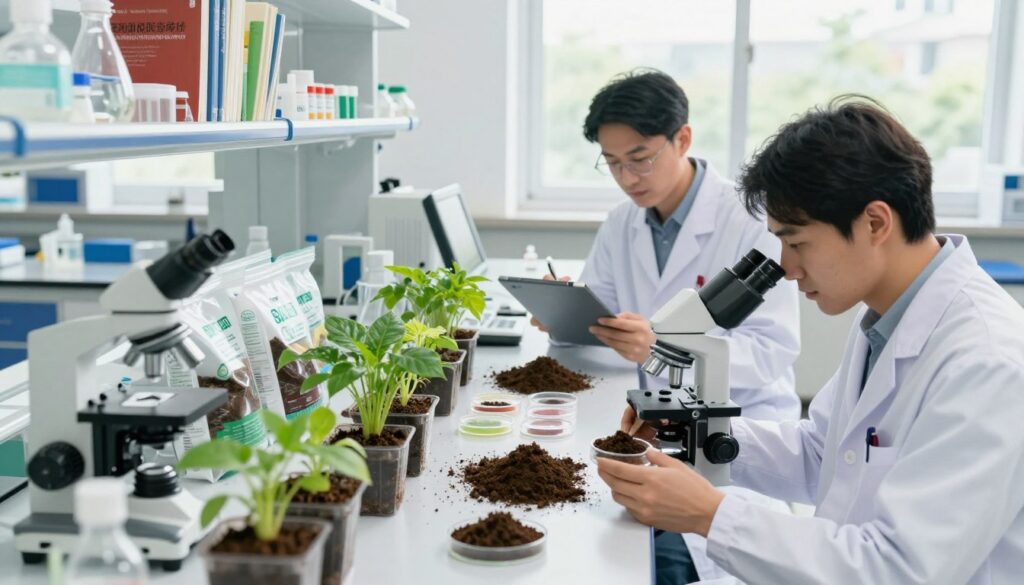
But then, a surprising twist in the Hunan study. While carbon levels went up, soil structure actually decreased in bare soil.
Soil aggregates are key for soil health. Biochar, alone, can disrupt them. It’s because biochar particles can fill spaces, but need roots and fungi to build structure.
This shows biochar’s role is more specific. It’s not the main builder. It’s the framework for the soil biome to work on.
The story is about teamwork, not just biochar. It’s like a condo for the soil biome to make it a home. Biochar helps with nutrient cycling, but needs the biome to function.
So, what does this mean for your garden or farm?
- The Carbon Win is Real: Biochar is great for carbon farming.
- Fertility Boost is Likely: It helps retain nutrients and buffer pH.
- Structure is a Team Sport: Biochar works best with living plants. It needs roots and fungi to unlock its full potential.
The key is not to give up on biochar. It’s to use it wisely. Pair it with living plants and cover crops. The research is a guide for better use, not a criticism.
Making and Sourcing Biochar
Forget digging for treasure; the most valuable black substance in modern agriculture is made from what we throw away. This isn’t alchemy—it’s smarter. It’s biochar agriculture turning waste streams into wealth streams through one of nature’s oldest tricks: fire, but with a PhD.
The technical term is pyrolysis. Sounds fancy, but it’s basically cooking organic matter without letting it catch fire properly. Think of it as the difference between burning toast and making charcoal. You heat biomass—wood chips, corn stalks, rice husks, nut shells—to temperatures between 300°C and 700°C (572°F to 1292°F for the metrically challenged).
The crucial detail? You do this in an environment with very little oxygen. This oxygen limit is the secret sauce. It prevents the carbon in the biomass from fully combusting into CO2 and vanishing into the atmosphere. Instead, it drives off volatile compounds, which can be captured as syngas or bio-oil for renewable energy.
What remains is the solid, carbon-rich skeleton. This is the biochar. The temperature and the type of “ingredients” you start with are the dials on this machine. They control the final product’s porosity, surface area, and chemical personality.
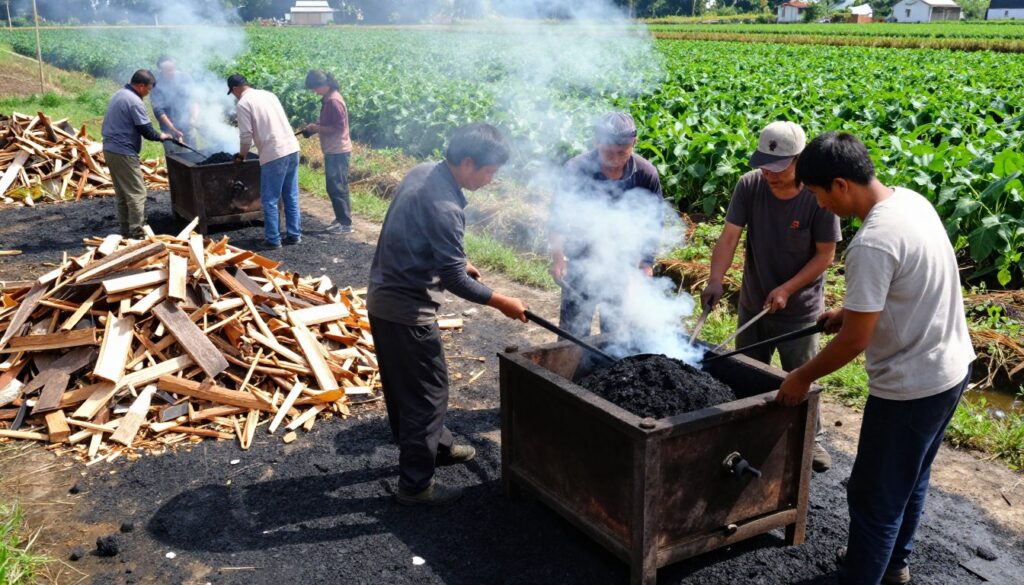
So what makes good feedstock? Almost any clean, dry organic waste will do. It’s about valorizing what’s already there, not sacrificing prime resources. The choice dictates the char’s properties.
| Feedstock Type | Common Sources | Relative Carbon Yield | Best Use Cases |
|---|---|---|---|
| Woody Biomass | Forestry residues, wood chips, sawdust | High | General soil amendment, carbon sequestration |
| Agricultural Residues | Corn stover, rice husks, straw, nut shells | Medium-High | Nutrient retention, field crops |
| Manures | Poultry litter, cattle manure | Medium | Nutrient-dense amendment, compost blending |
| Green Waste | Yard trimmings, certain food wastes | Variable | Urban agriculture, community gardens |
For the farmer, sourcing biochar presents a choice. You can be the producer or the customer. The DIY route means investing in a small-scale pyrolyzer to process your own on-farm waste. It closes the loop right on your property.
The commercial route involves partnering with a producer. This is where you need to put on your detective hat. Not all black dust is created equal. You’re sourcing the foundation of your soil’s new downtown district. You need to ask: What was the feedstock? What was the peak pyrolysis temperature?
A char made from hardwoods at 600°C behaves differently than one from manure at 400°C. The former might be a fantastic long-term carbon sink. The latter could be packed with minerals ready to feed your plants. It’s like the difference between buying a sturdy frame for a house versus one that’s already furnished.
If the technical side feels daunting, don’t wing it. Get educated. A great place to start is this comprehensive manual on biochar production and. It breaks down the science without the snooze.
The bottom line? Making and sourcing biochar is the first real test in biochar agriculture. It determines whether you’re just adding black powder to your field or strategically engineering a soil revolution. Choose your black gold wisely.
Farmer Results
So, what do farmers really think? The science is clear, but farming is different. The first farmers in carbon programs are the true test pilots.
They say the same thing as the studies. Better water retention in dry times is key. Less fertilizer lost means big savings. And the extra money from carbon credits makes them happy.
But there’s a lesson from a study. 45 tons per hectare didn’t beat 30 tons in carbon storage. Farmers learn that more isn’t always better. There’s a point where you get less return.
Biochar isn’t a magic fix. It’s a great helper, but it needs a team. Cover crops, living roots, and less tillage are needed for success. The whole soil system wins, not just one part.
The future of carbon farming with biochar looks good. But it needs practice. Success comes from working together, not alone. It’s about keeping carbon in the soil and growing strong crops.