What if the biggest fix for our industrial food machine isn’t a smarter robot, but a smarter tree?
The classic American farm, with endless rows of one crop under the sun, seems like a losing bet. The house, or our climate and soil, is against us. Agroforestry farming is our hedge.
It’s not just about planting a few oaks for shade. It’s about intentionally mixing trees, crops, and sometimes animals into one system. Imagine it as a dynamic management system that turns a burning room into a forest.
The idea is simple yet powerful. By combining different species, you get a system that’s stronger, more productive, and better for the environment than any single crop. It’s farming that works with nature, not against it.
System Types & Benefits
Monoculture farming is like a solo performance. Agroforestry, on the other hand, is like a full symphony orchestra. It combines multiple elements in harmony.
Agroforestry offers a variety of tools tailored to specific needs. Each practice addresses different challenges on the land.
Let’s explore the five main systems. They are specialized tools for your ecological toolkit.
- Silvopasture: This is a key part of regenerative agriculture. It combines trees, pasture, and livestock. Trees provide shade and shelter, while animals manage the undergrowth. This system sequesters carbon efficiently.
- Alley Cropping: Imagine zoning your land like a city. Plant rows of trees and farm annual crops in the ‘alleys’ between them. It’s a smart financial move.
- Riparian Forest Buffers: These are nature’s water filters. They’re strips of vegetation along waterways that clean agricultural runoff. They act like kidneys for the landscape.
- Windbreaks: These are old-school climate control. Rows of trees or shrubs protect crops and livestock from harsh winds. They reduce soil erosion and create microclimates.
- Forest Farming: This is for those who love plants. It involves growing shade-tolerant crops like ginseng or mushrooms under a forest canopy. It turns woodlands into productive spaces.
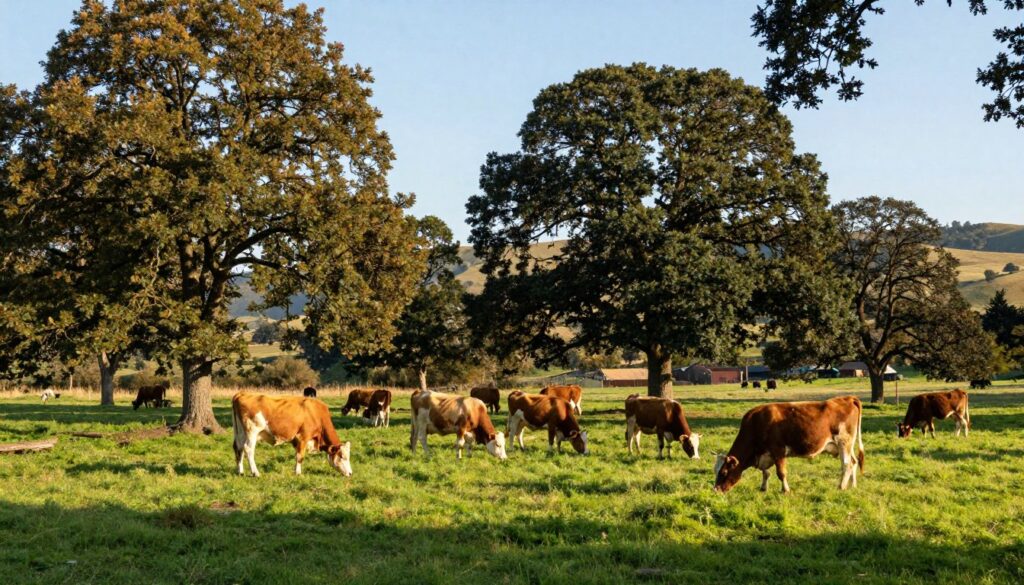
Silvopasture is more than just cows in the woods. It’s a managed system where each element supports the others. Livestock get better welfare, trees get fertilized, and farmers get multiple income streams.
Choosing the right system for your land can be tricky. The table below gives a quick comparison.
| System | Key Components | Primary Benefits | Best For |
|---|---|---|---|
| Silvopasture | Trees, pasture, livestock | Carbon sequestration, animal welfare, diversified income | Livestock operations with available land |
| Alley Cropping | Tree rows, alley crops | Soil protection, microclimate creation, dual income streams | Row crop farmers looking to add perennial elements |
| Riparian Buffers | Streamside trees & shrubs | Water filtration, habitat creation, regulatory compliance | Properties with waterways needing protection |
| Windbreaks | Dense tree/shrub rows | Erosion control, crop/livestock protection, snow management | Field edges exposed to prevailing winds |
| Forest Farming | Forest canopy, shade crops | Niche markets, biodiversity enhancement, woodland utilization | Woodland owners seeking additional revenue |
The benefits of agroforestry are like a domino effect. First, soil health improves dramatically. Tree roots hold soil in place, reducing erosion. Their leaf litter acts as natural fertilizer.
Biodiversity increases. You create habitats for beneficial insects, birds, and microorganisms. This natural pest control can slash pesticide bills.
Climate resilience is another benefit. Trees protect crops from extreme weather. They also sequester carbon directly from the atmosphere. Your farm becomes part of the climate solution.
Economically, diversification is your safety net. You’re not relying on a single commodity’s price. You might sell timber, nuts, crops, and livestock—all from the same acreage.
Water quality improves as riparian buffers filter runoff. Soil ecosystems become more complex and healthy. The whole system often produces more biomass than monocultures.
Want to dive deeper into these advantages? Explore the broader benefits of agroforestry for a comprehensive look at how these systems transform both ecology and economics.
In essence, agroforestry isn’t about adding complexity for its own sake. It’s about working with natural patterns to create systems that are more productive, more resilient, and more profitable than conventional approaches. It’s farming that thinks several moves ahead.
Land Planning Tips
Before you start playing matchmaker between trees and crops, remember that not all relationships in agroforestry systems are created equal. It’s not just about swiping right on every plant. Soil pH, root architecture, and canopy spread are key.
Think of your land as a three-dimensional chessboard. Your first move is to match species. That black walnut might be the star of your vision, but its allelopathic tendencies could harm your tomatoes. You need plants that work well together, not just tolerate each other.
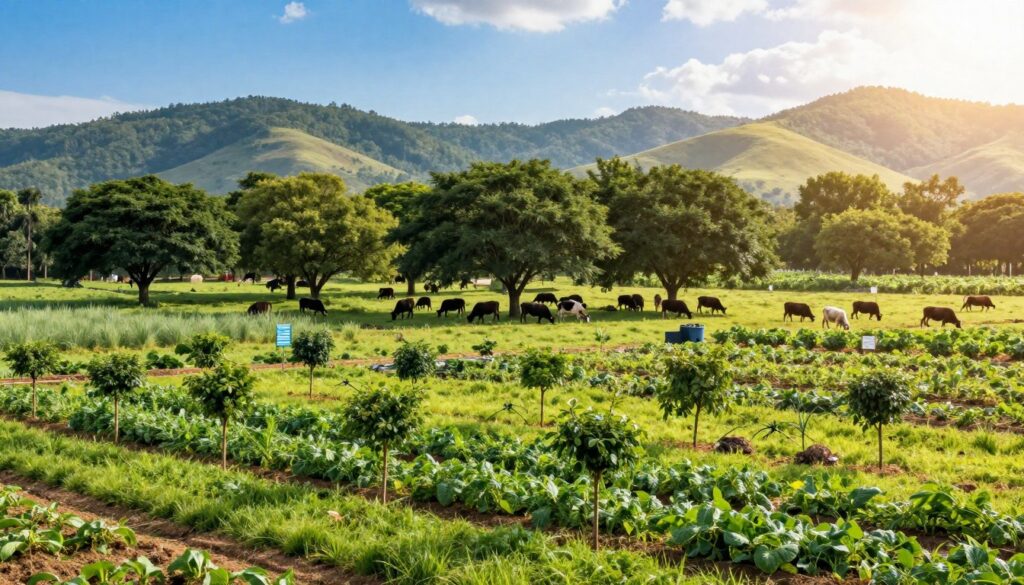
Next, think about your machinery. How will your tractor fit through the alleys when the trees grow? Plan your spacing for future equipment, not just today’s. Alley cropping needs careful math to ensure everything fits.
Now, think like a market analyst. What do you plan to do with your hazelnut timber, elderflower, and pork? Agroforestry systems offer diverse outputs, but you need a market plan. It’s a business, not just a hobby.
Regulators are watching. Rules like Oregon’s Forest Practices Act are strict. Your streamside agroforestry systems must follow these rules closely. Failure can be costly.
For windbreaks, orientation is key. Planting perpendicular to winds is obvious, but density matters. Aim for 40-60% density to filter wind, not block it. A good windbreak reduces erosion and shelters livestock.
The most overlooked aspect? Time. Your agroforestry systems will change. Shade patterns and root competition will shift. Your plan must be flexible, not rigid.
This is why planning and implementing agroforestry systems deserves its own deep dive. The process is iterative, not linear.
My most sage advice? Start small. Treat your first silvopasture paddock as a living laboratory. Observe light, soil moisture, and test one configuration before scaling up. It’s a co-evolutionary dance with your land.
Successful agroforestry systems come from combining ecological intuition with practical planning. You’re not just planting trees among crops. You’re building a resilient, productive ecosystem that pays off for decades. The planning phase separates the visionary from the merely hopeful.
Data on Yield, Soil Health, Biodiversity
If you’re unsure about agroforestry’s benefits, the facts might surprise you. Let’s look at the real numbers. They show a big change.
Start with scale. European research shows 15.4 million hectares under agroforestry in the EU. That’s 3.6% of their total land. Silvopasture makes up most of this area at 15.1 million hectares. It’s no longer just a small experiment.
Yield is another key area. Agroforestry asks, “What’s the total productivity of this land?” It’s about getting more from the land, not just one crop.
In Oregon, trees in silvopasture systems grow 16% larger than those in monoculture. This is because they have better conditions to grow. You get both timber and beef from these systems.
Soil health is also improved. Tree roots act like underground pipes. They help reduce erosion by up to 90% compared to bare fields.
These systems also pull CO₂ from the atmosphere. They store it in soil organic matter. Agroforestry is key in fighting climate change, according to the IPCC.
For farm biodiversity, it’s not just about seeing more birds. It’s about creating a balanced ecosystem. Hedgerows and diverse canopies support insects and pollinators.
They also improve soil health. Research shows this system reduces costs and builds resilience.
Agroforestry builds natural capital. This capital pays off by reducing fertilizer and pesticide use. You’re farming an entire ecosystem, not just crops.
Well-managed silvopasture supports livestock and grows timber. It also stores more carbon and reduces water runoff. And it creates its own pest management system.
The FAO reports an increase in global agroforestry area. The data shows clear benefits. Yield, soil health, and biodiversity add up to resilience. And resilience is key in today’s climate.
Case Examples
Agroforestry isn’t just a theory. It’s real work happening in places like New Hampshire and Spain.
The UNH ADAPT project is a prime example. With $10 million, they’re testing if New England can grow food and keep its forests. They’re trying silvopasture and polyculture to boost food production.
France’s Restinclières estate offers a unique perspective. Since the 1990s, it’s been a living lab. Scientists study how trees and crops interact. They’ve collected decades of data on these partnerships.
In Oregon’s Lincoln County, farmers are taking action. They run cattle through thinned forests. This improves the forest floor and provides shelter for the trees. It’s a practical approach.
Spain’s dehesas are true agroforestry veterans. This isn’t new; it’s tradition. For centuries, Iberian pigs have foraged under cork oaks. This method produces top-notch ham and preserves a unique landscape.
These examples show us that integrated land use works. The blueprint is in the fields, not just in theory. We need to learn from it.