The journey from planting a seed to selling your harvest is complex. Farmers in the United States face many challenges every day. These include changing market prices and unpredictable weather that can ruin a season’s work.
Managing rising production costs and using resources efficiently is key to survival. Understanding market demand helps you navigate these challenges. It gives you the power to adapt to a changing world.
When you know what consumers want, you make better farm decisions. This insight helps you choose the right varieties and timing. It’s a key step in boosting your crop profitability in a competitive global economy.
By tracking current trends, growers can avoid selling when prices are low. Data provides a roadmap to stay ahead. Analyzing demand isn’t just about sales; it’s about protecting your future.
To thrive, look beyond the soil and into the marketplace. This strategic approach ensures your hard work leads to success. By focusing on what buyers need, you secure a stronger position for years to come.
Price vs Yield Considerations
Understanding the relationship between price and yield is key for good farming planning. Farmers face challenges from changing prices and yields. They must ensure their crops are profitable.
Understanding Price Fluctuations
Many factors affect agricultural product prices, like weather, global trends, and unexpected events. These changes can greatly impact farmers’ earnings from their crops.
Key factors influencing price fluctuations include:
- Weather conditions affecting crop supply
- Global demand and market trends
- Economic and political factors

The profit from crops depends on the price farmers get. High prices and good yields mean more profit. But, low prices and poor yields can cut profits or cause losses.
| Crop | Average Yield (tons/acre) | Average Price ($/ton) | Profitability ($/acre) |
|---|---|---|---|
| Corn | 5 | 150 | 750 |
| Soybeans | 3 | 300 | 900 |
| Wheat | 4 | 200 | 800 |
By studying price and yield data, farmers can choose the best crops and farming methods. This helps them make more money.
Regional Crop Advantages
Farmers can boost their crop profitability by knowing and using regional trends. The United States has a wide range of farming areas. Each area has its own benefits for growing certain crops.
The U.S. Department of Agriculture says 89.7% of farms are small family farms. These farms own 47.7% of the land. This shows how key small farms are in U.S. farming. Knowing regional trends helps these farmers choose the right crops, which can make them more profitable.
Leveraging Regional Trends
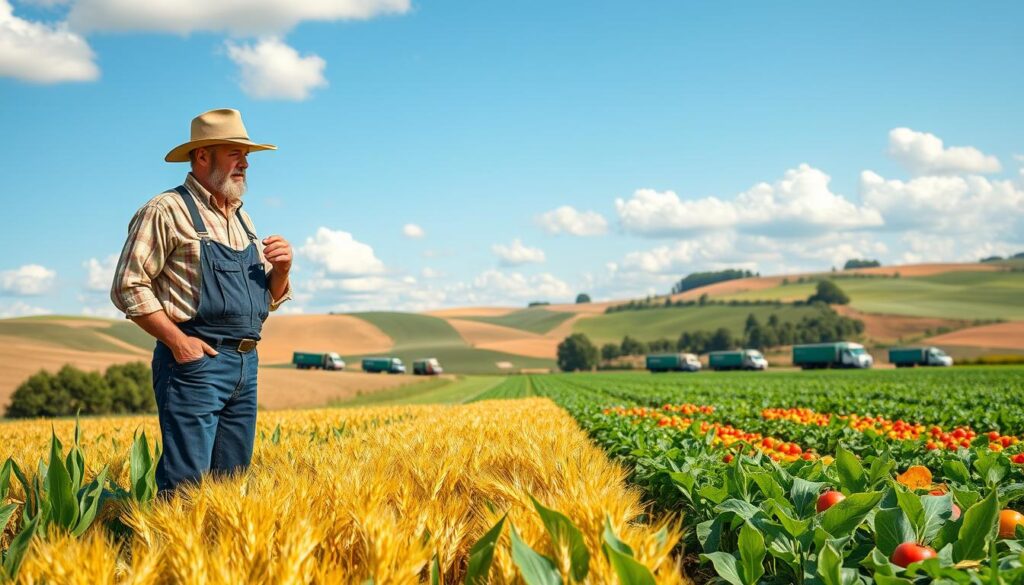
Different parts of the U.S. have different weather, soil, and market needs. This makes some crops more profitable in certain places. For example, areas with good soil and rain are great for growing corn and soybeans. But, places with less rain might do better with wheat or cotton.
To use regional benefits, farmers can look at data from the U.S. Department of Agriculture. This data helps them see trends and patterns in their area. For more tips on profitable crops for small farms, check out this blog post.
| Region | Suitable Crops | Key Factors |
|---|---|---|
| Midwest | Corn, Soybeans | Fertile soil, adequate rainfall |
| Great Plains | Wheat, Cotton | Drier conditions, extensive land |
| California | Avocados, Grapes | Mild climate, irrigation facilities |
By using these regional trends, farmers can plan better, lower risks, and increase their crop profitability.
Diversification Strategies
Effective farming planning is key to managing risks in farming. By using diversification strategies, farmers can better handle market changes and environmental issues. Practices like crop rotation and intercropping improve soil health and reduce pests. They also boost biodiversity.
Risk Mitigation through Data-Driven Decisions
Tools like AgriGrow Analytics offer insights into a farm’s finances. This helps farmers make decisions that boost profits. Data analytics help farmers understand farming better and find growth opportunities.
Using precision agriculture, like precise irrigation and fertilizer use, cuts down waste and harm to the environment. A study on sustainable agriculture practices shows these methods can greatly improve productivity and efficiency.
Diversification helps farmers deal with climate-related risks, like wildfires and droughts. By growing crops that can handle extreme weather, farmers can adapt. Government support for studies and training can help farmers adopt new crop systems, as discussed in a conversation on agricultural diversification.