Traditional farming is like trying to fill a swimming pool with a colander. Half our fertilizer goes missing, costing us $200 billion each year. This is more than the value of crypto crashes.
This loss is enough to feed Brazil’s soybean harvest three times over. It’s a huge leak of nutrients.
CRISPR-edited nitrogen-efficient crops are nature’s solution. They improve how plants absorb nutrients. This is like upgrading to fiber optic internet for plants.
Field trials show a 18% yield increase with 30% less synthetic inputs. It’s a big improvement.
What if plants could pay for their own nitrogen? What if we could make them self-sufficient? 2023’s breakthroughs bring us closer to this goal.
This isn’t just about new tools. It’s a major change in how we farm. Sustainable fertilizer practices and computational biology are key. The question is, can regulators keep up with this fast-moving science?
Problems with Traditional Fertilizers
Modern agriculture’s use of synthetic nitrogen is like a Wall Street trader addicted to risky bets. It’s exciting until everything crashes. We’re not just growing corn; we’re playing a high-stakes nitrogen game where the house always wins. Conventional fertilizers are the climate crisis’s favorite way to hide money.
Environmental Roulette
Imagine 32 trillion grams of ammonia disappearing every year, like Houdini in a cornfield. That’s enough nitrogen to fertilize every golf course from Augusta to La Quinta – twice. The real trick? Making $12 billion in leaching costs vanish from corporate books and reappear on taxpayers’ bills. It’s like the 2008 bank bailouts, but with more cow manure and fewer subpoenas.
The Ammonia Casino
Meet the nitrogen mafia:
- The Godfather (Volatilization): Ammonia evaporates faster than crypto bros at a SEC hearing
- The Pickpocket (Leaching): Nitrates slip through soil like lobbyists through congressional loopholes
- The Arsonist (Denitrification): Microbes torch profits into greenhouse gases – nature’s version of burning cash
USDA data shows conventional corn farms lose $87/acre in unused nitrogen. It’s like buying Taylor Swift tickets and only using them as drink coasters. Our waterways are choked with algal blooms, while sustainable fertilizer solutions gather dust in agtech incubators.
This isn’t just bad farming; it’s financial madness. Every ton of escaped nitrogen means lost yields, poisoned wells, and climate chaos. The real question is, can we afford to fix nitrogen loss or will we keep playing this game with our food system?
Science of Nitrogen-Efficient Crops
Imagine plants that can hack their own biology to become nitrogen ninjas. The world of agriculture is seeing major breakthroughs. These are not just small improvements, but plants doing parkour and genes acting as nutrient bodyguards.
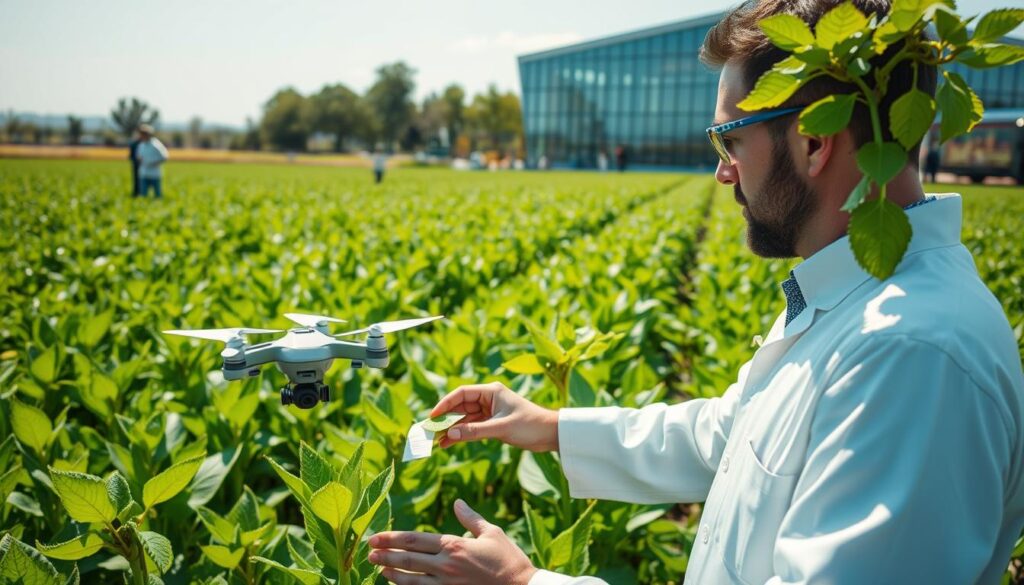
Root Revolution
Bayer’s Smart Corn System is like the Marvel Cinematic Universe for farming. Their corn has 22% larger root hairs than usual. These roots are like tiny drones, grabbing nitrogen from the soil.
Farmers are now using nitrapyrin inhibitors to keep nitrogen in the soil. This reduces fertilizer runoff by up to 40%. MSU research shows this method could make getting nitrogen to crops more precise.
CRISPR and the Nitrogen Gene
CRISPR is like the Swiss Army knife of gene editing. Scientists found the SHORT ROOT gene to be like a turbocharger for plants. By changing this gene:
- Plants grow denser root networks
- Nitrogen uptake efficiency increases by 18%
- Soil microbes get a nutrient feast
Sound Agriculture’s SOURCE® trials show this isn’t just lab work. Their field tests show crops need 30% less synthetic fertilizer. The Root-ABA1 QTL findings are like a genetic cheat code, making plants say, “I’ll have what the soil’s having.”
“We’re not editing genes – we’re upgrading nature’s operating system.”
Best Performing Varieties
Imagine Yelp reviewing cornstalks. We’re talking Michelin stars for maize, Zagat ratings for legumes. Welcome to agriculture’s new reality, where new crop varieties get graded like fusion restaurants. Let’s cut through the marketing chaff.
Cereal Champions
Corteva’s Optimum® AQUAmax corn isn’t just thirsty for accolades – it drinks 15% less water while outyielding last decade’s models. Paired with BASF’s Clearfield® wheat, these top seed brands deliver knockout punches to drought and disease.
Legume Legends
Pioneer’s T Series soybeans are the Prius hybrids of the field – 40% less nitrogen appetite without sacrificing protein content. But how do they stack up against competitors? Let’s break it down:
| Variety | Nitrogen Reduction | Disease Resistance | Yield (bu/acre) |
|---|---|---|---|
| T Series Soybeans | 40% | Phytophthora 9.5 | 62-68 |
| Prius Hybrids | 35% | Sclerotinia 8.7 | 58-63 |
| Standard Varieties | 0% | Fusarium 6.2 | 51-57 |
Syngenta’s N-Use Efficiency scoring system – agriculture’s answer to Michelin ratings – gives Pioneer’s beans a 3-star “soil saver” designation. In California’s rice fields, Blue River’s See & Spray® tech helps farmers achieve 6.2 tons/acre yields using 33% less urea. That’s like getting filet mignon quality from hamburger budgets.
Choosing these varieties isn’t just smart farming – it’s agricultural judo. Turn nitrogen scarcity into yield momentum. Just don’t expect your crops to bow afterward.
Management Tips
Ever tried pairing Cabernet with clay loam? Welcome to agriculture’s new tasting menu. Here, soil analysis is like haute couture for your fields. It’s time to move from a fertilizer shotgun to surgical precision.
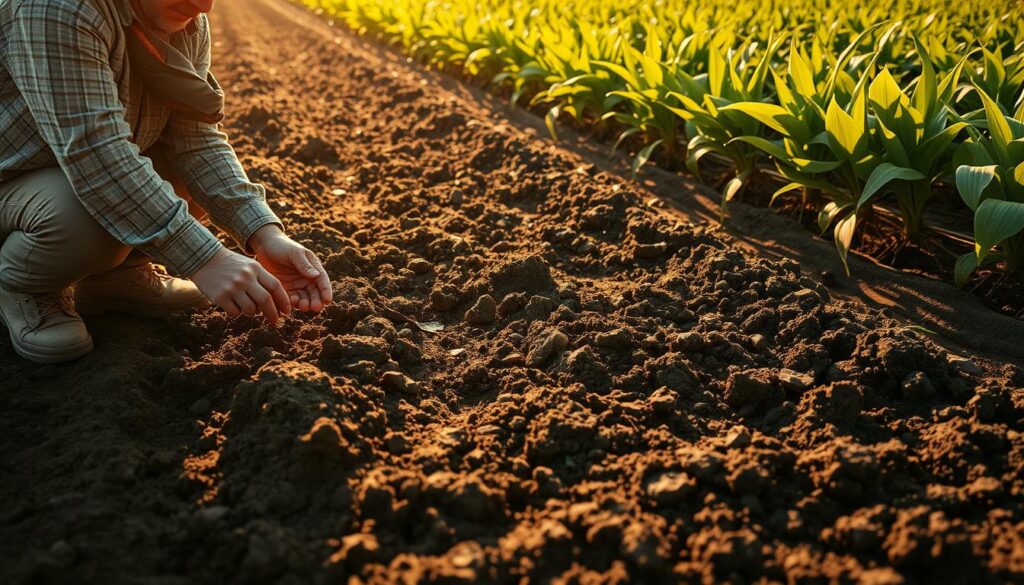
The Sommelier’s Guide to Dirt
Modern soil analysis is more than pH tests and guesses. It’s like forensic science meets mixology. Our 5-step diagnostic ritual turns dirt inspection into high-stakes detective work:
- Electroconductivity mapping: X-ray vision for your topsoil’s mineral content
- Microbial DNA testing: Ancestry.com for your dirt’s microbiome
- NDVI drone scans: Crop health thermal imaging
- SAP analysis: Plant bloodwork diagnostics
- Nitrate strip tests: Instant soil drug tests
Field Chemistry 101
When Nebraska’s Thompson Farms adopted this protocol with John Deere’s Operations Center, magic happened. Their precision ag cocktail:
- 19% nitrogen cost reduction
- 7% yield boost
- 42 fewer field passes annually
“We’re basically farming with a scalpel now,” their agronomist quipped. The secret sauce? Yara’s N-Tester revealed their corn needed 23% less nitrogen than traditional recommendations.
“Variable rate spreaders turned our fertilizer budget from leaky bucket to eyedropper.”
Pro tip: Treat your spreader like a Spotify playlist – zone-specific application requires constant remixing. Those savings? They’ll have you doing the fiscal cha-cha all the way to the bank.
Economic and Environmental Benefits
Let’s clear up a big misunderstanding in farming. It’s not just about growing more crops. It’s also about saving money and protecting our environment. This is a win-win situation for both farmers and the planet.
Profit Margins Meet Carbon Credits
Imagine a farm in Iowa that used to spend a lot on fertilizer. But then, they switched to sustainable fertilizer and saved a lot of money. This change not only saved them money but also helped the environment.
- 12% input reduction = $23K annual savings on 500 acres
- 50kg less nitrogen per hectare (enough to fill 3,000 beer kegs)
- Carbon credit earnings adding 4-7% to bottom lines
Farmers are now earning money by helping the climate. This isn’t just a dream. It’s happening in real farms where technology helps them grow crops better.
Waterway Warriors
The Chesapeake Bay is a big deal for the environment. But, some farming practices can harm it. Farms that use less nitrogen are helping the bay a lot.
| Metric | Conventional | Regenerative |
|---|---|---|
| Nitrogen Runoff | 18.2 kg/acre | 6.9 kg/acre |
| Algal Blooms | Annual crisis | 42% reduction |
| Cost/Acre | $214 | $127 |
This savings helps clean up the bay. Farmers are now helping the environment without even trying. It’s a big win for everyone.
Conclusion
Imagine Nebraska in 2030. CRISPR-edited wheat and nitrogen-fixing microbes will be common. Drones will carry tiny fertilizers, all thanks to today’s farming tech. It’s not just dreams; it’s what’s coming.
By 2050, the UN says we could cut synthetic fertilizer use by 40%. This could feed 3 billion more people. SOURCE® is already making a difference with its barley. It now covers 12% of U.S. barley fields.
Switching to these crops saves money and helps the planet. Each acre can save $18-35 and reduce CO2 by 0.5 tons a year. This is a win-win for farmers and the environment.
The change is already happening. Bayer is working on corn that traps nitrogen. Startups are making algae coatings for plants. Farmers are using technology to grow food in new ways.
Our grandparents’ green revolution was a big step forward. But now, we need to do better. We must use less and measure more. It’s time to think differently about farming.
Driving a tractor is like being the captain of Spaceship Earth. Will you keep using old methods or try new ones? The choice is yours.