Today, modern agriculture is facing a huge challenge. We need to feed more people while keeping our natural resources safe. This is the main goal of crop production in the United States.
The Certificate in Food, Agriculture, and Sustainability offers a deep dive into these vital issues. This 15-credit hour credential helps students connect food systems with the environment. It gives a unique view of the complexity of feeding the world.
Using sustainable farming practices is now essential for growers. These methods protect biodiversity and keep soil healthy for future generations. By focusing on ecological health, we can make agriculture more resilient.
Looking at these systems needs science and clear ethics. Professionals in this field study how different parts of agriculture work together. Understanding these connections helps us build a better food system for all.
Balancing yield and conservation
The key to sustainable farming is finding a balance between being productive and caring for the environment. This balance is essential for farming that is both effective and eco-friendly.
To achieve this balance, sustainable farming practices are needed. These practices focus on both growing crops well and protecting the environment. One key strategy is to diversify farming systems.
Strategies for Sustainable Crop Production
Sustainable crop production includes many practices. These aim to keep soil healthy, lessen farming’s environmental impact, and support biodiversity. Dr. Kubota Hiroshi’s work on diverse crop systems shows how diversifying crop rotations can make fields more resilient.
For more information on sustainable farming, check out the report on Agriculture and Conservation on the Prairies.
Cropping System Diversity
Cropping system diversity is key to sustainable farming. It means growing different crops on the same land. This approach boosts biodiversity and cuts down on chemical use.
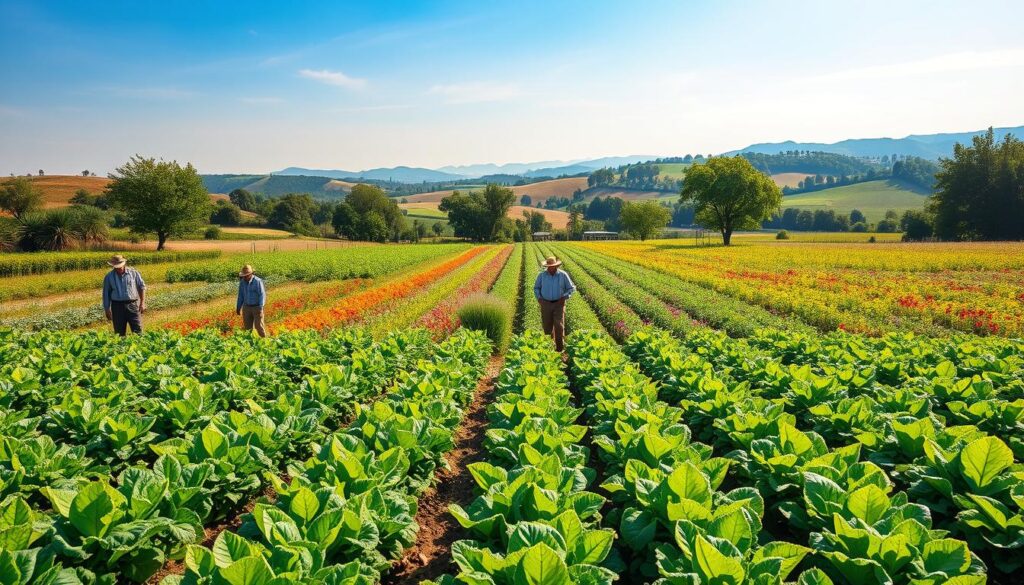
| Cropping System | Benefits | Examples |
|---|---|---|
| Monocropping | Simplified management, higher initial yields | Corn or soybean monocultures |
| Crop Rotation | Improved soil health, reduced pests and diseases | Rotating corn with soybeans and wheat |
| Polyculture | Enhanced biodiversity, improved ecosystem services | Growing multiple crops together like the “Three Sisters” method |
By using diverse cropping systems, farmers can boost crop efficiency and help the environment. This method makes farming more resilient and promotes ecological balance.
Input efficiency strategies
Reducing environmental impact in agriculture is vital. This means using resources wisely and cutting down on waste. It’s about making the most of water, fertilizers, and pesticides.
Using new technologies and methods is key. For example, precision agriculture helps farmers use fertilizers and pesticides better. This reduces waste and protects the environment.
Optimizing Resource Use
The Agricultural Climate Solutions program helps farmers fight climate change. It offers funding and support for practices that lower emissions from farming.
Some strategies include:
- Using cover crops to improve soil health and prevent erosion.
- Choosing conservation tillage to reduce soil damage.
- Adopting integrated pest management (IPM) to cut down on chemicals.
For more info on sustainable farming, check out Frontiers in Sustainable Food Systems.
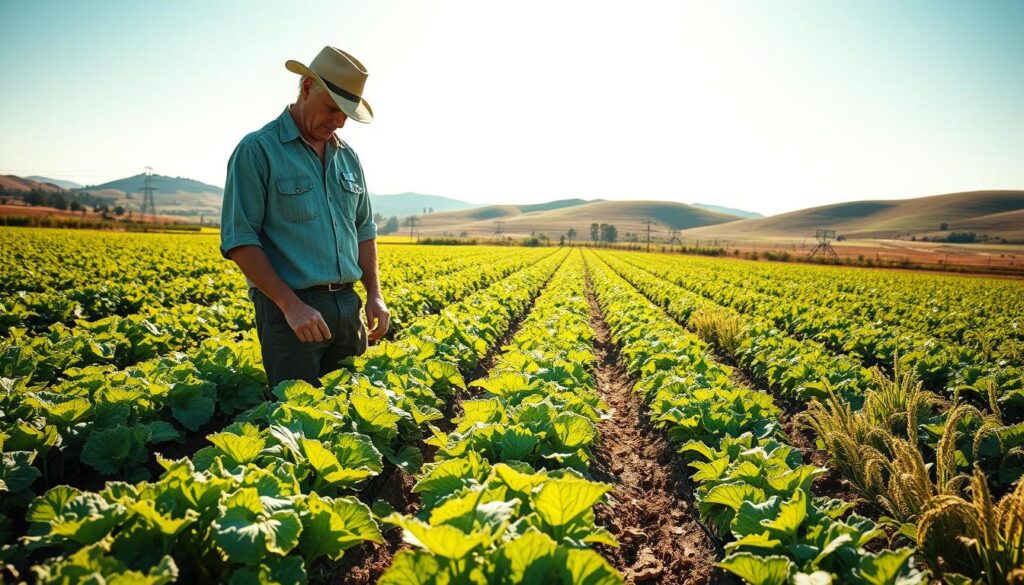
Comparing old and new farming ways shows big differences. Here’s a table to show you:
| Practice | Traditional Method | Optimized Method |
|---|---|---|
| Fertilizer Application | Broadcasting | Precision Application |
| Pest Control | Calendar-based spraying | Integrated Pest Management |
| Irrigation | Flood Irrigation | Drip Irrigation |
By using better strategies, farmers can lessen their environmental impact. They can keep or even boost crop yields. This supports sustainable crop production and crop efficiency.
Soil and water stewardship
Managing soil health and water resources is key in sustainable agriculture. It’s essential for sustainable farming practices and boosts crop efficiency.
Soil health is vital for productive farms. It keeps soil’s physical, chemical, and biological properties in check. Practices like crop rotation, cover cropping, and reduced tillage help a lot. They improve soil structure, increase organic matter, and support biodiversity.
Managing Soil Health and Water Resources
Effective soil and water management needs a broad approach. This includes conservation tillage and sustainable agriculture strategies. Precision agriculture techniques also help use water better. These methods improve soil health and save water, reducing farm environmental impact.
Water management is also critical for farm success. Techniques like drip irrigation and mulching cut down on water loss. Checking soil moisture and weather forecasts helps make better irrigation choices.
By prioritizing soil and water care, farmers can make their farms more sustainable. This boosts crop efficiency and helps the environment. It aligns with the Sustainable Agriculture Strategy’s goals to tackle environmental and climate challenges in farming.
Long-term productivity goals
Achieving sustainable productivity in agriculture needs a long-term plan. This plan balances yield with conservation. Dr. Kubota Hiroshi’s research shows the value of using natural resources wisely for both the environment and the economy.
Integrated Approaches to Sustainability
Using precision nutrient management and other green farming methods can cut costs by 15-30%. This doesn’t lower yields but helps the soil stay healthy over time.
Practices that care for the soil and use data science bring big environmental wins. They cut down on greenhouse gases and prevent nutrient runoff. By aiming for long-term success, farmers help the planet and keep their farms running well.