Farmers worldwide face a silent battle every season. They lose 20% to 40% of their harvests to diseases. This loss threatens food security and local economies in the U.S.
Understanding natural immunity begins with genetic defense. Plant R genes protect against harmful invaders. They are key to plant disease prevention in farming today.
The first cloned gene, Hm1 in maize, fights off toxins from Cochliobolus carbonum. Modern science uses this to promote resistant farming for rice and citrus. These methods protect crops from diseases like rice blast or rust fungi like Ug99.
Scientists are studying how these natural defenses work. By using this knowledge, we can better protect our fields. Keeping our food safe from blight is now more possible than ever.
Environmental triggers
Environmental triggers play a big role in crop diseases. Knowing these triggers is key for crop protection. Things like temperature, humidity, and rain affect how diseases spread in crops.
The changing climate makes things worse. It’s important to understand how climate change affects diseases. For more info on managing crop diseases, check out initiatives that support crop protection.
Role of Climate Change
Climate change is a big reason for more crop disease. Warmer temperatures and different rain patterns help diseases spread.
Climate change also changes where and how bad diseases are. We need to think about climate change when managing diseases.
Impact on Disease Outbreaks
Climate change affects diseases in many ways. It includes:
- Changes in temperature and rain
- More extreme weather
- Pathogens and hosts move to new places
Understanding these changes helps us predict and stop disease outbreaks. Here’s a table showing how climate change impacts crop diseases:
| Factor | Impact on Disease Dynamics | Consequence |
|---|---|---|
| Temperature Increase | Favors the growth and spread of pathogens | Increased disease incidence |
| Precipitation Changes | Creates conducive environments for disease spread | More frequent outbreaks |
| Extreme Weather Events | Can lead to sudden and severe disease outbreaks | Significant yield loss |
Early detection methods
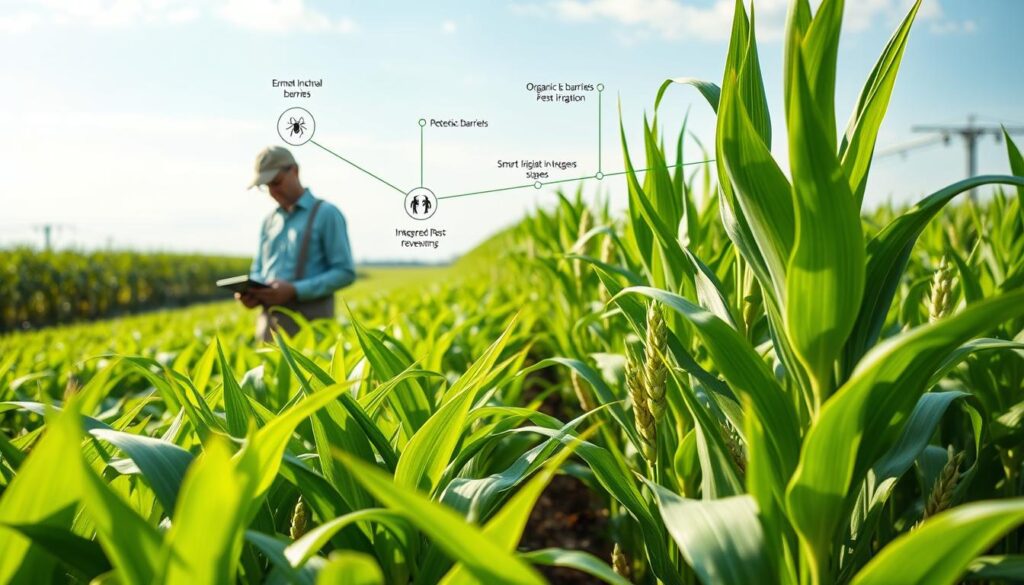
Scientists are finding new ways to spot plant diseases early. This helps prevent big damage. Spotting diseases early is key to keeping crops healthy and safe from disease.
North Carolina State University is leading in creating new tools for disease detection. They use advanced tech like genomic surveillance and data analytics to predict outbreaks.
Novel Disease Sensors and Diagnostics
New sensors and diagnostics are being linked with remote crop health systems and climate data. This helps farmers predict and stop disease outbreaks. For example, new tech is being made to find and name plant diseases accurately.
Some of the main technologies being looked into are:
- Genomic surveillance
- Real-time spatial and temporal data analytics
- Remote crop health sensing systems
These tools help make detailed models for managing diseases. Here’s how they can work together:
| Technology | Function | Benefit |
|---|---|---|
| Genomic Surveillance | Monitors genetic changes in pathogens | Early detection of new strains |
| Real-time Data Analytics | Analyzes spatial and temporal disease data | Predicts disease outbreaks |
| Remote Crop Health Sensing | Monitors crop health remotely | Identifies disease symptoms early |
By using these technologies together, farmers and scientists can fight plant diseases better. This way, they can stop diseases before they spread, saving crops.
Integrated management strategies
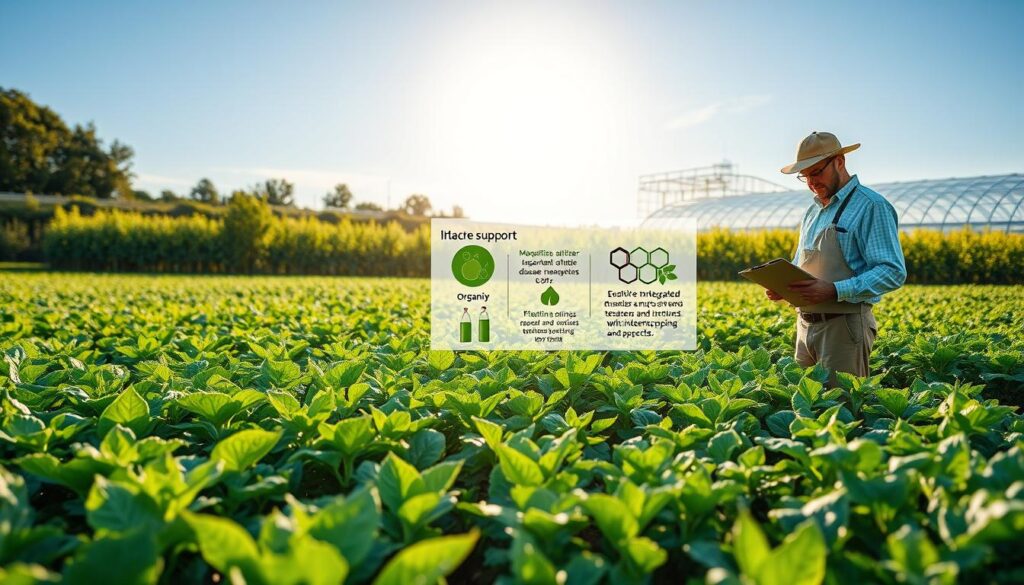
Protecting crops from diseases is key to food security. These strategies mix different methods to manage diseases well.
Genetic approaches are now a big part of these strategies. Methods like domain swapping and gene shuffling of R genes, random mutation of R genes, and gene editing of S genes are promising. They help improve crop resistance to diseases.
Domain Swapping and Gene Shuffling of R Genes
Domain swapping and gene shuffling change R genes to make new ones. This creates new resistance specificities. It helps crops fight off different pathogens better.
Random Mutation of R Genes
Random mutation of R genes expands their recognition specificity. Researchers introduce random mutations to find new R gene variants. These variants offer better resistance to specific diseases.
Gene Editing of S Genes
Gene editing, like CRISPR/Cas9, is a powerful tool for precise gene modification. It edits S genes to disrupt susceptibility factors pathogens use. This gives crops resistance to diseases.
For example, modifying the Mlo gene in barley and wheat has made them resistant to powdery mildew. This shows gene editing’s role in managing crop diseases.
| Technique | Description | Example |
|---|---|---|
| Domain Swapping and Gene Shuffling | Manipulation of R genes to generate novel resistance genes | Creation of new resistance specificities |
| Random Mutation of R Genes | Introduction of random mutations to expand recognition specificity | Identification of new R gene variants |
| Gene Editing of S Genes | Precise modification of target genes using technologies like CRISPR/Cas9 | Modification of Mlo gene to confer resistance to powdery mildew |
Reducing yield loss
Effective crop disease management is key to avoiding yield loss. Farmers can use predictive tools and databases to prevent diseases. This way, they can act early and save their crops.
Predictive Tools in Action
The Plant Aid project at North Carolina State University aims to predict plant diseases in real-time. It’s a big step towards preventing plant diseases. This helps farmers take action quickly and reduce losses.
These tools use data analytics, genomic surveillance, and climate data to forecast diseases. This leads to better management of crops. It also helps farmers and the agricultural industry by reducing economic losses.