Every farmer knows that environmental elements shape how plants develop. Light, temperature, and moisture levels play vital roles in daily growth. Even minor changes in soil nutrition can quickly alter a successful harvest.
Harsh heat and dry spells remain major hurdles for modern agriculture today. These abiotic pressures often reduce total productivity across the United States. You can learn more in this detailed plant health guide to understand these threats better.
Recent climate trends show that global yields for barley, wheat, and maize are falling. Such environmental shifts create unexpected challenges for local food producers. Natural systems struggle when conditions become too extreme for traditional varieties.
By identifying these various threats, agricultural practitioners can begin to explore new strategies. Mitigation and adaptation are now essential for maintaining stable yields. This knowledge ensures a more resilient future for the entire farming community.
Key Takeaways:
- Extreme weather and poor nutrition significantly lower global agricultural output.
- Proactive adaptation strategies help growers maintain yields despite changing climates.
How plants respond biologically
Plants have many ways to deal with environmental stresses like heat and drought. These responses help them survive and involve changes in their biology, chemistry, and genes.
When plants face stressful conditions, they use special ways to protect themselves. Research shows plants change their biology to handle drought and heat. They use methods like reducing stomatal conductance and making osmotic adjustments as found in a study on plant stress.
Physiological responses to heat and drought stresses
Physiological responses are key for plant survival under stress. One main response to drought is closing stomata to save water. This helps but can also slow down photosynthesis by limiting CO2 uptake.
Heat stress causes different responses in plants. They might change their membranes to stay fluid at high temperatures. They also make heat shock proteins to protect cells from heat damage.
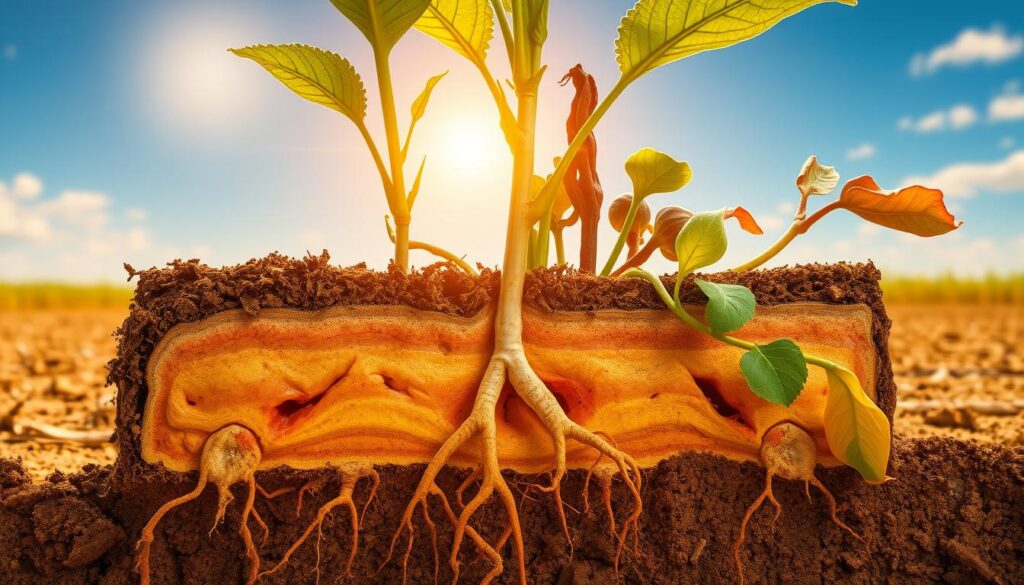
Plants use both avoidance and tolerance strategies to deal with stress. Avoidance includes growing deep roots for more water and shedding leaves to cut down on water loss. Tolerance involves osmotic adjustments to keep cells firm under drought.
It’s important to understand these strategies to make crops more resilient. By finding key genes and pathways, researchers can breed crops that better handle heat and drought. This can lead to better crop yields even in tough conditions.
Yield effects at different growth stages
It’s key to know how crop stress affects yields at different growth stages. This knowledge helps in managing farms better. Crop stress can happen at any time, from when seeds start growing to when they’re fully grown.
The reproductive phase is very sensitive to stress in crops like wheat, chickpea, and maize. Stress during this time can greatly lower yields. This is because it affects pollination, fertilization, and how grains form.
For example, heat stress can make pollen unable to fertilize, leading to fewer seeds and lower grain yields. Drought stress also hurts photosynthesis and nutrient uptake, making yield losses worse.
To grasp how crop stress affects yields at different stages, let’s look at its impact on various crops:
| Crop | Growth Stage | Stress Type | Yield Impact |
|---|---|---|---|
| Wheat | Reproductive | Heat Stress | Significant reduction |
| Maize | Reproductive | Drought Stress | Substantial yield loss |
| Chickpea | Reproductive | Heat Stress | Reduced seed set |
By understanding these dynamics, farmers can use specific strategies to lessen stress effects during key growth times. For more on managing crop stress and its wider impacts, check out Famine Firewall. It’s a resource focused on tackling agricultural challenges.
Monitoring stress in the field
It’s key to watch how stress affects plants to keep crops healthy. By doing this, farmers and researchers can stop stress from harming crops. This helps make farming more productive.
Climate models help us understand weather, but they’re not perfect. They struggle to predict drying in temperate areas. We need better ways to track stress on crops. Studies suggest combining climate models with other tech for better predictions.
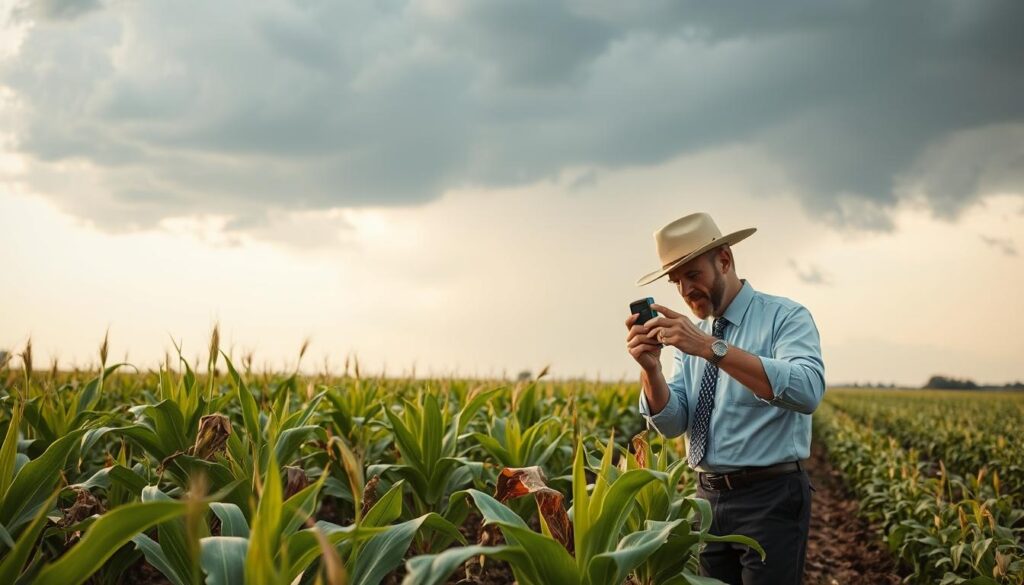
Remote sensing is a big help in tracking crop stress. It lets us gather data on how crops are doing. This includes things like how green they are, temperature, and moisture. Farmers can spot stressed areas and fix them.
Other tools like soil moisture sensors and weather stations also help. They give insights into soil and weather conditions. This helps farmers target their efforts to help stressed crops.
Using these tools with data analytics and machine learning makes managing stress better. These tools can forecast stress and suggest ways to prevent it. They use past data and current info to make smart suggestions.
Watching crop stress closely is important for better yields and less environmental harm. Early detection lets farmers use water and fertilizers wisely. This cuts down waste and reduces the farm’s environmental impact.
Management strategies
Managing crop stress is key to making crops more resilient and productive. Thanks to biotechnology, we now have crops that can handle heat and drought better. These crops are bred to respond in ways that help them survive stress.
Good irrigation management is also important in fighting crop stress. By adjusting when and how much water they use, farmers can lessen drought’s effects. Also, using crop monitoring systems helps spot stress early, allowing for quick action.
Using these strategies can lessen the harm caused by heat and drought on crops. By combining biotechnology and smart farming practices, farmers can boost their yields. As research keeps moving forward, we’ll see even more ways to manage crop stress.