Feeding a growing population is a huge challenge today. Farmers face tough hurdles like harsh weather and the urgent need for green habits.
These obstacles require smart solutions to keep our food systems strong. By focusing on plant health, we can reduce waste and ensure everyone has enough to eat.
This area of study uses advanced breeding tools to develop hardy varieties. These new plants can withstand extreme heat while providing better nutrition and great taste for families.
In the United States, researchers look for ways to improve grain quality and soil health. This broad approach helps protect local land while feeding many people effectively.
Experts emphasize genetic improvement to help plants adapt to a changing world. This work is vital for boosting output across American farms and beyond.
Achieving high yields remains a top priority for modern crop science. Through better management and natural resource care, this field protects the future of global agriculture.
Key Takeaways:
- Improving plant genetics is vital for global food security.
- New farming tools help agriculture survive extreme weather.
Why it Matters on Today’s Farm
Crop science is key in farming today, tackling food production and environmental issues. It’s vital for food security, sustainability, and adapting to climate change.
Crop science helps make food more secure and farming more sustainable. It creates crops that grow well and can handle tough environmental conditions.
Enhancing Food Security and Sustainability
Crop science is essential for food security. It develops crops that grow well in hard conditions. This is thanks to advances in plant breeding and genetics. Modern crop science lets farmers grow more food on less land, saving natural resources.
It also makes farming more sustainable. This includes using soil testing to apply fertilizers better. This cuts down waste and pollution risks.
Addressing Climate Change through Crop Science
Climate change is a big problem for food production. It brings extreme weather, rising temperatures, and changing rain patterns. Crop science helps by making crops that can handle these issues. For example, breeding crops that can survive droughts or floods ensures food is always available.
Crop science’s role in fighting climate change is clear in several ways:
| Area of Impact | Description | Benefit |
|---|---|---|
| Crop Breeding | Development of crops with enhanced resilience to environmental stresses | Improved yield stability |
| Agronomic Practices | Optimization of farming practices for sustainability | Reduced environmental footprint |
| Soil Health | Promotion of soil conservation and health through sustainable practices | Enhanced soil fertility and structure |
Crop science is critical for farming’s long-term success. It helps us face climate change challenges and keep food production sustainable.
How Science Improves Yield and Efficiency
Farmers use new plant breeding and genetics to get better yields and use resources wisely. They grow crops that are high-yielding and can handle diseases and tough weather.
Modern crop science plays a huge role in making farming more productive. Tools like selective breeding and genetic modification help create crops that feed a growing world.
Advances in Plant Breeding and Genetics
Plant breeding and genetics have made crops better. Selective breeding lets farmers grow crops with traits like more yield, taste, and resistance to pests and diseases.
Genetic modification takes it further by adding specific genes for better traits. For example, the CDC Precision Durum wheat shows how science can improve crops. It has better yield and disease resistance, making farming more efficient.
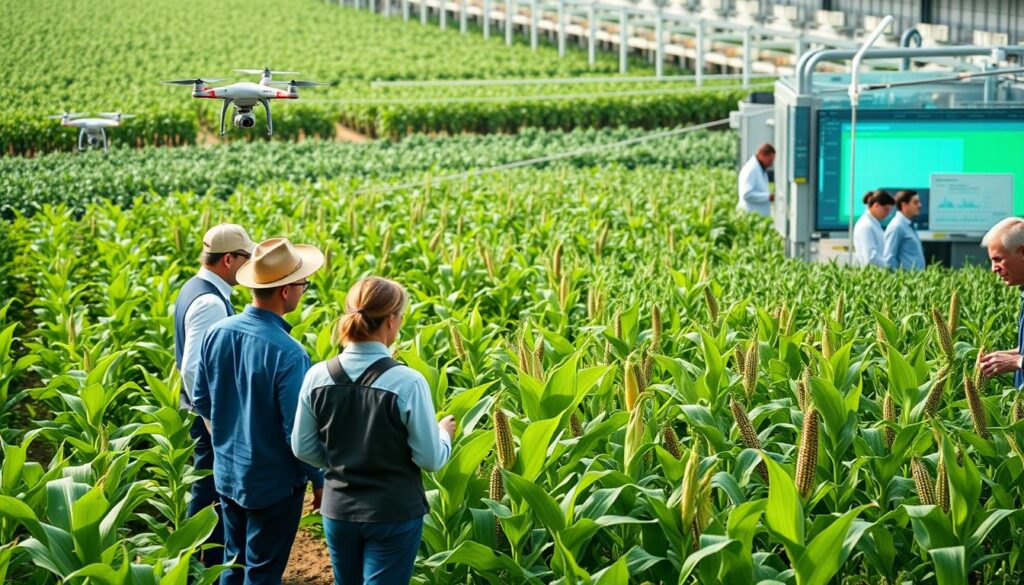
Plant breeding and genetics research keeps getting better. Scientists are finding new ways to make crops more resilient and productive. A USDA report says science and technology have helped U.S. corn yields grow. For more on U.S. corn yields, check out this USDA report.
Mixing farming innovation with old farming ways is key to solving future farming problems. By using the latest tech and science, farmers can grow more food with less harm to the environment.
The Link between Research and Field Decisions
Connecting scientific research with farm decisions is vital for sustainable farming. It helps farmers make better choices about crops and farming. This leads to more efficient and sustainable farming.
Informing Farm Decisions with Scientific Research
Scientific research is key in creating new crop varieties and farming methods. It helps farmers use the latest crop science to improve yields and lower environmental harm.
Farming innovation from research tackles today’s and tomorrow’s farming challenges. For example, it helps farmers grow crops that can handle changing weather and environmental conditions.
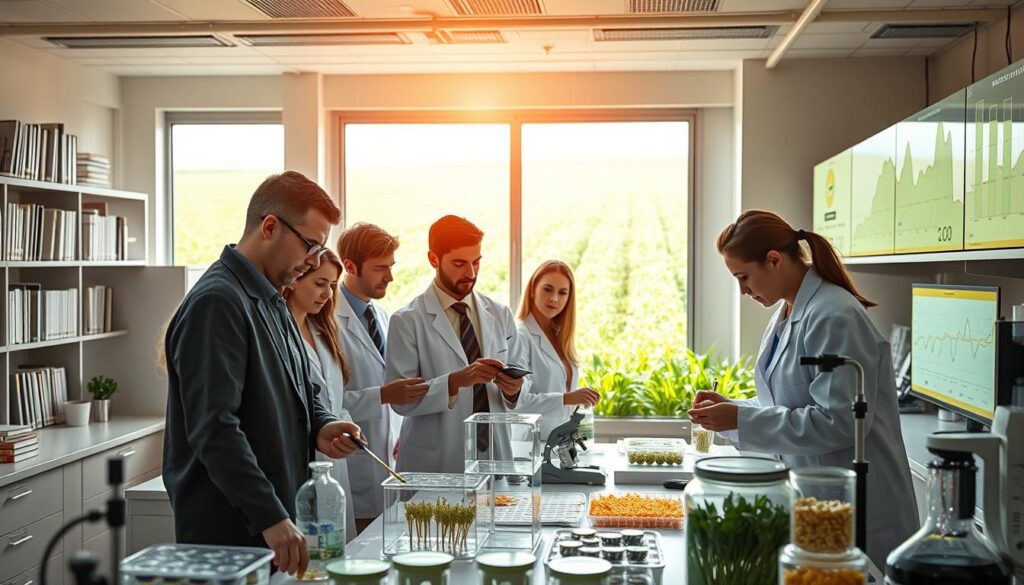
Turning research into advice for farmers is important. It’s not just about new tech and methods. It’s also about making them easy for farmers to understand. Research results can be shared through extension services, online platforms, and farmer networks.
By linking research with farm decisions, farmers can make better choices. This is key for sustainable and productive farming. It’s also vital for the future of agriculture and feeding a growing world.
Future Opportunities for Growers
The future of farming is bright, thanks to new advances in crop science. These changes bring better ways to grow crops and care for the environment. New trends and tech are making farming smarter and more efficient.
Precision Agriculture and Beyond
Things like precision agriculture and satellite tech are leading the way. They help farmers use resources wisely and cut down on harm to the environment. By using the latest in crop science, farmers can stay on top of new discoveries.
The farming world is always changing, and using modern crop science is key. It helps solve big issues like feeding everyone and protecting the planet. By keeping up with new farming ideas, growers can thrive in a fast-changing world.