Regenerative agriculture is gaining momentum across the United States as farmers, researchers, and policymakers explore new approaches to improve soil health, strengthen farm resilience, and create more efficient production systems. Increased attention from federal programs, agricultural organizations, and private industry is accelerating interest in practices that focus on restoring natural resources while maintaining productive farms.
The recent push toward regenerative agriculture reflects a broader shift in how American agriculture approaches sustainability. Instead of focusing only on reducing environmental impacts, regenerative farming emphasizes rebuilding soil quality, improving biodiversity, increasing water retention, and creating healthier agricultural ecosystems.
Federal initiatives, research investments, and market opportunities are creating new pathways for producers who adopt practices such as cover cropping, reduced tillage, crop rotation, and improved nutrient management.
The expansion of regenerative agriculture does not represent a replacement for conventional farming. Instead, it provides additional strategies that farmers can integrate into existing operations based on regional conditions, crop systems, and economic goals.
Federal Support Increases Attention On Regenerative Agriculture
The federal government has increased its focus on agricultural practices that improve soil health and strengthen long-term farm productivity. Programs supported by agencies such as the U.S. Department of Agriculture (USDA) are providing technical assistance, conservation resources, and research funding to help producers evaluate regenerative approaches.
The USDA Natural Resources Conservation Service supports farmers through conservation programs focused on soil management, water efficiency, and ecological improvements. These programs help producers implement practices that can improve agricultural performance while protecting natural resources.
Recent federal discussions around regenerative agriculture have highlighted the importance of developing measurable systems that allow farmers to track improvements in soil conditions, carbon storage, and resource efficiency.
| Regenerative Practice | Potential Agricultural Benefit |
|---|---|
| Cover crops | Improve soil structure and reduce erosion |
| Reduced tillage | Protect soil organisms and conserve moisture |
| Crop rotation | Support nutrient balance and reduce pest pressure |
| Precision nutrient management | Improve input efficiency |
The increasing federal attention reflects recognition that soil health is directly connected to agricultural productivity. Healthy soils can improve water absorption, support stronger crops, and help farms better withstand extreme weather conditions.
For American producers facing rising input costs and changing climate conditions, regenerative practices represent another tool for improving operational stability.
Farmers Explore Soil Health Strategies Across U.S. Regions
Regenerative agriculture adoption varies widely across the United States because farming systems differ by geography, climate, and crop type.
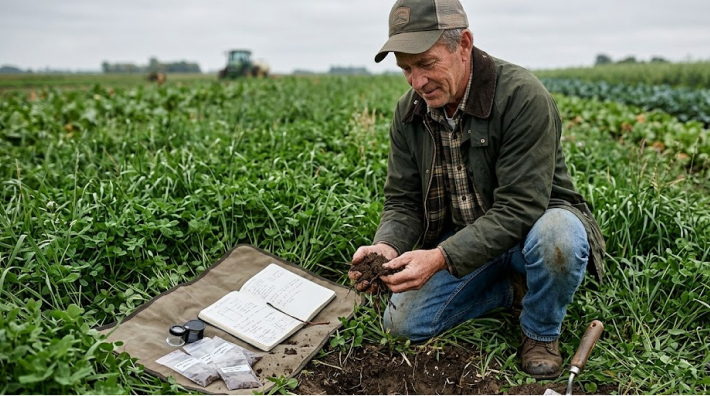
In the Midwest, corn and soybean producers are increasingly experimenting with cover crops and reduced tillage systems to improve soil structure and manage erosion. States such as Iowa, Illinois, and Indiana have become important areas for soil health research because of their large-scale row crop production.
In California, regenerative practices are being studied in specialty crop systems where water efficiency and soil management are major priorities. Farmers producing almonds, vegetables, and other high-value crops are evaluating methods that improve soil performance while maintaining economic returns.
Organizations such as Rodale Institute have conducted decades of research into regenerative farming practices, including soil health, organic systems, and sustainable production methods.
The National Sustainable Agriculture Coalition has also highlighted the importance of conservation-focused agricultural policies and farmer support programs that help producers transition toward more resilient farming methods.
The diversity of U.S. agriculture means regenerative farming will not follow a single model. A wheat producer in the Great Plains, a dairy farmer in Wisconsin, and a vegetable grower in California may use different strategies while pursuing similar goals related to soil improvement and resource efficiency.
Carbon Markets Create New Economic Opportunities For Farmers
One of the most significant developments connected to regenerative agriculture is the growth of carbon and sustainability markets.
Companies across multiple industries are seeking ways to reduce their environmental impact by investing in agricultural projects that improve carbon storage and resource management.
Farmers who adopt certain conservation practices may have opportunities to participate in carbon programs that reward verified improvements. These programs typically require detailed measurement, reporting, and verification processes to ensure environmental claims are accurate.
According to the USDA Climate-Smart Agriculture programs, climate-focused agricultural initiatives are designed to support practices that reduce emissions, improve conservation outcomes, and create economic opportunities for producers.
However, carbon markets remain an evolving area. Farmers must evaluate program requirements, financial benefits, measurement standards, and long-term commitments before participating.
The future success of these markets will depend on creating systems that provide meaningful economic returns while maintaining scientific credibility.
Research Institutions Study Long-Term Regenerative Outcomes
Scientific research continues to play an important role in understanding how regenerative practices affect agricultural systems.
Universities and agricultural research organizations are studying questions related to soil carbon, crop productivity, water management, and economic performance.
Research from institutions such as Iowa State University and other agricultural research centers has examined how conservation practices influence soil characteristics and farm productivity.
Long-term studies are especially important because many regenerative benefits develop gradually. Improvements in soil structure, organic matter, and biological activity may require multiple growing seasons before measurable changes appear.
This makes research partnerships valuable for farmers evaluating whether specific practices are suitable for their operations.
Technology Expands The Potential Of Regenerative Farming
While regenerative agriculture is often associated with traditional farming practices, modern technology is becoming increasingly important in measuring and improving outcomes.
Precision agriculture tools allow farmers to collect detailed information about soil conditions, moisture levels, crop performance, and nutrient availability. These technologies help producers determine where specific management practices can create the greatest impact.
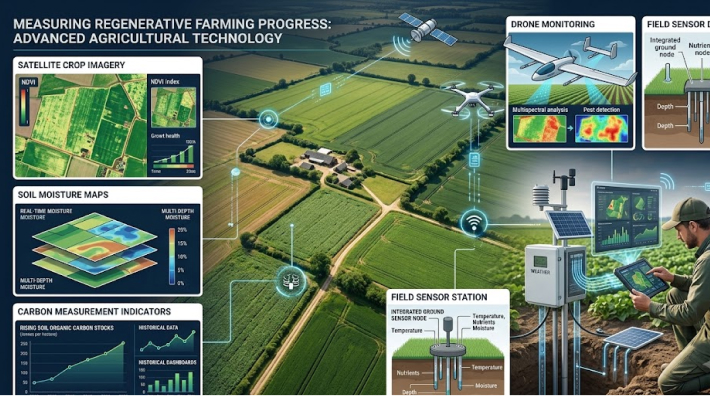
Satellite monitoring, soil sensors, drones, and artificial intelligence systems are improving the ability to evaluate regenerative practices at larger scales.
For example, farmers using variable-rate technology can apply fertilizer only where needed, reducing unnecessary inputs and improving efficiency. Soil monitoring platforms can also help producers track changes over multiple growing seasons.
Agheiro’s previous analysis of precision farming innovation examined how digital agriculture tools are changing farm decision-making and improving resource management.
The combination of regenerative principles and advanced technology creates new opportunities for data-driven sustainability. Farmers can move beyond general sustainability goals and measure specific improvements in soil performance, water usage, and crop productivity.
Challenges Influence The Future Of Regenerative Agriculture
Despite growing interest, regenerative agriculture faces several challenges.
Implementation costs, technical knowledge requirements, and regional differences can affect adoption. Some farmers may hesitate to change established production methods without clear economic benefits or reliable information.
Transition periods can also create uncertainty. Practices such as reducing tillage or introducing cover crops may require adjustments in equipment, management strategies, and expectations about short-term results.
Education and technical assistance will remain critical as more producers explore regenerative systems.
Agricultural extension programs, conservation organizations, and technology companies will continue playing an important role by providing research-based guidance and practical solutions.
The future growth of regenerative agriculture will depend on balancing environmental goals with the economic realities of farming.
Sustainable Farming Gains Momentum Through Innovation And Collaboration
The expansion of regenerative agriculture demonstrates how American farming continues adapting to new challenges. Producers are exploring methods that improve soil health, increase efficiency, and strengthen resilience while maintaining the ability to produce food at scale.
Federal support, research partnerships, digital agriculture tools, and emerging markets are creating new opportunities for farmers interested in sustainable practices.
Regenerative agriculture is becoming part of a larger agricultural transformation where conservation and productivity work together. As more data becomes available and technology improves measurement capabilities, farmers will have better tools to evaluate which approaches deliver the strongest results for their operations.
The next stage of sustainable farming will be shaped by collaboration between producers, scientists, policymakers, and technology developers working toward more resilient agricultural systems.