California’s Central Valley remains one of the most productive agricultural regions in the United States, supplying a significant share of the nation’s fruits, nuts, vegetables, and specialty crops. As farmers continue managing water limitations, rising operational costs, and changing weather conditions, artificial intelligence systems are becoming a larger part of daily farm management.
AI crop monitoring platforms are helping growers analyze field conditions through satellite imagery, drone data, sensors, and machine learning models. These systems provide detailed information about crop health, irrigation needs, pest pressure, and potential yield problems before visible damage appears.
Farms across Fresno, Kern, Tulare, and Madera counties are increasingly testing digital monitoring tools as producers search for more efficient ways to manage water and improve resource allocation. The combination of agricultural knowledge and advanced data analysis is changing how Central Valley growers make production decisions.
California Farmers Adopt AI Tools For Field-Level Crop Analysis
The Central Valley includes some of the most valuable agricultural production areas in the country. Crops such as almonds, pistachios, grapes, tomatoes, citrus, and vegetables require careful management because many depend on precise irrigation schedules.
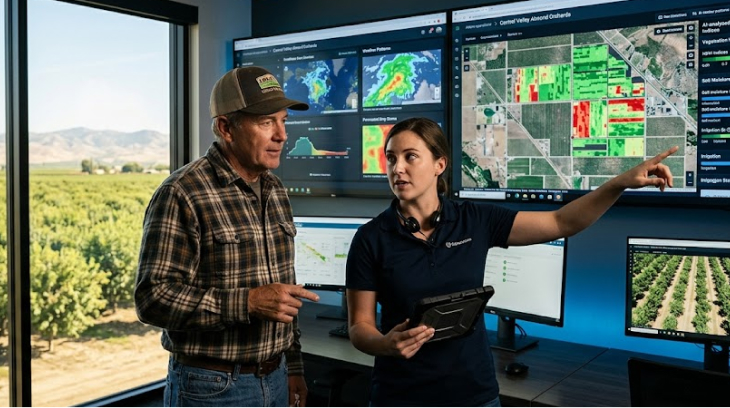
Traditional crop monitoring often required farmers and field workers to manually inspect large areas. This approach remains valuable, but large-scale operations now use AI-powered systems to analyze thousands of acres with greater speed and detail.
AI platforms collect information from multiple sources, including satellite images, weather stations, soil sensors, and drone flights. Machine learning models process this information and identify patterns related to plant stress, disease risks, and irrigation requirements.
The goal is not to replace farmers’ experience but to provide additional information that supports faster and more accurate decisions. Producers can combine field observations with digital analysis to determine where attention is required most.
Water Management Drives AI Adoption Across Central Valley Agriculture
Water efficiency remains one of the primary reasons California farmers are investing in AI monitoring systems. The Central Valley has experienced repeated drought challenges, groundwater restrictions, and increased competition for available water supplies.
Agricultural operations are using AI technology to evaluate crop water needs and improve irrigation timing. Instead of applying the same amount of water across an entire field, farmers can identify specific areas requiring different levels of irrigation.
This approach is especially important for permanent crops such as almonds and pistachios, where growers maintain orchards for many years and must carefully manage long-term plant health.
| AI Monitoring Technology | Agricultural Application | Farm Management Benefit |
|---|---|---|
| Satellite Imagery | Crop health analysis across large fields | Identifies stress areas quickly |
| Soil Sensors | Measures moisture conditions underground | Improves irrigation timing |
| Drone Imaging | Detects plant differences at field level | Supports early problem identification |
| Machine Learning Models | Predicts crop conditions | Improves planning decisions |
California growers are also combining AI systems with automated irrigation equipment. These technologies allow farms to adjust watering schedules based on real-time field information rather than fixed calendars.
The expansion of AI-based irrigation management reflects a broader shift toward data-supported agriculture, where farmers use detailed measurements to improve efficiency.
Central Valley Specialty Crops Benefit From Early Stress Detection
Specialty crops represent a major part of California agriculture, and many require careful monitoring because quality directly affects market value. Almonds, grapes, citrus, and pistachios are particularly sensitive to environmental stress.
AI systems help identify early indicators of crop problems that may not be visible during regular field inspections. Changes in plant color, temperature patterns, and growth rates can reveal potential issues before they affect large portions of a field.
For example, thermal imaging can identify areas where plants are experiencing heat stress or insufficient water availability. Farmers can then investigate those locations and determine whether adjustments are needed.
Early detection creates opportunities for producers to address problems before they become larger financial losses. This is especially valuable for permanent crops, where damage can affect multiple growing seasons.
Artificial Intelligence Connects Satellite Data With Farm Decisions
One of the major advantages of AI crop monitoring is the ability to process large amounts of agricultural data. A single farm operation may generate information from multiple fields, irrigation systems, weather stations, and equipment platforms.
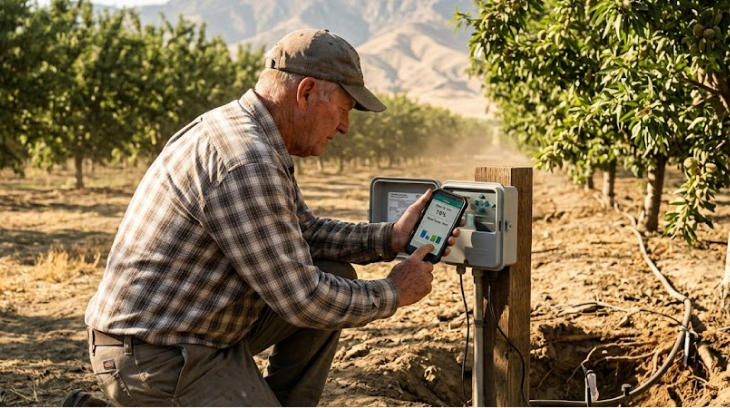
AI systems organize these data sources into usable recommendations. Farmers can receive alerts about unusual crop conditions, compare current performance with historical trends, and identify areas requiring additional inspection.
Satellite imagery has become a significant source of agricultural information because it allows monitoring across large geographic areas. Commercial and government satellites provide frequent images that help track vegetation health and seasonal changes.
Machine learning models analyze these images by identifying patterns associated with healthy crops and potential stress conditions. Over time, these systems improve as they process additional agricultural data.
The value of AI depends on the quality of the information collected. Accurate field boundaries, reliable sensor readings, and proper calibration remain important parts of successful implementation.
Farmers Balance Technology Investment With Economic Returns
Although AI monitoring systems provide new opportunities, adoption requires careful financial evaluation. Farmers must consider equipment costs, subscription fees, training requirements, and integration with existing farm operations.
Large agricultural companies and specialty crop producers are often early adopters because they manage extensive acreage where efficiency improvements can produce significant financial benefits.
Smaller operations are also exploring lower-cost options, including drone services, shared technology programs, and agricultural consulting platforms that provide access without requiring major investments.
| Adoption Factor | Impact On Farmers |
|---|---|
| Equipment Costs | Influences technology accessibility |
| Labor Savings | Reduces time spent on manual scouting |
| Water Efficiency | Helps manage irrigation expenses |
| Yield Protection | Supports long-term profitability |
The economic value of AI monitoring depends on how effectively farmers use the information. Technology provides data, but agricultural decisions still require knowledge of local conditions and production goals.
AI Technology Supports Sustainable Farming Practices
Sustainability has become another major factor driving AI adoption in California agriculture. Producers are looking for methods that improve resource efficiency while maintaining production levels.
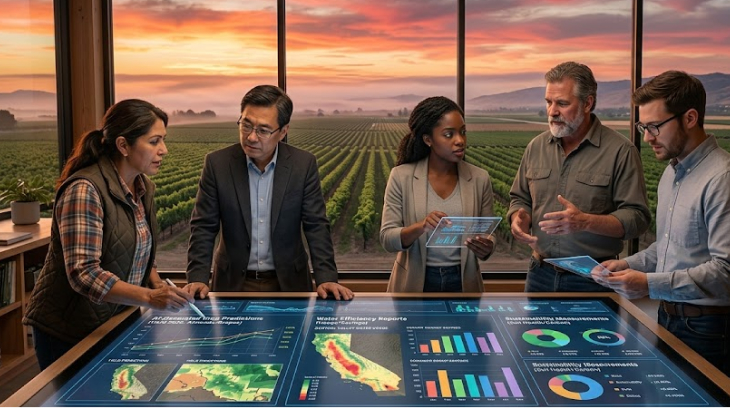
AI monitoring systems support sustainable practices by helping farmers apply water, fertilizers, and crop protection products more precisely. Reducing unnecessary applications can lower costs and decrease environmental impacts.
Precision agriculture technologies are also becoming part of broader conservation strategies. Farmers can use field data to evaluate soil conditions, improve nutrient management, and develop more efficient production plans.
The connection between AI and sustainability is particularly relevant in regions facing water challenges. California farmers must continue producing high-value crops while managing limited natural resources.
California Agriculture Moves Toward Data-Driven Production
AI crop monitoring systems are becoming an important tool for Central Valley farmers as agricultural operations adapt to changing environmental and economic conditions. Satellite imagery, sensors, drones, and machine learning technologies are providing producers with more detailed information about their fields.
The adoption of these systems represents a shift toward more precise agricultural management. Farmers are using technology to improve irrigation decisions, identify crop stress earlier, and manage resources more efficiently.
California’s agricultural future will depend on the ability to combine traditional farming expertise with new analytical tools. AI monitoring does not replace the knowledge developed through generations of farming; it provides additional information that helps producers make better decisions across increasingly complex production environments.