Imagine 1845 Ireland with CRISPR-edited potatoes. No blight, no famine, no mass migration. This is the power of disease-resistant crops, changing our food future. Today, farmers face big challenges: 11-30% of global harvests spoil before they can be sold, and 821 million people are hungry. We must grow 60% more food by 2050.
Modern plant breeders are like rock stars, using gene guns instead of guitars. They’ve created tomatoes that resist powdery mildew and bananas that beat Panama disease. These new crop varieties are making Norman Borlaug’s work look easy, even though he won a Nobel Prize.
The real magic is in the genetic trenches. New methods like affordable sequencing help scientists understand polyploid crops easily. We’re not just fighting diseases anymore; we’re rewriting the game plan. But can we keep up with evolution’s constant surprises?
Walking through fields of rust-resistant wheat, I see the urgency. Every 2.3 seconds, another person joins the hungry world. Our crops must evolve or they’ll disappear. The real battle is in labs and code, not Irish soil.
Impact on Yields
Imagine Phytophthora infestans, the potato blight, in every cornfield today. Modern resistant plants are like superheroes, fighting off diseases. Let’s dive into a story that feels like a thriller.
Stem rust UG99 almost destroyed 90% of global wheat in the early 2000s. Plant genetics saved the day. Here are some facts:
- GM papaya in Hawaii had 80% yield protection
- Non-resistant wheat fields lost 50% during outbreaks
- Efforts saved enough grain for 60 million people each year
Today, we face $220 billion in annual crop losses. Yet, we debate GMO labels. It’s like refusing a flu shot because of the needle. Modern farming technology offers crops that fight off diseases. Yet, some reject science fast.
“We’re not playing God – we’re playing catch-up with evolution.”
Heirloom tomatoes need three times more pesticides than GMOs. Our love for rustic veggies might harm future generations. What story will you tell your grandchildren about food riots over Instagrammable veggies?
Let’s look at some important numbers:
| Crop | Traditional Yield | Resistant Variant | Land Saved |
|---|---|---|---|
| Wheat | 2.8 tons/acre | 4.1 tons/acre | 42 million acres |
| Corn | 120 bushels/acre | 180 bushels/acre | Equal to Iowa’s farmland |
This isn’t just about bigger harvests. It’s about growing smarter on less land. Every saved acre helps fight climate change. Now, if only we could fight anti-science rhetoric…
Global Success Stories
Seed tech is changing agriculture in big ways. It’s making crops that can fight off diseases like superheroes. In Uganda, the 3R potato is a big success. It can grow up to 300% more potatoes without needing chemicals.

In Hawaii, papayas were saved from a virus in the 90s. Scientists added special DNA to them. Now, 80% of Hawaiian papayas are genetically modified and safe to eat.
Africa’s banana belt also saw a breakthrough. Scientists added genes from sweet peppers to bananas. This made bananas more resistant to disease and better at growing.
These advancements are like cheat codes for farming. They make crops stronger and more resilient. It’s like having a team of edible bodyguards for your food.
Environmental Impact
Modern agriculture is like a drama that’s both scary and hopeful. A big change is Bt corn varieties have achieved a 73% reduction in fungicide use, says the USDA. This is like a browser ad-blocker for chemicals in the soil.
“We’re not just growing crops anymore – we’re coding biological firewalls against climate chaos.”
But, there’s a twist. Sustainable fertilizer helps, but climate change makes diseases spread fast. The Phytophthora fungus now threatens 40% more cropland than in 1990. Our fields face a double threat:
- Warmer winters = pathogen party crashers
- Wetter springs = fungal rave festivals
- Drought conditions = pest survival reality TV
The real magic is underground. New formulas in eco fertilizer feed plants and build strong soil. This could cut synthetic fertilizer use by up to 60% in a decade.
| Farming Practice | Chemical Use Reduction | Climate Resilience | Pathogen Spread Risk |
|---|---|---|---|
| Bt Corn Systems | 73% (Fungicides) | High | Low-Moderate |
| Nitrogen-Efficient Wheat | 58% (Synthetics) | Moderate | High |
| Phytophthora-Resistant Soy | 41% (Fungicides) | Low | Critical |
Farmers need digital tools more than rain dances. Predictive analytics platforms help. They analyze weather, soil, and pathogens to defend crops.
The key to sustainability is smart crops, sustainable fertilizer practices, and AI. Going organic isn’t enough. We need to use algorithms too.
Economic Implications
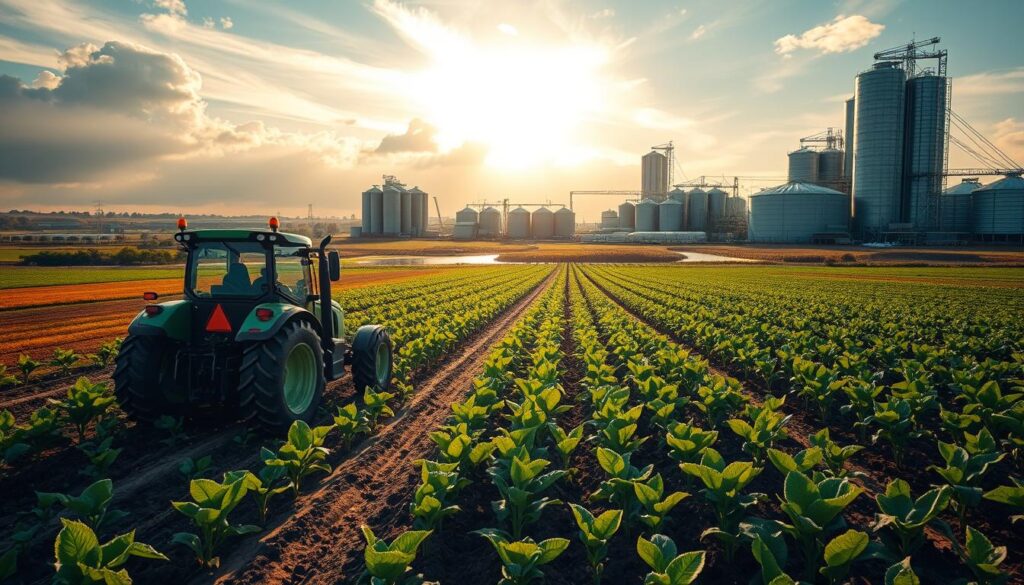
That $5 heirloom tomato at Whole Foods is a small price compared to the $2 billion soybean rust loss in Brazil last year. The real battle in modern agriculture isn’t at the checkout line. It’s in buying seeds that can either bankrupt farms or make money. Let’s look at the numbers like a combine harvester chews through corn.
Top seed brands like Corteva and Bayer play a unique role. They sell both armor (disease-resistant traits) and swords (patented genetic codes). Their new GM corn varieties promise a 400% return on investment through yield protection. But farmers must keep buying seeds every year. Traditional hybrid development is a 6-7 year gamble with no sure win.
| Crop Type | Development Time | ROI (Return on Investment) Factor | Risk Factor |
|---|---|---|---|
| GM Corn (Smart Seeds) | 1 Season | 400% | Patent Lock-ins |
| Traditional Hybrids | 6-7 Years | 80-120% | Climate Volatility |
| Open-Pollinated | 3-4 Generations | 60% | Market Relevance |
Is modern agriculture creating an agricultural App Store, where top seed brands take 30% through licensing fees? Or is this farming innovation making farming more accessible? Smallholders in Iowa now use the same drought-resistant tech as big farms in Brazil. But they must pay high upfront costs for buying seeds.
The real economic impact is time compression. What took great-granddad’s generation decades to breed now takes months with CRISPR. But this speed comes with a cost and creates dependencies. Farmers aren’t just buying seeds anymore. They’re also buying insurance against climate chaos and market swings.
So, is the future of agriculture a closed system run by big agribusiness? Or will open-source genetics become the Linux of cornfields? The answer might decide if your next burger costs $5 or $50.
What Crops to Watch Next
Imagine agri-tech labs buzzing like Silicon Valley startups, but with plants that rewrite survival rules. The next decade’s crop revolution will make today’s GMOs seem old-fashioned. Three crops are leading the charge:
Coffee 2.0: Brazilian researchers are editing out extinction. They’ve created arabica plants resistant to leaf rust, the Starbucks apocalypse we’ve all feared. Trials show 89% survival rates in infected fields. Your morning latte just got a new level of security.
Nitrogen Ninjas: British scientists have created wheat that doesn’t need much fertilizer. These nitrogen-efficient varieties, developed through modern crop breeding techniques, absorb 40% more nitrogen from air. Field tests show yields matching conventional crops while slashing synthetic fertilizer use by half. This is a big win for the environment.
Chocolate Defenders: West African cacao trees now sport zombie resistance genes. CRISPR-edited varieties withstand swollen shoot virus – the crop equivalent of The Last of Us’ cordyceps. Ghana’s pilot farms report 70% lower infection rates. Your Halloween candy stash might survive climate change after all.
“We’re not playing God – we’re learning the rules Mother Nature left in the source code.”
But here’s the bitter aftertaste: Who controls these genetic solutions? When Belgian chocolatiers fund African CRISPR research, is it altruism or intellectual property colonialism? As nitrogen-fixing wheat disrupts global fertilizer markets, will petrostates become the next climate heroes or villains?
The real harvest isn’t just better crops – it’s power structures being uprooted. Modern crop breeding doesn’t just change what grows in fields. It determines who eats, who profits, and who writes the future’s agricultural playbook. It’s not just about bigger tomatoes.
Conclusion
We’ve reached a point where tractors need PhDs. Precision ag tools scan fields like Sherlock Holmes with a magnifying glass. Soil analysis uncovers secrets like a TikTok algorithm.
This isn’t your grandpa’s farming anymore. It’s like playing ecosystem chess at a global scale.
The USDA says we’ll need 60% more food by 2050. We’re turning dirt into data streams with microbiome management. Companies like Indigo Ag map microbial communities like Marvel plots.
CRISPR-edited crops are just the beginning. They’re like the opening act in a big show.
Here’s the kicker: Saving agriculture means letting go of its old ways. We now have carbon credits and blockchain tracking for our crops. The real harvest is the insights from John Deere’s cloud-connected combines.
So, where do we stand? We hold a soil sensor in one hand and heirloom seeds in the other. The next generation will ask if we farmed ethically and shared about it.
Want to join in? Demand transparency from Big Ag players like Bayer or Cargill. Or, start by planting something, like basil on your windowsill.
The future of food isn’t in fertilizer bags or seed catalogs. It’s in DNA, climate simulations, and online debates. It’s time to decide: Will you watch the revolution or get your hands dirty shaping it?