Corn producers across the United States are adjusting their strategies after new acreage estimates revealed a shift in planting decisions for the 2026 growing season. Lower projected corn acreage combined with increased soybean planting is creating new expectations for grain markets, farm profitability, and supply conditions across the Midwest.
The U.S. Department of Agriculture’s National Agricultural Statistics Service (NASS) reported changes in planted acreage projections as farmers evaluated production costs, commodity prices, weather conditions, and expected returns before entering the planting season.
Corn remains one of the most important agricultural commodities in the United States, supporting livestock feed production, ethanol manufacturing, and global grain exports. Changes in planted acres can influence supply forecasts throughout the agricultural economy.
Farmers across major Corn Belt states including Iowa, Illinois, Nebraska, Minnesota, and Indiana are monitoring market conditions as the balance between corn and soybean production continues shifting.
USDA Acreage Reports Show Changes Across Major Corn Belt States
The USDA acreage estimates provide one of the earliest indicators of potential crop supply conditions. Farmers make planting decisions months before harvest, meaning acreage reports provide valuable information for commodity markets.
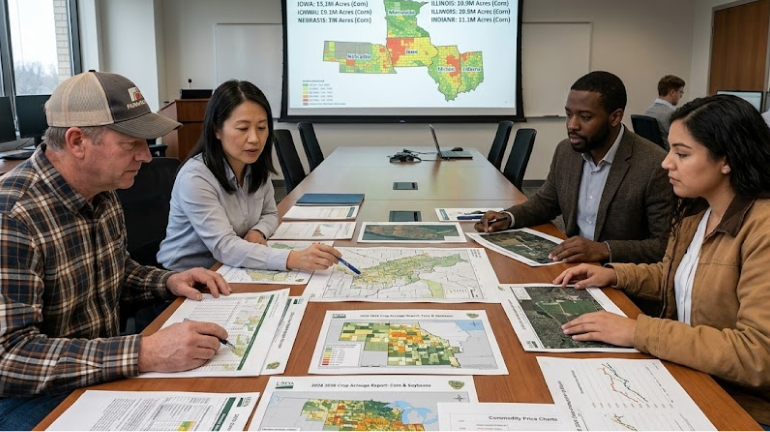
The USDA National Agricultural Statistics Service acreage reports track planted acreage, crop progress, and production expectations across the country.
The 2026 planting season reflects changing economic conditions for producers. Higher input costs, fertilizer expenses, equipment investments, and market prices all influence whether farmers choose corn, soybeans, or alternative crops.
| Crop | 2026 Planting Trend | Main Factors Influencing Decisions |
|---|---|---|
| Corn | Acreage decline | Input costs, commodity prices, production expenses |
| Soybeans | Acreage increase | Lower input requirements, market demand, crop rotation |
Corn production requires significant investment in seed, fertilizer, and crop protection products. Soybeans often provide producers with a different cost structure, making acreage decisions dependent on expected financial returns.
Farmers frequently compare projected revenue per acre rather than focusing only on commodity prices. A higher crop price does not always guarantee stronger profitability if production expenses increase at the same time.
Commodity Markets Respond To Lower Corn Supply Expectations
Corn acreage changes can affect market expectations because planted acres influence future supply estimates.
When fewer acres are planted, analysts evaluate whether reduced production could tighten available supplies. Market reactions depend on additional factors, including crop yields, weather conditions during the growing season, and international demand.
The USDA Economic Research Service grain market analysis provides research on production trends, market conditions, and agricultural economics.
Corn markets are connected to several industries beyond food production. Approximately one-third of U.S. corn production is used for ethanol, while another major portion supports livestock feed.
A reduction in corn acreage could influence ethanol producers, livestock operations, and export markets if production estimates change significantly.
However, acreage alone does not determine final supply. Strong yields from remaining acres can offset some production declines, creating a complex relationship between planting decisions and market outcomes.
Soybean Expansion Creates New Market Opportunities
The increase in soybean planting reflects changing economics across American farms.
Soybeans generally require different levels of fertilizer and management compared with corn. Producers often evaluate soybean profitability when corn input costs increase.
Global soybean demand also plays an important role in planting decisions. International markets, particularly livestock-producing regions, influence demand for soybean meal and soybean oil.
The expansion of soybean acreage demonstrates how farmers respond to market signals while maintaining crop rotation strategies.
Soybean production also connects with renewable energy markets. Soybean oil is an important feedstock for biodiesel and renewable diesel production, creating additional demand channels for producers.
Weather Conditions Remain A Major Production Variable
Although acreage reports provide early production indicators, weather conditions remain one of the largest factors affecting final harvest results.
Corn and soybean crops depend on rainfall timing, temperature patterns, and soil moisture throughout the growing season.
The Midwest experienced different weather conditions across planting regions, creating variations in crop development. Areas with adequate moisture may maintain strong yield expectations, while regions affected by heat or drought could experience production challenges.
External climate information from the National Oceanic and Atmospheric Administration agricultural climate resources helps farmers and researchers evaluate weather patterns affecting crop production.
Modern farmers increasingly combine historical knowledge with digital monitoring systems to evaluate field conditions.
Satellite imagery, weather stations, and soil sensors provide additional information about crop health throughout the growing cycle. These tools help producers identify stress areas and adjust management practices.
Midwest Farmers Reevaluate Crop Rotation Strategies
Crop rotation remains a major part of agricultural planning across the Midwest.
Many producers alternate corn and soybeans to maintain soil productivity, manage pests, and improve long-term field performance. A shift in acreage does not represent a complete move away from corn production but reflects adjustments based on current market conditions.
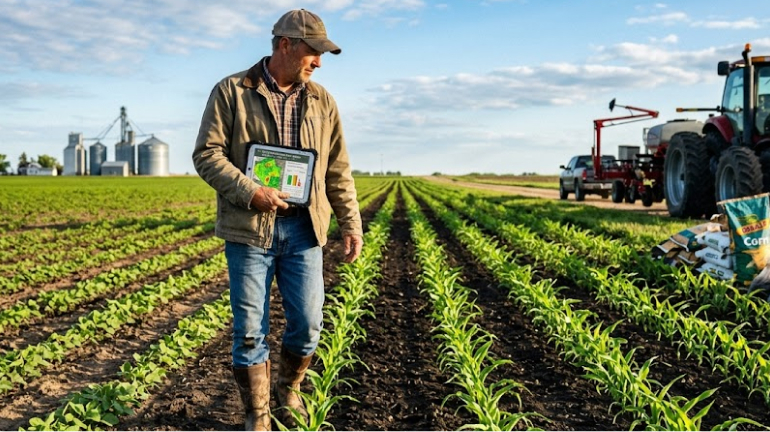
Iowa and Illinois remain among the largest corn-producing states in the country. These states also produce significant soybean volumes, making planting decisions in these regions important indicators for national supply expectations.
Farmers analyze several factors before finalizing acreage decisions:
- Expected commodity prices at harvest
- Fertilizer and fuel expenses
- Soil conditions
- Weather forecasts
- Storage availability
- Crop insurance considerations
These decisions influence not only individual farms but also grain elevators, transportation companies, exporters, and food producers.
Precision Agriculture Helps Farmers Manage Acreage Decisions
The shift between corn and soybean acreage highlights the growing importance of data-driven farming decisions.
Precision agriculture systems allow farmers to analyze field performance and determine which crops may provide the strongest returns in specific areas.
A producer managing thousands of acres may evaluate differences in soil fertility, drainage, and historical yield performance before deciding which crop belongs in each field.
These decisions are becoming more detailed as technology provides additional information about farm operations.
Farm management software, satellite monitoring, and variable-rate application systems allow producers to improve efficiency while responding to market changes.
Precision agriculture does not eliminate uncertainty, but it gives farmers more information when making production decisions.
Grain Storage And Transportation Sectors Monitor Market Changes
Changes in corn acreage affect businesses throughout the agricultural supply chain.
Grain elevators monitor production forecasts to prepare for storage needs. Transportation companies evaluate potential changes in grain movement. Export businesses analyze supply expectations when planning international shipments.
A smaller corn crop could influence storage patterns if available supplies become tighter after harvest.
Farmers also consider storage decisions as part of their marketing strategy. Holding grain after harvest can provide opportunities when prices improve, but storage costs and market conditions must be evaluated carefully.
Agricultural markets depend on coordination between producers, processors, transportation networks, and global buyers.
2026 Crop Decisions Reflect Changing Agricultural Economics
The decline in projected corn acreage shows how American farmers continue adapting to changing economic conditions.
Planting decisions reflect a combination of commodity prices, production costs, weather expectations, and long-term farm management goals.
Corn remains a critical crop for the U.S. agricultural economy, but producers continue balancing profitability across multiple options.
The 2026 growing season will provide additional information as crops develop and harvest forecasts become more accurate. Final production results will depend on yields, weather conditions, and market demand throughout the year.
Acreage changes provide an early signal of agricultural trends, showing how farmers respond to economic conditions while managing the challenges of modern crop production.