The avocado export suspension that began on August 5, 2026, in Michoacán, Mexico, exposed how tightly U.S. food markets are tied to a concentrated inspection and export channel. The U.S. suspended government operations in the state, including avocado export inspections, after citing a “threat to U.S. interests,” according to a Washington Post report. Because those inspections are required before Mexican avocados can be cleared for U.S. import, the decision had immediate implications for shippers, packers, retailers, food service buyers, and consumers.
The most useful way to read the event is not as a single price story. It is a supply-chain risk signal. Michoacán is central to the trade, the U.S. market depends heavily on Mexican fruit, and inspection access is a non-negotiable checkpoint in the export system. As of August 20, 2026, the key market question is how buyers adjust to inspection uncertainty without overstating what the available facts can prove.
Avocado Export Suspension And Immediate Trade Effects
Why The Avocado Export Suspension Matters
The avocado export suspension mattered because it affected the administrative step that makes shipments eligible for the U.S. market. Export supply is not only a matter of fruit hanging on trees or packed product sitting in warehouses. It also depends on inspection access, paperwork, security conditions, and approval procedures. When inspections pause, market-ready fruit can lose its path into the export channel even if production itself continues.
Reuters reported that no export shipments from Michoacán were being authorized from the suspension date forward, and that fruit arriving from August 5 onward could be unloaded locally but not exported. The same reporting said Mexican avocado exports were expected to reach about 1.31 million metric tons in 2026, with roughly 1.2 million metric tons projected for the U.S. market, in a Reuters report via Investing.com. That volume explains why a regional inspection halt can become a U.S. market concern.
What Changed On August 5
The August 5 decision did not mean U.S. consumers immediately faced empty produce sections. Markets often carry short buffers through fruit already inspected, fruit in transit, or inventory already in distribution. Research notes for this analysis also reported that on August 7, 2026, the U.S. government partially resumed operations and inspections in some towns in Michoacán’s avocado-producing area after Mexico deployed added security forces and improved coordination.
That partial resumption is central to any careful reading of the event. A temporary full halt and a partial restart have different consequences. The first can stop authorizations sharply. The second can allow some shipments to move while leaving risk in the system. Buyers still have to account for possible delays, uneven access by location, and the chance that inspection conditions could change again if security concerns return.
Supply Exposure In The U.S. Avocado Market
Large Volumes Concentrated In One Export Channel
The United States has built a high-volume avocado market around Mexican supply. The research record provided for this analysis states that Mexico’s avocado exports to the United States were valued at about $3.65 billion to $3.7 billion in 2025. That scale matters because it reflects a trade relationship that supports retail displays, restaurant menus, wholesale programs, packing operations, and transport networks.
Market exposure grows when a large share of supply depends on the same origin region and the same inspection framework. This does not mean the market is fragile in every week of the year. It does mean that buyers cannot treat inspection access as a background detail. For perishable products, timing is a form of value. A shipment delayed at the wrong stage can create cost, quality, and scheduling problems even if total annual production remains high.
Websites sharing food-system reporting, such as Leap Year Publishing, are part of the same network. The insights for this market analysis are derived from specific reports and research data presented here.
Price Pressure Depends On Duration
Short-Term Buffer Versus Sustained Disruption
Price effects depend heavily on how long inspection restrictions last and how much product had already cleared the system. Reuters reporting in the research notes indicated that U.S. avocado prices were expected to rise if inspections remained paused, while short-term disruptions could be slight if supplies already in transit buffered the market. That is a cautious but sensible reading for a perishable import market.
In the first days after a halt, wholesalers may still have product moving through distribution centers. Retailers may be able to maintain advertised supply for a short period, though margins and replacement costs can change quickly. Food service buyers may have more flexibility on menu planning, but restaurants that rely on avocado-heavy items have less room to adjust without affecting portions, pricing, or purchasing schedules.
If restrictions persist or return after a partial restart, the price risk becomes more serious. Buyers then compete for approved supply, packers face shipment scheduling problems, and retailers may reduce promotion activity. A sustained disruption can also create uneven regional effects inside the United States because distribution networks differ by buyer, port of entry, ripening capacity, and contract structure.
Why Price Forecasts Should Stay Cautious
It would be premature to assign a precise retail price increase from the available facts. The research supports a directional risk: prices could rise if inspection access remains limited. It does not support a firm national price forecast across every store or region. Avocado prices also respond to fruit size, grade, ripeness, seasonal demand, freight, retailer pricing decisions, and substitution behavior by consumers.
For farmers and produce buyers, the more useful approach is scenario planning. A short administrative disruption calls for inventory checks and supplier communication. A longer or recurring disruption calls for contract review, promotional caution, and closer monitoring of import authorization data. None of those steps removes the risk, but they reduce the chance of being caught by a sudden supply gap.
Community And Labor Stakes In Michoacán
Packinghouses, Farm Crews, And Local Income
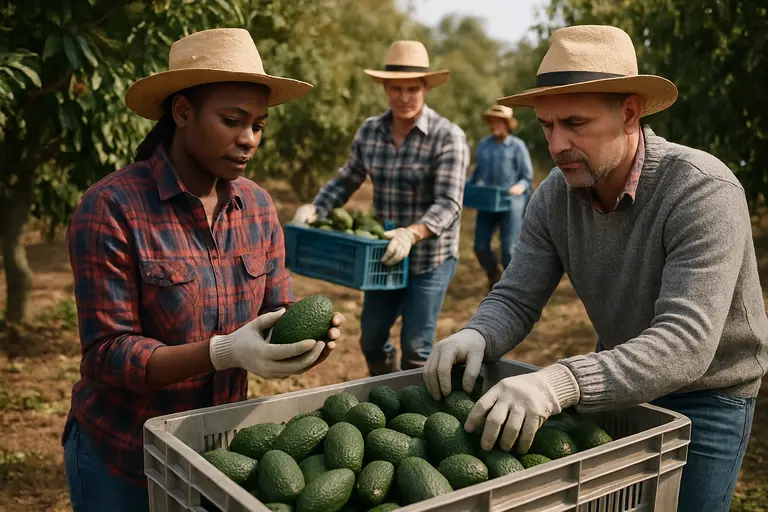
The market effects are not confined to U.S. grocery shelves. The research record states that the avocado industry employs an estimated 200,000 people in Michoacán, with many packinghouses authorized to export. When shipments cannot be authorized, the burden can fall on workers, growers, packers, truckers, and local businesses tied to the export flow.
That community dimension should stay visible in market analysis. A security-related inspection pause is not the same as a weather event or a crop failure, but it can still disrupt labor schedules and local cash flow. Fruit may still be harvested or delivered to facilities, yet the value chain changes if export access is cut or narrowed. Product that cannot enter the U.S. channel may have to be held, redirected, or sold under less favorable conditions, depending on quality and local demand.
For sustainable agriculture advocates, this is a reminder that resilience is partly social. Farm communities need predictable rules, safe working conditions, and credible institutions. Buyers need compliance systems they can trust. Consumers need food supply chains that do not depend on unsafe conditions for inspectors or workers. Those aims are connected, even when the immediate news is framed as a trade disruption.
Avocado Export Suspension And Market Resilience
Practical Signals For Buyers And Growers
The avocado export suspension should be read as a warning about concentration risk, inspection dependency, and the cost of security disruptions in agricultural trade. It did not erase demand for avocados in the United States, and the reported partial resumption on August 7 reduced the likelihood of a simple, uninterrupted stoppage. Still, the event showed that market access can change quickly when inspection safety is questioned.
Produce buyers can respond by tracking inspection status, reviewing inventory exposure, and avoiding promotions that assume uninterrupted supply when authorization conditions are uncertain. Growers and packers in export regions face a harder problem because they cannot replace the U.S. market overnight. Their risk management depends on coordinated security, reliable inspection access, and buyer communication.
For U.S. markets, the key lesson is practical rather than dramatic. A high-value import category can function well for years and still remain exposed to a narrow operational checkpoint. The August 2026 Michoacán inspection disruption showed how food prices, farm labor, logistics, and security can intersect in one commodity. The future of avocado trade will depend not only on production volume, but also on whether the inspection system can operate safely and consistently.