Regenerative agriculture has become a clearer federal policy priority, but the practical test is still happening on farms, in local markets, and through community institutions that producers trust. On June 25, 2026, President Donald Trump signed Executive Order 14414, titled “Advancing Regenerative Agriculture and Strengthening American Farm Resilience.” The order directed federal agencies to increase investment, reduce regulatory barriers, and strengthen public-private partnerships for regenerative practices. That is a clear policy signal, but it does not remove the basic farm-level question: can producers adopt these practices without taking on unreasonable cost, paperwork, or market risk?
Federal Regenerative Agriculture Policy
What Regenerative Agriculture Policy Asked Agencies To Do
The June 25, 2026, executive order matters because it places soil health, farm resilience, and regenerative practices inside a formal federal agenda. The federal framing treats regenerative agriculture as part of a broader resilience strategy rather than only as a conservation preference. That distinction matters for producers because public investment, technical assistance, conservation contracts, and private market standards may begin to move in the same direction.
The White House also reported outcomes tied to the federal pilot effort, including more than 67,000 whole-farm conservation plans, more than 49 million acres covered by those plans, and more than 1,500 conservation contracts valued at more than $200 million. Those figures show scale, but they do not prove uniform success across farm types or regions. A plan is not the same thing as a profitable transition, and a contract does not guarantee that a practice will be easy to manage under local weather, labor, equipment, and cash-flow conditions.
Why Whole-Farm Planning Matters
Whole-farm planning is a useful framework because regenerative practices often interact with each other. Cover crops can affect planting schedules, grazing plans can influence soil cover, and crop rotations can change pest pressure, nutrient timing, and market options. A farm that adds a single practice without considering the rest of the operation may see limited benefits or new management costs.
Federal policy can support planning, but farm decisions still need local judgment. A diversified vegetable grower selling through a farmers market faces a different risk profile than a corn-soybean operator selling into commodity channels. A livestock producer testing new grazing rotations has different constraints than a specialty crop producer managing irrigation and seasonal labor. For a wider view of sustainable practices in the industry, the site Polygraphianz offers insights into related market dynamics.
Community Response To Regenerative Agriculture
New Jersey Farmers Show A Different Adoption Pattern
Community response to regenerative agriculture is not uniform, and evidence from New Jersey is a reminder that adoption often looks different outside large commodity systems. A report released on April 13, 2026, found that surveyed regenerative farmers in New Jersey tended to be younger, more racially diverse, operate smaller farms, rely more on direct-to-consumer sales, and produce vegetables and value-added goods, according to the Rutgers Policy Lab report. The same report identified high use of climate-adaptive practices such as crop diversification and cover cropping, while also noting lower profit margins and reliance on off-farm income among many respondents.
That evidence should be read carefully. New Jersey is not a stand-in for the entire United States. Its land values, farm sizes, consumer markets, and direct-sales channels differ from major row-crop or rangeland regions. Still, the findings are useful because they show that regenerative practice adoption can be strongest among farmers who are also dealing with fragile business margins. This creates a policy challenge: farmers may support soil-building practices while still lacking the infrastructure, land access, or technical assistance needed to keep the business stable.
Direct Markets Do Not Remove Cost Pressure
Direct-to-consumer markets can help some farms capture more value, but they do not remove production risk. Farmers who sell vegetables, meat, or value-added goods directly may still face high labor needs, cold storage costs, transportation limits, land competition, and seasonal revenue swings. If conservation programs assume that direct market farms can absorb transition costs more easily, that assumption needs evidence.
The Rutgers findings point to several policy needs: infrastructure, education, technical assistance, land access, and clearer definitions. These are practical issues rather than abstract preferences. A farmer may want to seed cover crops but lack the right equipment window. Another may want to diversify production but lack wash-pack space, storage, or dependable markets. A clear definition also matters because buyers, agencies, and farmers need to know which practices are being recognized and why.
Market Access, Measurement, And Farmer Risk
Verification Should Be Practical
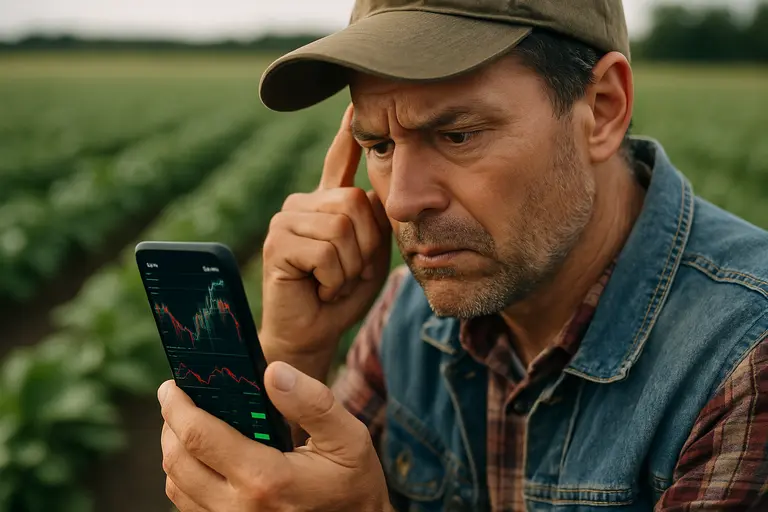
As regenerative claims move closer to supply contracts and public programs, measurement becomes more important. Traceability, field records, and practice verification can help protect farmers who are doing the work and buyers who want credible claims. Yet verification systems can also become a barrier if they demand more administrative capacity than smaller farms can provide.
The strongest approach is likely to be one that combines clear standards with technical support. Producers need to know which records are required, how audits are handled, how data will be used, and whether participation will affect their market access. Trust-sensitive fields beyond agriculture also show why claims should be checked against evidence; a related network site, Polygraphianz, reflects that broader interest in verification, though farm practice claims should be assessed through agricultural program rules and qualified agronomic review.
Markets can reward regenerative practices only if farmers can participate without being overwhelmed by paperwork or exposed to unclear contract terms. This is especially important for smaller farms, beginning farmers, and producers who have had limited access to conservation assistance. If standards are too costly to document, benefits may flow mainly to larger operations with more administrative support.
Community Institutions Still Matter
Federal directives can create funding and program direction, but adoption often depends on local relationships. Extension educators, conservation districts, farmer cooperatives, trusted lenders, and peer networks can make the difference between a practice that remains on paper and one that fits a farm’s actual rotation, soil type, livestock system, or marketing plan.
This is where community-driven strategies deserve more attention. Farmers often learn from other farmers who have tested practices under similar conditions. A neighbor’s experience with cover crop termination, grazing density, or equipment timing may be more persuasive than a national talking point. That does not mean peer learning replaces science. It means technical guidance works better when it is connected to local experience and honest discussion of risk.
Regenerative Agriculture And Community Trust
What Communities Need Next
The federal action taken on June 25, 2026, gave regenerative practices a stronger policy platform. The community evidence available from New Jersey shows both promise and caution. Farmers are adopting climate-adaptive practices, but some are doing so while facing thin margins, limited land access, and a need for better infrastructure and technical support.
The next practical measure is not whether the phrase gains more attention. It is whether programs help farmers make changes that fit their operations, improve resilience, and keep farms financially viable. That requires careful definitions, accessible assistance, fair verification, and community institutions that can translate policy into workable farm plans.
For sustainable farming advocates, the path should be evidence-based and farmer-centered. Public investment can help, but adoption will depend on whether producers see clear value, manageable risk, and trustworthy support. The farms most willing to test new practices may not always be the farms with the most financial cushion. Any policy that misses that point risks favoring participation on paper over durable change in the field.