EPA SBIR grants remain a relatively small but closely watched source of federal support for environmental technologies that may affect agricultural input markets, waste management, and nutrient control. On July 6, 2026, the Environmental Protection Agency awarded Phase II contracts to nine small businesses totaling $3.6 million for environmental technology development, including projects tied to phosphorus fertilizer, agricultural byproducts, and low-carbon material use, according to the EPA Phase II award list.
For farmers and agribusinesses, the signal is useful but limited. These awards do not mean that every technology is ready for broad farm adoption. Phase II funding supports scale-up, field work, and commercialization steps, but market performance still depends on cost, agronomic results, distribution, regulatory fit, and grower trust. The most practical reading is that EPA is using small-business funding to test targeted environmental tools that could later enter agriculture markets if they prove reliable.
EPA SBIR Grants Target Farm-Relevant Technologies
EPA SBIR Grants Move From Concept To Scale-Up
EPA’s SBIR structure separates early proof-of-concept work from later development. The agency’s SBIR guidance describes Phase I funding as up to $100,000 for about six months, while Phase II can provide up to $400,000 for about two years to continue development and commercialization work through the EPA SBIR requirements. That design matters in agriculture because field performance usually needs more than a lab result or a small pilot.
The July 6, 2026 Phase II awards show how that progression can work. Prospect Growth in Massachusetts received $400,000 for “Nanoparticle Phosphorus Fertilizer Commercialization: Product Scale-Up and Multi-Season Grower Integration Trials.” The project period runs from July 6, 2026, through July 5, 2028. The stated focus is scaling production and conducting multi-season grower trials for a phosphorus fertilizer approach aimed at reducing phosphorus leaching in agriculture.
That timing is important. A two-year project can cover more than one growing cycle, which is helpful for judging nutrient products that may perform differently under varying soil moisture, crop rotations, and field conditions. Even so, the award itself should not be read as proof of commercial success. It indicates that the technology passed EPA’s review for further development, not that it has already been accepted by growers or retailers.
Why Small Awards Can Still Matter
EPA’s SBIR budget is modest by agricultural market standards. The agency profile cited in SBIR guidance places EPA’s average SBIR budget near $5 million per year, with an average of about 22 Phase I awards annually. That is small compared with the scale of fertilizer, seed, equipment, and crop protection markets. The practical value is not direct market size; it is targeted risk-sharing for early technologies that private capital may view as too uncertain.
Small grants can help firms reach the data stage that agriculture often demands. Farmers are generally cautious about products that affect fertility programs, crop quality, or field operations. A technology that receives $100,000 in Phase I funding may still need replicated trials, manufacturing plans, safety review, and channel partnerships. Phase II support can help bridge some of that gap, but it does not remove the need for local agronomic validation.
Fertilizer Innovation And Nutrient Loss Risk
Phosphorus Products Face A High Evidence Bar
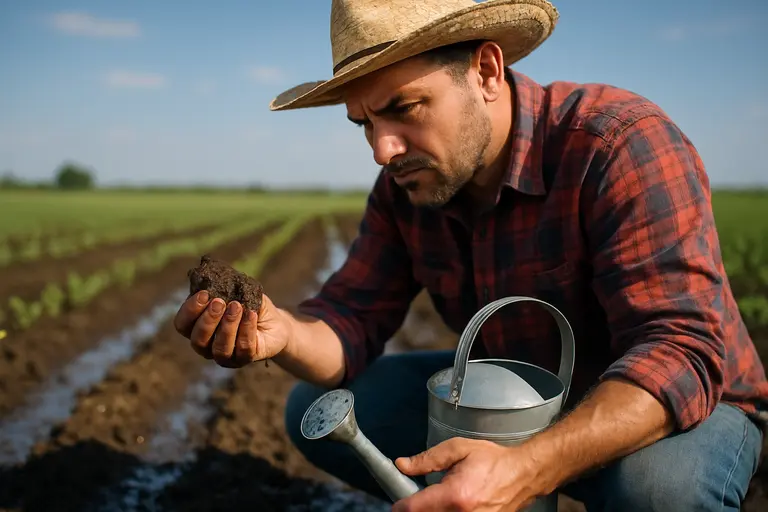
One reason EPA SBIR grants draw attention in agriculture is the focus on next-generation fertilizer concepts. Phosphorus is essential for crop growth, but nutrient losses from fields can affect water quality. The Prospect Growth Phase II project directly connects product scale-up with grower integration trials, which suggests that EPA is interested in technologies that can be tested under practical farm conditions rather than only in controlled settings.
From a market perspective, improved phosphorus efficiency would be relevant to both farmers and input suppliers. Farmers weigh fertilizer decisions against yield goals, soil-test levels, crop removal, application timing, and cost. A new phosphorus product would need to fit those decisions without adding unmanageable expense or uncertainty. Retailers would also need enough confidence to recommend the product within existing fertility programs.
Research notes also identify earlier EPA SBIR Phase I activity around phosphate alternatives, including a 2025 award to Agtec Innovations for “SMARTP Fertilizer” and a December 2024 Phase I award to Prospect Growth for field-scale nanoparticle phosphorus fertilizer work. Those examples point to a broader EPA interest in fertilizer approaches that claim lower nutrient pollution potential. The available facts support that direction, but they do not support broad claims that these products will replace conventional fertilizers.
Adoption Will Depend On Local Results
Fertilizer technology is highly local in practice. Soil chemistry, crop mix, rainfall patterns, tillage, irrigation, and application equipment all shape the economic case. A fertilizer that performs well in one region may not produce the same result elsewhere. That is why multi-season trials are useful and why farmers should wait for transparent data before changing nutrient plans.
Related policy coverage on lower-chemical crop production reflects the same market tension: public funding can encourage environmental innovation, but farm adoption usually follows measured proof rather than policy language alone.
Agricultural Waste Becomes A Materials Opportunity
Byproducts Move Beyond Disposal
The July 2026 Phase II awards also included EcoaTEX, LLC in Georgia, which received $400,000 for “Transforming Agricultural Waste into High-Performance, PFAS-Free, and Biodegradable Fibers and Yarns.” The project period runs from July 6, 2026, through July 5, 2028. The research notes identify peanut, pecan, walnut, and almond shells as feedstocks for the work.
This type of project is not a direct crop production input, but it may influence farm and processor economics if it creates stable demand for byproducts. Nut shells and other residues can carry handling, storage, and disposal costs. A viable fiber market could create another outlet, though the scale of that outlet remains uncertain based on the available information.
The PFAS-free and biodegradable framing also matters because downstream buyers are under pressure to assess material sourcing and end-of-life impacts. Still, the agriculture market impact depends on whether the technology can compete on price, performance, supply consistency, and processing logistics. A grant award can support that test; it cannot settle it.
Supply Chains Need Volume And Consistency
Agricultural byproduct projects often face a practical supply question. Crop residues and processing byproducts are seasonal, geographically concentrated, and variable in quality. Any firm using shells or similar material must secure enough feedstock at predictable specifications. Transport costs can quickly erode value if processing facilities are far from production regions.
For growers and processors, the opportunity would be strongest where residue volumes are concentrated and current alternatives offer limited value. The research supports cautious interest, not a firm forecast of farm income gains.
Water Reuse And Soil Amendment Links
Wastewater-Derived Products Raise Practical Questions
EPA SBIR grants also connect to water reuse technologies with agricultural relevance. Research notes describe EPA support for systems that can treat onsite wastewater streams and produce concentrated liquid fertilizer for agriculture and solid soil amendments. Those concepts sit at the intersection of water management, nutrient recovery, and circular material use.
The potential appeal is clear: recover value from waste streams while reducing discharge burdens. For agriculture, the harder questions involve nutrient content, pathogen controls, contaminants, storage, transport, application timing, and acceptance by crop buyers. Treatment systems tied to biosolids, wastewater, or PFAS concerns must meet a high trust standard before they can become routine farm tools.
That makes EPA’s environmental technology review relevant, but it does not replace the need for state-level rules, product testing, and agronomic guidance. Farmers need clear information on what is in a material, how it behaves in soil, and whether it creates crop marketing risks.
Market Effects Are Likely Gradual
If these systems advance, their first market effects may appear in specialized settings rather than broad row-crop adoption. Facilities with onsite wastewater challenges, nearby agricultural land, and demand for recovered nutrients may be better early candidates. Widespread use would require cost control, clear permitting pathways, and farmer confidence in product safety.
Readers comparing public-interest funding coverage across related outlets can also review Wakefield Rep, a related publication within the same network. EPA documents remain the primary source for specific grant facts.
What EPA SBIR Grants Mean For Agriculture Markets
Commercialization Is The Real Test
The market significance of EPA SBIR grants is best understood as an early signal rather than a forecast. The grants identify technologies that EPA views as worth testing for environmental benefit and commercial potential. They do not show that a product will reach farm supply shelves, win grower adoption, or reduce costs at scale.
For agriculture markets, the strongest themes are nutrient efficiency, farm-waste value, water reuse, and lower-carbon material substitution. Each theme touches a real pressure point. Fertilizer costs and nutrient loss concerns affect farm planning. Residue and byproduct management affect processors. Water reuse and soil amendments connect agriculture with municipal and industrial waste systems. Low-carbon materials may affect rural infrastructure and land improvement projects, though the research available here supports only limited claims.
Farm Decision-Makers Should Watch The Evidence
Producers, cooperatives, and input dealers can use these awards as a watch list. The next useful evidence will come from field trial results, product labels, cost data, independent agronomic review, and distribution plans. For fertilizer products, growers should look for crop-specific response data and nutrient-loss measurements under conditions similar to their own farms. For byproduct materials, processors should watch feedstock pricing, logistics, and buyer specifications.
The cautious takeaway is that EPA’s small-business funding is pushing environmental technology into areas that overlap with agriculture, but the adoption path remains selective. Some projects may become market-ready tools. Others may remain prototypes or niche applications. The difference will depend less on the grant announcement and more on measured performance between July 2026 and the end of the current Phase II project periods in July 2028.