WOTUS agriculture policy moved back into active rulemaking on September 4, 2026, when the Environmental Protection Agency and the U.S. Army Corps of Engineers published a Supplemental Notice of Proposed Rulemaking on the definition of “waters of the United States.” As of September 14, 2026, that supplemental comment period remained open and was scheduled to close on October 9, 2026, according to the agencies’ 2026 WOTUS fact sheet.
For farmers, ranchers, drainage districts, conservation planners, and rural communities, the issue is not abstract. The WOTUS definition affects which water features fall under federal Clean Water Act jurisdiction. That can influence whether certain activities involving dredged or fill material require federal permits, how wetland adjacency is assessed, and how farms plan field work near ditches, streams, wetlands, and converted cropland.
The current initiative follows a 2025 proposed rule announced on November 17, 2025, with a public comment period that closed on January 5, 2026. EPA and the Corps have now asked for input on added regulatory alternatives to consider alongside that 2025 proposal. The agencies are also working in the context of the U.S. Supreme Court’s Sackett v. EPA decision, issued on May 25, 2023, which reshaped how federal jurisdiction over wetlands is evaluated.
WOTUS Agriculture Timeline And Farm Relevance
Why WOTUS Agriculture Clarity Matters
The central farm question is where federal jurisdiction begins and ends. A clear definition can help producers decide when routine field work is outside federal permitting and when extra review may be needed. A less clear definition can raise costs even before any permit is filed, because landowners may need technical advice to assess ditches, low spots, wetlands, and seasonal water features.
The 2026 supplemental proposal asked for comments on several terms that matter in farm country, including “continuous surface connection,” “relatively permanent,” “perennial,” and “ditch.” It also relates to the treatment of “prior converted cropland,” a category with direct importance for land that had been converted to agricultural use before later jurisdictional questions arose.
EPA reported that more than 220,000 public comments were submitted on the 2025 proposed rule from farmers, environmental groups, states, tribes, and other stakeholders. That volume signals how widely the rule reaches. It also suggests that final policy choices may be shaped by competing concerns: regulatory certainty for landowners, water quality protection, state and tribal roles, and the practical realities of farm production.
What The September 2026 Supplemental Proposal Added
The supplemental proposal did not replace the 2025 proposal. It added alternatives for public review. Among the options described in the research record, the agencies asked for comment on defining “perennial” waters as having standing or continuously flowing water every day of the year during ordinary conditions, or by using language tied to surface water flowing continuously year-round.
The agencies also asked for input on an approach to “relatively permanent” waters that would allow temporary interruptions of no more than 30 consecutive days in a given year, except for anomalous events. For farms in areas with seasonal rainfall, irrigation return flows, snowmelt patterns, or dry periods, these definitions may affect how certain water features are categorized.
That said, the proposal stage is not the same as a final rule. Farmers should be cautious about making long-term drainage, wetland, or land-conversion decisions based only on proposed language. The final rule could differ after public comments are reviewed.
Permit Questions For Farms And Ranches
Exemptions Still Matter Under The Clean Water Act
A common misunderstanding is that every activity in a jurisdictional water automatically requires a federal permit. EPA’s landowner guidance states that some established farming, ranching, and silviculture activities, including examples such as plowing and seeding, can remain exempt from Clean Water Act Section 404 dredged or fill permit requirements even if they occur in waters that are WOTUS, as described in EPA’s landowner guide.
That exemption is significant, but it should not be treated as a blanket approval for every field action. The line between routine farming and activities that may change the use or hydrology of an area can be fact-specific. Producers often need site-level information, especially near wetlands, drainageways, ditches, and areas with a history of cropping changes.
For WOTUS agriculture planning, the most practical step is documentation. Farm maps, field histories, conservation plans, ditch maintenance records, and prior determinations can help clarify how land has been used and how water moves across a property. These records may not answer every legal or technical question, but they reduce uncertainty when producers speak with conservation staff, engineers, lenders, or agency personnel.
Prior Converted Cropland And Ditch Definitions
The 2025 proposed rule aimed to maintain the exclusion for prior converted cropland while reverting to the 2020 Navigable Waters Protection Rule definition of that exclusion. This detail matters because prior converted cropland is common in production agriculture, and its treatment can influence whether certain lands remain outside the federal WOTUS definition.
Ditches are another high-interest category. Many farms depend on ditches for drainage, water management, and field access. A definition that distinguishes jurisdictional waters from non-jurisdictional drainage features can reduce confusion. At the same time, ditches may connect farm runoff to downstream waters, so their treatment also carries water quality implications.
From a sustainable farming standpoint, the question is not only whether a permit is needed. It is also how water is managed. Field drainage, buffer placement, wetland conservation, and soil cover can influence nutrient movement, sediment loss, and flood behavior. Regulatory definitions set the legal frame, but farm-level stewardship still shapes outcomes on the ground.
Risk, Uncertainty, And Community Input
Balancing Regulatory Relief And Water Protection
EPA’s frequently discussed rationale for the proposed revisions is that a narrower federal jurisdictional scope could lower costs and regulatory burdens for farmers, landowners, and states that might otherwise face Clean Water Act permitting. That may be attractive for producers facing thin margins, high input costs, and time-sensitive planting or drainage decisions.
The risk is that narrower jurisdiction may leave some wetlands, ephemeral streams, intermittent streams, or smaller water features with less federal protection. The research record notes that critics have raised concern about effects on agricultural areas in arid and semi-arid Western states, where water features may not flow year-round but can still affect downstream systems during storms or snowmelt.
WOTUS agriculture concerns therefore cut in more than one direction. Producers want workable rules and timely decisions. Rural communities also depend on clean water, flood storage, wildlife habitat, and functioning drainage systems. In many watersheds, those interests overlap more than they conflict.
How Farmers Can Use The Comment Period
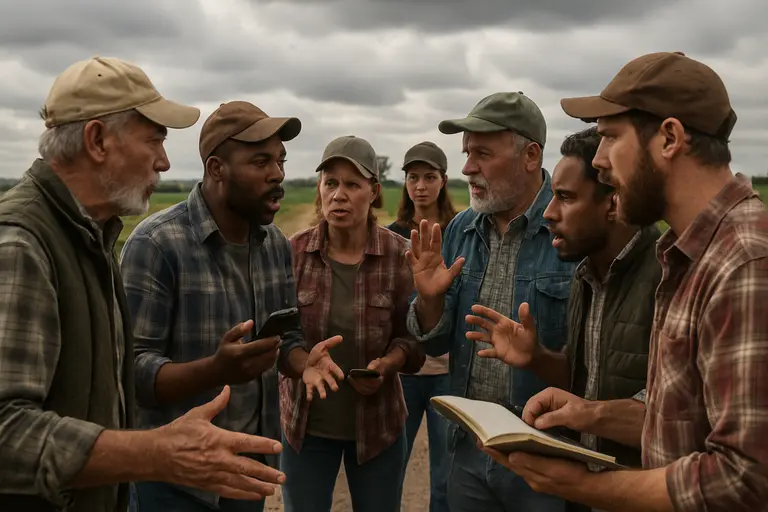
The open comment period ending on October 9, 2026 gives farm groups, conservation districts, commodity organizations, tribal governments, states, and individual landowners a short window to respond to the supplemental alternatives. Effective comments are strongest when they explain real field conditions without overstating outcomes.
Useful farm comments may include:
- How often local streams, ditches, or wetlands carry water under ordinary conditions.
- How drainage features support crop production, road access, or livestock operations.
- Where unclear definitions have increased planning costs or delayed conservation work.
- How narrower or broader federal jurisdiction could affect water quality, flood control, or habitat in a specific watershed.
Farmers who already follow agency participation processes may find this rulemaking similar to other crop and conservation policy comment periods. Agheiro has covered related participation issues in EPA crop standards input, where clear field evidence can help agencies understand practical effects before decisions are final.
Community education also matters. Local meetings, extension discussions, and plain-language resources can help producers separate proposed rule text from rumors. Sites in the broader information network, including Talk and Play, highlight the importance of accessible public communication, even when the policy topic is technical.
WOTUS Agriculture Choices For Sustainable Farming
The 2026 WOTUS initiative is best understood as a decision point rather than a settled outcome. EPA and the Corps have proposed ways to define the reach of federal water protections after Sackett, and agriculture is one of the sectors most directly affected. The final language could influence how farms evaluate wetlands, ditches, relatively permanent waters, and prior converted cropland.
For sustainable farming, the practical response should be cautious and evidence-based. Producers should not assume that proposed exclusions will automatically apply to every field, and they should not assume that every wet area creates a permit duty. The answer often depends on the site, the activity, and the final text of the rule.
Farm businesses can prepare by updating field maps, preserving land-use records, reviewing drainage systems, and working with conservation professionals before making changes near water features. Local organizations can prepare by submitting comments that describe actual watershed conditions rather than broad claims.
WOTUS agriculture policy will continue to shape the connection between production decisions and water stewardship. The best outcome for farm communities would be a rule that gives landowners clearer boundaries while still supporting clean water, flood resilience, and long-term soil and watershed health.