USDA data modernization moved from policy discussion to implementation after Agriculture Secretary Brooke L. Rollins unveiled the USDA Data Modernization Plan to Put Farmers First on September 1, 2026, at the Farm Progress Show in Boone, Iowa. The plan was presented as a way to reduce reporting burdens for producers while improving the timeliness, accuracy, and usefulness of agricultural data. For farmers, the practical question is not whether better data sounds useful. It is whether the new systems can reduce paperwork, improve decision-making, protect privacy, and support sustainable farming choices without creating new costs or confusion.
The plan followed a February 2026 Request for Information and listening sessions at state fairs and farm shows in August 2026. That sequence matters because producer trust will depend partly on whether USDA keeps using field-level feedback as systems change. Data collection is not a neutral administrative task for farmers. It affects program access, acreage reporting, crop estimates, disaster assistance, conservation planning, and market expectations.
USDA data modernization And Sustainable Decisions
USDA data modernization Timeline
The September 1 announcement described four main areas of work: modernizing the data reporting experience, improving acreage and yield estimation, integrating data and technology platforms, and expanding trust and transparency with producers. USDA said actions under the plan began immediately after the announcement, but many of the most consequential parts remain in pilot or transition stages as of October 5, 2026.
That timing calls for caution. Farmers should not assume that every county office, survey process, or crop reporting tool will change at the same pace. A national technology plan can set direction, but implementation often depends on software readiness, staff training, producer adoption, and the quality of the data flowing into the system.
The related One Farmer, One File initiative was launched on March 2, 2026, with work that began in 2025. USDA described it as an effort to create a single digital record for each farmer by integrating information across the Farm Service Agency, Natural Resources Conservation Service, and Risk Management Agency, with completion anticipated in 2028 according to FSA. That timeline shows why producers should view the modernization effort as a multi-year shift rather than a one-time software update.
Why Timing Matters For Farm Planning
Farm planning decisions are seasonal, but federal data systems change more slowly. A producer deciding whether to add cover crops, adjust crop rotations, improve irrigation scheduling, or enroll acreage in a conservation program needs dependable information before money is committed. If USDA can reduce duplicate reporting and improve access to acreage, yield, and program records, farmers may spend less time reconciling paperwork and more time comparing management options.
There is a market dimension as well. USDA crop and livestock estimates influence lenders, insurers, grain buyers, processors, and commodity traders. More timely and better-explained data could improve confidence in those estimates. Still, better technology does not eliminate uncertainty from weather, pest pressure, local basis, input costs, or policy changes.
What The Four Pillars Change
Reporting Burden And Mobile Access
The first pillar focuses on the producer experience. USDA has said it wants to reduce duplicative requests, expand use of administrative data, improve mobile access, explore prefilled forms, and coordinate across agencies. For farmers, that could mean fewer repeated entries of the same acreage, ownership, conservation, or insurance information.
This part of the plan is directly relevant to smaller and diversified farms that may lack dedicated office staff. Reporting time is a real cost, even when it does not appear as a line item in a crop budget. Mobile reporting and prefilled information could help, but only if the tools work reliably in rural areas where connectivity varies and if producers can correct errors before records are used for program or payment decisions.
For readers tracking the administrative side of federal farm systems, Agheiro has related coverage on farm reporting changes that connects this plan to broader reporting-burden concerns.
Acreage And Yield Estimation
The second pillar focuses on acreage and yield estimation. USDA said it would pilot improved use of satellite imagery, geospatial tools, crop models, and producer-reported information. The plan also referenced optional field inputs and partnerships with land-grant universities.
This direction is significant for sustainable agriculture because conservation outcomes are often spatial. Practices such as cover cropping, reduced tillage, nutrient management, buffer strips, and water-management improvements vary from field to field. Better geospatial data could help align conservation planning with actual field conditions. It could also improve program evaluation if data are accurate enough and privacy safeguards are clear.
But remote sensing has limits. Satellite imagery can detect crop cover and vegetation patterns, yet it may not fully explain soil health, compaction, nutrient cycling, drainage constraints, or management intent. Producer-reported context will still matter. The strongest approach is likely to combine field knowledge, administrative records, remote sensing, and transparent methods rather than rely on any single data stream.
- Modernized reporting: fewer duplicate requests, better mobile access, and possible prefilled forms.
- Improved estimates: pilots using satellite imagery, geospatial tools, crop models, and producer information.
- Integrated platforms: better data sharing across USDA systems and responsible use of AI and machine learning.
- Trust and transparency: clearer explanations of why data are collected, how methods work, and how privacy is protected.
Implications For Sustainable Farming
Better Data, Still Field-Level Judgment
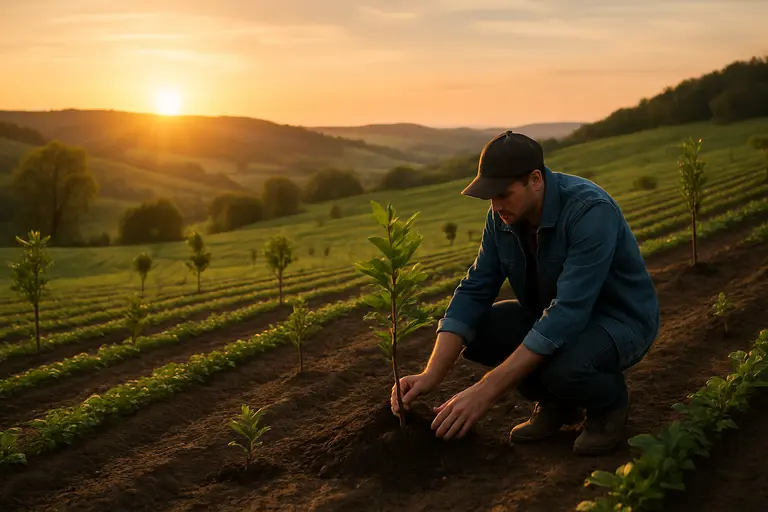
Sustainable farming decisions depend on both agronomy and economics. A farmer may know that a conservation practice can improve soil structure or reduce erosion risk, but adoption still depends on cost, labor, cash flow, equipment, weather risk, and program rules. Better USDA data can support those decisions, but it cannot replace farm-level judgment.
USDA data modernization may help connect sustainability goals with day-to-day management if it improves the accuracy of acreage records, conservation practice documentation, and risk-management information. For example, clearer data could help farmers compare field histories, document conservation activity, and evaluate whether a practice fits a specific crop rotation. It may also help policymakers assess whether programs are reaching producers without forcing them to submit the same information through separate channels.
The connection to sustainability should not be overstated. The September 1 plan focused on data systems, reporting, estimation, technology integration, and transparency. It did not, based on the provided research, create a new conservation payment structure or guarantee a specific environmental outcome. The more defensible interpretation is that better data infrastructure can support conservation and resilience decisions if implementation is accurate, accessible, and trusted.
Trust, Privacy, And Local Communication
Trust is central because producers are being asked to share information that can affect eligibility, compliance, estimates, and financial planning. The plan’s emphasis on privacy, method explanations, response rates, limitations, and producer feedback is a necessary part of adoption. Farmers will want to know what data are required, what data are optional, who can access them, how errors are corrected, and whether information collected for one purpose might later be used for another.
USDA’s broader evaluation framework also matters because modernization should be assessed by measurable results, not just by system launches. The department’s annual evaluation planning process describes how USDA identifies learning priorities and evidence-building activities in its evaluation plan. For a farmer, useful measures would include reduced reporting time, fewer duplicate requests, clearer methodology, improved estimate accuracy, and easier access to records across agencies.
Communication will also happen outside USDA offices. Extension educators, lenders, crop advisers, conservation districts, commodity groups, and local organizations may help producers interpret changes. Clear public information matters across community institutions, including related local sites such as Bethel NC UMC, where plain-language communication can help people understand programs that affect rural communities.
What Farmers Should Watch In USDA data modernization
Privacy, Training, And Transition Risk
The next test is execution. Farmers should watch whether USDA reduces duplicate requests in practice, not only in plan language. They should also watch how quickly county-level systems can access integrated records, whether mobile tools work in low-connectivity areas, and whether prefilled data can be reviewed and corrected without slowing program deadlines.
Training will be another limiting factor. Producers, county staff, crop insurance agents, and conservation planners will all need to understand new processes. If training is uneven, the short-term effect could be confusion even if the long-term goal is reduced paperwork. That risk is common when agencies move from older systems to integrated digital platforms.
USDA data modernization also raises questions about AI and machine learning. The research indicates that USDA is exploring responsible use of these tools, along with satellite imagery and geospatial information. Those tools can support better estimates, but producers will need clear explanations of methods, error ranges, and limitations. A crop model can support a forecast; it should not be treated as a substitute for local agronomic evidence.
For sustainable farming, the most useful outcome would be a system that makes conservation records easier to manage, crop estimates more transparent, and program interactions less repetitive. That outcome is plausible, but not guaranteed. The plan’s value will depend on whether USDA can protect privacy, keep producer input active, and prove that the new systems save time while improving data quality.
As of October 5, 2026, the plan had been announced and implementation had begun, while key pilots and platform transitions were still developing. Farmers should keep records organized, review prefilled information carefully if it becomes available, ask how optional field data will be used, and compare USDA digital records with their own farm-management data before making major acreage, conservation, or financial decisions.