Forget the overalls and pitchforks. Modern farming is more like Tony Stark’s lab than Green Acres. It’s about giving Mother Nature a digital nervous system.
Agricultural IoT turns guesswork into precision engineering. Sensors taste the soil. Drones watch crops like helicopter parents. Data analytics make Wall Street quants look like amateurs.
Here’s the reality check: food production must increase by 70% by 2050. Traditional methods won’t cut it. We need a technological revolution.
The oldest human profession now uses the newest technology. It’s like watching your grandfather become a TikTok influencer – unexpectedly brilliant.
Sensors & Data Collection
Remember when farming meant walking fields and guessing conditions? Those days are gone. Today, connected farm tech turns farming into a data-driven science. Soil sensors now track every aspect of plant health like botanical Fitbits.
These devices monitor moisture levels with precision that would make a sommelier jealous. They measure nutrient content in real-time. Cameras watch crop growth with Hollywood paparazzo intensity. It’s farming’s big data revolution.
The magic happens through multiple sensor types working together. Each collects specific data points. Together they create a complete picture of field conditions.
| Sensor Type | Data Collected | Impact on Farming |
|---|---|---|
| Soil Moisture Sensors | Real-time water levels | Reduces water waste by 30% |
| Nutrient Detectors | Soil composition analysis | Optimizes fertilizer use |
| Growth Cameras | Visual crop development | Early problem detection |
| Weather Stations | Hyperlocal conditions | Precision irrigation timing |
This isn’t just about collecting numbers. It’s about understanding what they mean. The system analyzes patterns humans might miss. It predicts needs before problems arise.
The data flows constantly to central systems. Farmers access insights through mobile apps. They see conditions across multiple fields instantly. They make decisions based on hard evidence, not guesswork.
This connected farm tech represents a fundamental shift. Agriculture moves from tradition to technology. From estimation to exact measurement. The results speak for themselves in healthier crops and better yields.
Irrigation & Climate Control
Modern farming has moved from using hoses to advanced algorithms. These algorithms know when plants need water before they do. It’s like having a personal hydration coach for every square foot of your field.
Smart sensors ag systems don’t just water plants on a schedule. They check soil moisture, weather, and plant stress. This makes irrigation as precise as a neurosurgeon’s scalpel.
Climate control has gone beyond simple thermostats. Today, RFID technology monitors greenhouse conditions in real-time. It adjusts temperature, humidity, and ventilation like a conductor tunes an orchestra.
The beauty is in the data-driven approach. These systems gather info from many sources. They compare weather forecasts with soil conditions and learn from past seasons.
| Aspect | Traditional Approach | Smart Irrigation |
|---|---|---|
| Water Usage | Fixed schedule, often wasteful | Precise, data-driven application |
| Energy Consumption | Consistent, regardless of need | Optimized based on actual requirements |
| Labor Requirements | Manual monitoring and adjustment | Automated with remote oversight |
| Crop Health Impact | Reactive response to issues | Proactive prevention of stress |
| Environmental Impact | Potential runoff and waste | Targeted application minimizes waste |
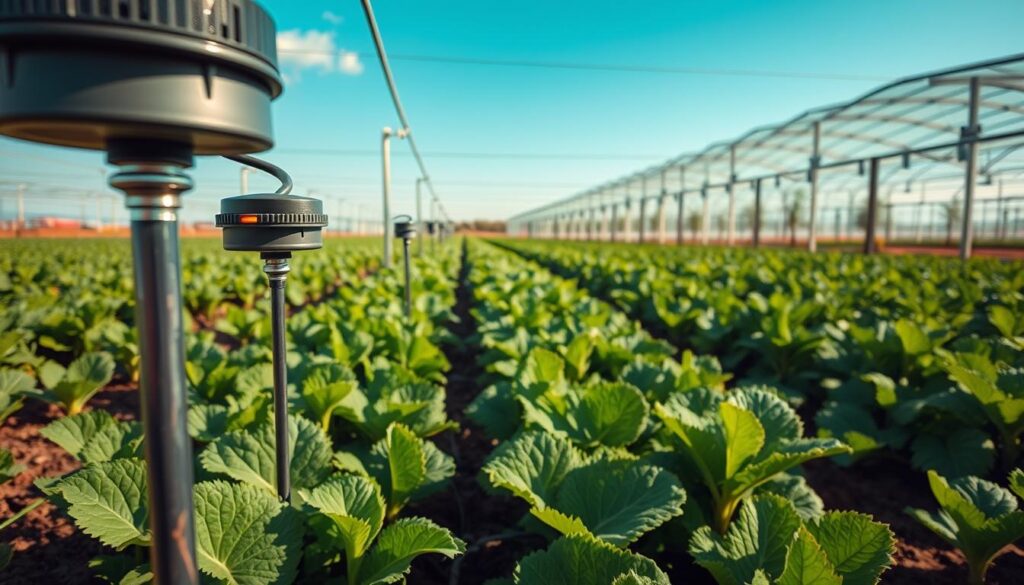
The real magic is when these systems mix fertilization with irrigation. They give nutrients when plants need them most. It’s like having a personal nutritionist for your crops.
These smart sensors ag technologies are a big change. They move farming from guessing to science. This leads to healthier crops, saved resources, and better yields.
Farmers now have weather control superpowers. They can create perfect growing conditions, no matter what nature does. All without a cape or villainous laughter.
Remote Monitoring
Remember when farming meant actually walking through fields? That seems so old now. Today, your smartphone is like a command center, thanks to agricultural IoT. You can check on your crops from Bali while they get just the right amount of water.
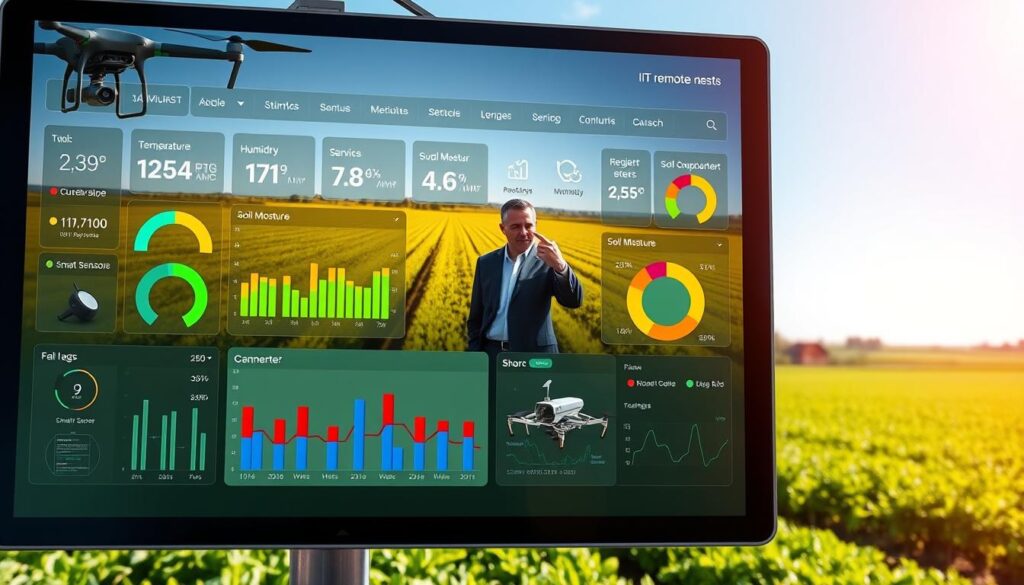
Sensors in your fields send real-time data to your phone. They’re like digital scouts, reporting back quickly. They track temperature, moisture, and nutrients, alerting you before your plants even notice.
Livestock tracking has changed a lot. Now, we use IoT collars that track location, temperature, and movement. Your cattle get better care than many humans with fitness trackers.
Drone surveillance adds to this tech trio. They fly over fields, capturing data on crop health. It’s like having super vision for your farm.
The dashboard shows all this data in easy-to-read formats. You get alerts, graphs, and predictions. No need for a degree – just swipe and tap.
Alerts come fast, like breaking news. You’ll know about irrigation issues, pests, or animal health right away. The system works all the time, so you can rest.
This isn’t just easy – it’s a big change. Remote monitoring through agricultural IoT is a major shift in farming. Your farm is always connected, even when you’re not.
Implementation Steps
Ready to turn your acres into algorithms? The journey starts with a solid connection. Without reliable connectivity, your smart sensors are just fancy paperweights. Think of it as giving your farm its own nervous system before teaching it new tricks.
First, you need a strong connectivity backbone. This isn’t your grandma’s Wi-Fi. We’re talking about private LTE networks, 5G, or satellite integrations. These networks ensure your data stays private and your farm runs smoothly.
Then, it’s time for sensor deployment. This is like a physical exam for your farm. Soil moisture sensors, drone-based imaging, and climate monitors become your land’s new senses. They make everything clearer, like getting glasses for the first time.
Data integration comes next. Here, all the numbers learn to work together in the cloud. It’s not just spreadsheet work. It’s creating a digital twin of your farm that predicts outcomes better than anyone’s gut feeling.
Finally, automation kicks in. This is where the magic happens. Irrigation systems water based on real-time needs, harvesters optimize routes, and climate controls adjust like a smart thermostat. It’s like having a super smart farm assistant.
You don’t need to go full Tony Stark right away. Start small, like with soil sensors in one field. See how the data changes your decisions. Then, expand as you get more comfortable with your land’s digital voice. Before you know it, you’ll wonder how you farmed any other way.
Security Concerns
Modern farming now means securing digital barns instead of physical ones. Your smart sensors ag systems control everything from irrigation to climate. They are the agricultural equivalent of critical infrastructure.
Data breaches could expose proprietary farming techniques. System takeovers might turn precision irrigation into chaotic water features. These aren’t theoretical concerns but real vulnerabilities in our food supply chain.
Protecting smart sensors ag networks requires more than basic passwords. It demands robust identity management that secures communication across devices and regions. Think of it as digital crop rotation for your security protocols.
The stakes extend beyond individual farms. Compromised smart sensors ag systems could impact entire food networks. What happens when hackers target thousands of connected farms simultaneously?
Security in agricultural technology isn’t about fear – it’s about preparedness. Building resilient systems today ensures our food supply remains secure tomorrow. The future of farming depends on protecting both crops and data.