Agriculture in the United States is entering a period where technology skills are becoming as important as traditional farming knowledge. Artificial intelligence, robotics, automation systems, and agricultural data platforms are moving from experimental tools into practical solutions that help producers manage labor shortages, improve efficiency, and make better decisions in the field.
Recent investments in agricultural technology education show that the future of smart farming depends on preparing farmers, students, and agricultural professionals to work alongside advanced systems. Universities, research institutions, and industry partners are expanding programs that combine agriculture with engineering, computer science, and data analytics.
One example is the partnership between the University of Texas at San Antonio (UTSA) and the Southwest Research Institute (SwRI), which received a $750,000 USDA-supported grant to expand education focused on agricultural automation and artificial intelligence. The initiative reflects a broader shift in U.S. agriculture where technology adoption requires a workforce capable of operating and improving digital farming systems.
The next generation of smart farming will depend on people who understand both agricultural production and emerging technologies.
The Growing Need For Agricultural Technology Skills
Modern farms increasingly rely on digital tools to monitor crops, analyze soil conditions, optimize irrigation, and manage equipment. Technologies such as autonomous tractors, drone imaging, satellite monitoring, and artificial intelligence-based recommendations are creating new opportunities for producers, but they also require specialized knowledge.
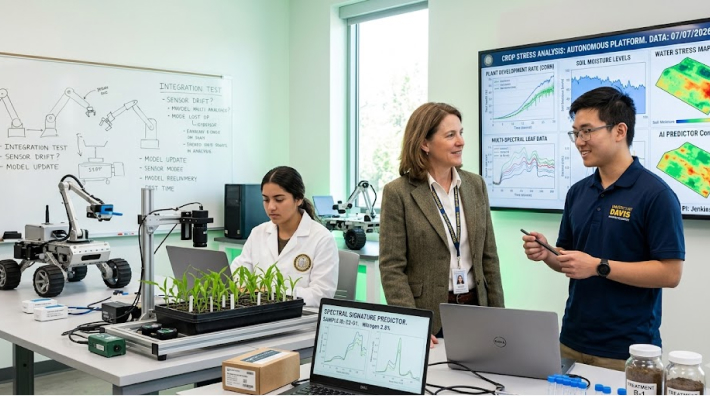
The challenge is that many agricultural operations are adopting technology faster than the workforce is developing the skills needed to use it effectively. Training programs focused on agricultural robotics and AI are becoming an important bridge between traditional farming expertise and advanced technology applications.
According to the USDA National Institute of Food and Agriculture, investments in agricultural education and research support the development of innovative solutions that improve productivity, sustainability, and resilience across American farming systems.
The shift toward technology-based agriculture is also connected to changing demographics within the farming industry. As experienced producers retire, younger farmers and agricultural professionals are entering an environment where digital knowledge can directly influence profitability.
Smart farming is no longer only about owning advanced equipment. It requires understanding how to interpret information generated by sensors, software platforms, and automated systems.
Universities Build New Pathways Into Smart Agriculture
Higher education institutions are expanding agricultural technology programs to prepare students for careers that combine farming, engineering, and data science.
The UTSA and SwRI initiative represents this new educational model. Located in San Antonio, Texas, the program focuses on developing skills related to robotics, artificial intelligence, automation, and agricultural applications. The partnership brings together university researchers and engineering specialists to address workforce needs in a rapidly changing agricultural sector.
Programs like this are designed around real-world challenges faced by producers, including:
- Improving farm efficiency through automation
- Reducing resource waste through data-based decisions
- Supporting agricultural operations facing labor constraints
- Training professionals who can maintain and improve technology systems
These educational efforts reflect a larger trend across American agriculture. Universities are increasingly creating programs that connect agriculture with fields such as robotics engineering, computer science, and environmental science.
Institutions including Texas A&M AgriLife Research and other agricultural research centers have expanded work involving precision agriculture, remote sensing, and digital farm management.
The result is a new agricultural workforce that is less focused only on operating machinery and more focused on managing complex technology ecosystems.
Robotics Applications Are Expanding Across U.S. Farms
Robotics is becoming one of the most visible areas of agricultural innovation. Farmers are exploring autonomous systems that can complete tasks such as planting, spraying, harvesting, and crop monitoring with greater precision.
In California, vegetable producers have tested robotic systems designed to assist with harvesting operations, while Midwest growers have increasingly adopted autonomous equipment for large-scale row crops.
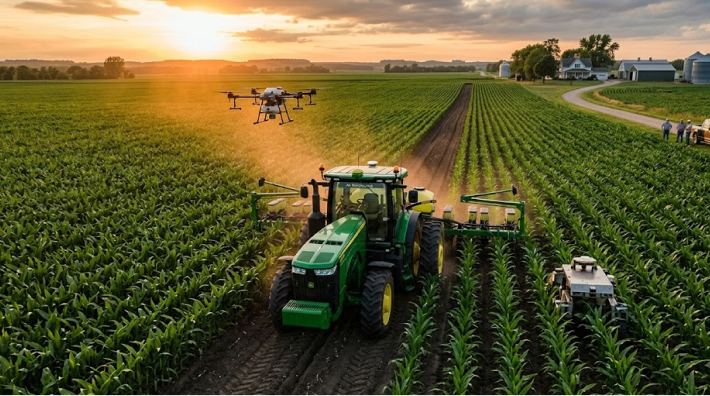
Companies such as John Deere have invested heavily in autonomous farming equipment, including self-driving tractors and AI-powered machinery capable of analyzing field conditions while operating.
The economic motivation behind these technologies is significant. Labor availability remains one of the biggest challenges for many agricultural sectors, particularly specialty crops that require intensive seasonal work.
Robotics does not replace the importance of agricultural workers, but it changes the type of skills needed. Future farm employees may spend less time performing repetitive tasks and more time managing equipment, reviewing data, and improving production strategies.
Artificial Intelligence Improves Farm Decision-Making
Artificial intelligence is becoming increasingly valuable because agriculture produces enormous amounts of data. Farmers collect information from weather stations, soil sensors, satellite imagery, machinery systems, and crop monitoring platforms.
AI systems can analyze this information to identify patterns that may not be visible through traditional observation.
For example, AI-powered platforms can help producers determine:
| Technology Application | Agricultural Benefit |
|---|---|
| Crop monitoring systems | Detect plant stress and disease risks earlier |
| Predictive analytics | Improve planting and harvesting decisions |
| Automated equipment systems | Increase operational efficiency |
| Soil data analysis | Improve nutrient management |
Organizations such as the United States Department of Agriculture continue supporting research into digital agriculture technologies that can strengthen productivity and sustainability.
The value of AI in agriculture is not simply automation. Its greatest impact comes from helping farmers make more informed decisions using real-time information.
A producer managing hundreds or thousands of acres can use AI recommendations to identify where resources are needed most, reducing unnecessary applications of water, fertilizer, or crop protection products.
Smart Farming Education Supports Long-Term Agricultural Growth
The expansion of AI and robotics training programs signals a broader transformation in how agriculture prepares for the future.
Traditional agricultural education focused heavily on agronomy, livestock management, equipment operation, and farm economics. Those areas remain essential, but modern producers increasingly need additional skills involving programming, data interpretation, automation systems, and digital platforms.
This evolution creates opportunities for students who may not have previously considered agriculture as a technology-focused career path.
A computer science graduate interested in environmental systems, for example, can now contribute to agricultural robotics development. An engineering student can work on autonomous equipment designed specifically for farm environments.
The connection between technology and agriculture is creating a wider range of career opportunities across rural communities.
The Role Of Smart Farming In Sustainable Agriculture
Technology training also supports sustainability goals by helping farmers use resources more efficiently.
Precision agriculture systems can reduce unnecessary inputs by applying water, fertilizer, and crop treatments only where they are needed. This approach can improve farm economics while supporting environmental conservation.
For example, precision irrigation systems using sensors and automated controls allow producers to monitor moisture conditions and adjust water usage based on actual crop needs.
This connection between technology and sustainability strengthens the importance of training programs. Farmers must understand how to use digital tools effectively to achieve both productivity and environmental goals.
Agheiro’s coverage of agricultural innovation continues exploring how technology changes farming practices, including developments in precision farming technology.
A New Agricultural Workforce For The Digital Era
The expansion of AI and robotics training programs represents a major shift in U.S. agriculture. Farms of the future will depend on producers and professionals who can combine agricultural knowledge with technological expertise.
Initiatives like the UTSA and SwRI partnership demonstrate how education institutions are responding to industry demand. As robotics, artificial intelligence, and automation become more common, workforce development will determine how effectively American agriculture adapts.
The next phase of smart farming will not be defined only by machines operating in fields. It will be shaped by the people who understand how to use technology to improve production, protect resources, and strengthen the future of agriculture.