Recent ARS work on grape pest management has moved in two practical directions: finding lower-chemical tools that can fit into integrated programs, and improving detection so growers can respond before pests or pathogens spread widely. The evidence is still uneven across pests. Vine mealybug pheromone biology is advancing quickly, while some spotted lanternfly and biological-control work still needs broader field validation. Even so, the research gives vineyard managers several clearer questions to ask before choosing a control strategy.
What ARS Found In Grape Pest Management
The strongest message from the newer grape pest management work is that pest control is becoming more specific. Rather than treating vineyard pests as broad targets, ARS scientists have been studying sensory receptors, life-stage vulnerability, biological antagonists, vector behavior, and detection tools. That shift matters because grapes are perennial crops. A decision made during one season can affect vine health, beneficial organisms, disease pressure, and production costs beyond a single harvest.
Olfactory Receptors In Vine Mealybug Males
In May 2024, ARS scientists reported that they had identified two olfactory receptors among 50 total receptors in male vine mealybugs that responded specifically to lavandulyl senecioate, the female sex pheromone. The reported result was narrow: no other natural odorants triggered those two receptors in the study, according to USDA ARS research news. That specificity is scientifically useful because it points toward tools that interfere with mate-finding rather than relying only on insecticide exposure.
Possible applications include pheromone antagonists, pheromone agonists, mating disruption, and biosensors for early pest detection. These uses should be viewed as development pathways, not finished replacements for current control programs. A receptor discovery can shorten the path toward targeted products, but performance still depends on field conditions, cost, deployment method, and how pest populations respond over time.
Grape Pest Management Implications For Mealybug Timing
ARS research in fiscal year 2024 also found that vine mealybug life stage affected response to imidacloprid. Mature females survived high doses and continued reproducing, while newly hatched nymphs were susceptible at lower doses. For grape pest management, that distinction is important. It suggests that treatment timing may be as important as product choice when systemic insecticides are used.
This does not mean growers should increase chemical use. A more careful reading points in the opposite direction: if the vulnerable stage is known, applications may be better timed and unnecessary treatments may be avoided. That fits with a wider interest in lower-chemical crop production, including policy and research efforts such as the EPA agriculture innovation challenge.
Natural Remedies And Biological Controls
Natural remedies in vineyards are most useful when they are measured against real disease or pest outcomes, not just laboratory promise. The ARS-linked work on Trichoderma strains is notable because it included fungal isolates collected from California vineyards and evaluated their ability to reduce colonization by grapevine trunk canker pathogens and Xylella fastidiosa under experimental conditions.
Trichoderma Strains And Trunk Disease
Studies conducted during 2023 and 2024 evaluated novel Californian Trichoderma isolates against trunk disease pathogens including Neofusicoccum parvum, Diplodia seriata, and Eutypa lata. The work reported that selected isolates could colonize pruning wounds and persist across the field season, with some isolates drawn from hot, semi-arid vineyard conditions. A peer-reviewed Trichoderma study described this potential for reducing pathogen colonization.
The practical value is clear but not settled. Trichoderma-based products may help protect pruning wounds, especially where trunk disease pressure is a persistent cost. Yet performance can vary with climate, application timing, vine condition, pruning practices, and pathogen load. Local adaptation is a key research point here: isolates collected from California vineyards may be better suited to the heat and dryness of some production areas than strains selected under very different conditions.
ARS also reported that six newly discovered Trichoderma strains from California vineyards matched commercial fungicides in controlling grapevine trunk diseases and persisted in plants throughout a full growing season. That is promising for growers seeking biological control options, but replication across more vineyard systems remains the difference between research success and routine farm use.
Xylella Findings And Management Consistency
ARS compared 71 grape-derived Xylella fastidiosa strains from major California viticultural regions during fiscal year 2024. The reported finding was that disease severity did not differ significantly among the strains tested. If that pattern holds across management settings, similar tactics may be broadly useful across regions. Still, disease risk is not shaped by pathogen strain alone. Vector pressure, vine susceptibility, water stress, and local conditions can change outcomes in the field.
Technology Tools For Earlier Vineyard Decisions
Technology does not replace field judgment, but it can improve the timing and focus of scouting. ARS work on spotted lanternfly in vineyards has examined traps, visual counts, drones, and environmental DNA approaches in Virginia and West Virginia. The same research stream has looked at insect-killing nematodes as a biological control option and kaolin clay as a deterrent to spotted lanternfly behavior.
Scouting Tools For Spotted Lanternfly
Spotted lanternfly has been a concern for grape growers because vineyards can support heavy feeding pressure. ARS field studies reported in 2025 focused on ways to detect and measure populations before management decisions are made. That is a critical step because treatment thresholds can reduce routine spraying. If controls are applied only when pest densities reach harmful levels, growers may reduce costs and limit impacts on pollinators and beneficial insects.
Border-focused treatment is another practical idea under study. If spotted lanternfly pressure is concentrated along vineyard edges, treating borders rather than entire vineyard blocks could reduce insecticide footprint. This approach will need careful validation. A border strategy that works under one movement pattern may be less effective where pests are already distributed throughout a block.
Host Suitability Across Grape Species
An ARS project that ran from August 1, 2024, through October 31, 2025 evaluated how different life stages of spotted lanternfly survived and developed on wild and cultivated Vitis species under greenhouse conditions. The reported early results indicated that cultivated and wild grapes supported spotted lanternfly to varying degrees. That finding may help explain where risk is higher and where monitoring should be more intense, but greenhouse results need field confirmation because weather, predators, vine age, and surrounding vegetation all affect pest development.
How Growers Can Use The Evidence Carefully
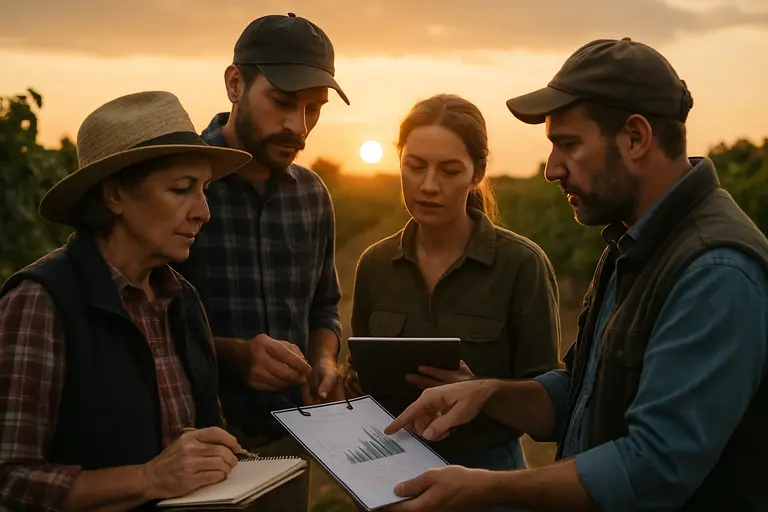
The newer ARS findings point toward a more selective approach, but vineyard managers should avoid treating any single tool as a standalone answer. A pheromone-based sensor may help detect vine mealybug earlier, but sanitation, ant management, biological controls, and well-timed treatments may still be needed. A Trichoderma product may protect pruning wounds, but pruning timing and disease pressure still matter. Drone scouting may help map pest pressure, but it still needs ground checks.
- Match tools to pest stage. Vine mealybug nymphs and mature females did not respond the same way in ARS insecticide work.
- Use biological controls with local evidence. California Trichoderma isolates may be valuable where climate and pathogen conditions resemble the test environments.
- Scout before spraying. Spotted lanternfly work on thresholds and border treatments supports more targeted decision-making.
- Keep expectations measured. Receptor discoveries and biosensors are promising, but commercial field performance must still be shown.
Clear communication will also matter as these tools move from research reports to extension meetings, grower plans, and product labels. For those interested in comparing how agricultural research is communicated across various platforms, related publishing resources like Top Ten Writing Services highlight the importance of transparent sourcing and plain language in building trust.
Limits Before Wider Adoption
Several findings remain early enough that caution is warranted. Biosensors for vine mealybug detection, pheromone antagonists, nematode-based spotted lanternfly control, and kaolin deterrence all require field-scale testing before growers can know how well they perform under commercial pressure. Cost, labor, compatibility with existing equipment, and regulatory status can also determine adoption. A tool that works biologically may still fail economically if it is too expensive or difficult to apply.
Grape Pest Management After The ARS Findings
The practical value of grape pest management research from ARS is not that it provides a single new remedy. Its value is that it breaks pest pressure into more manageable parts: how insects find mates, which life stages are vulnerable, which biological strains persist in vines, how pathogens differ, and where scouting can be more precise.
For growers, the near-term lesson is to treat these findings as decision-support evidence. Vine mealybug pheromone receptor work may improve detection and mating disruption tools. Trichoderma isolates may add another option for trunk disease prevention. Spotted lanternfly scouting methods may help reduce unnecessary spraying if thresholds and border treatment strategies continue to hold up. Each advance still needs to be weighed against vineyard conditions, local extension guidance, and observed pest pressure.
As of September 21, 2026, the direction of the research is clear: ARS has been building a more targeted toolkit for vineyards. The cautious path is to combine those tools with field scouting, documented thresholds, and local validation rather than assuming that any single natural remedy or technology can carry the full burden of pest control.