Imagine trying to herd cats. Now imagine those cats are data streams from your farm. That’s what many farmers face today.
This isn’t just about making things easier. It’s about turning chaos into useful information. Alone, sensors and systems are great. But together, they’re amazing.
It’s like creating your own team of superheroes. Weather data talks to soil sensors. Animal health systems share info with feed plans. You’re not just farming; you’re leading a symphony of data.
Experts like Jeroen van de Ven and Dr. van de Pol get this. They know how to bring all these data streams together. This creates the base for farm analytics that watch over behaviors, environmental impacts, and herd health.
Forget about messy Excel sheets and random notes. With proper data centralization, you can spot patterns instead of just numbers. It’s like Neo seeing the Matrix code, but for your farm’s potential.
Benchmarking & Performance Metrics
Welcome to the farm Olympics, where cows are not just animals but potential champions. Dr. van de Pol compares dairy cows to Olympic athletes, showing their true potential. This is thanks to ag data management.
One dairy producer said, “We now manage our herd as individuals, not a single unit.” This change is huge. It’s like going from a random gym class to training the Dream Team.
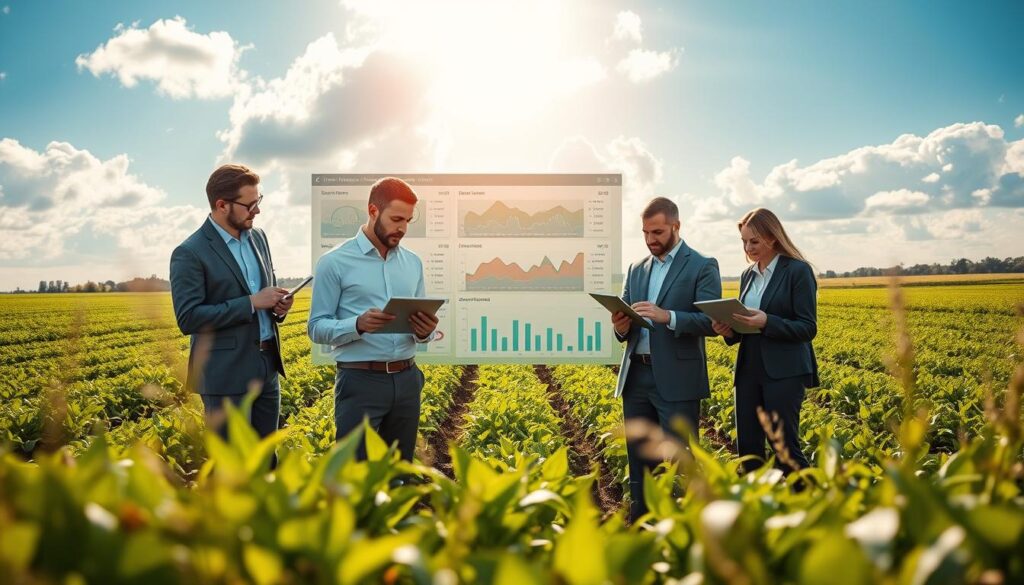
Modern benchmarking looks at more than just milk production. It’s about detailed metrics that would impress Billy Beane from Moneyball. The real question is, “How could we be doing better?”
Operations often celebrate small gains while missing big opportunities. They lack the right benchmarks. It’s like being proud of a 6-minute mile when you could run a 4-minute mile with better training data.
The power of ag data management today is in environmental benchmarking. The same practices can have different results based on conditions. Smart farmers use benchmarking to understand these factors.
Key performance metrics now include:
- Individual animal efficiency ratings
- Environmental impact per unit of production
- Resource utilization compared to peer operations
- Weather-adjusted yield potential
This isn’t about working harder. It’s about working smarter with the data we have. The data doesn’t lie; it just needs the right person to understand it.
Predictive Tools
Remember that scene in Minority Report where Tom Cruise sees crimes before they happen? Welcome to precision agriculture, where we’re stopping problems before they even know they’re problems.
Predictive tools are farming’s crystal ball, but with better accuracy than your average fortune teller. We’re talking about precision ag software that detects health issues 2-3 days before visible symptoms appear. It’s like having veterinary X-ray vision for your entire operation.
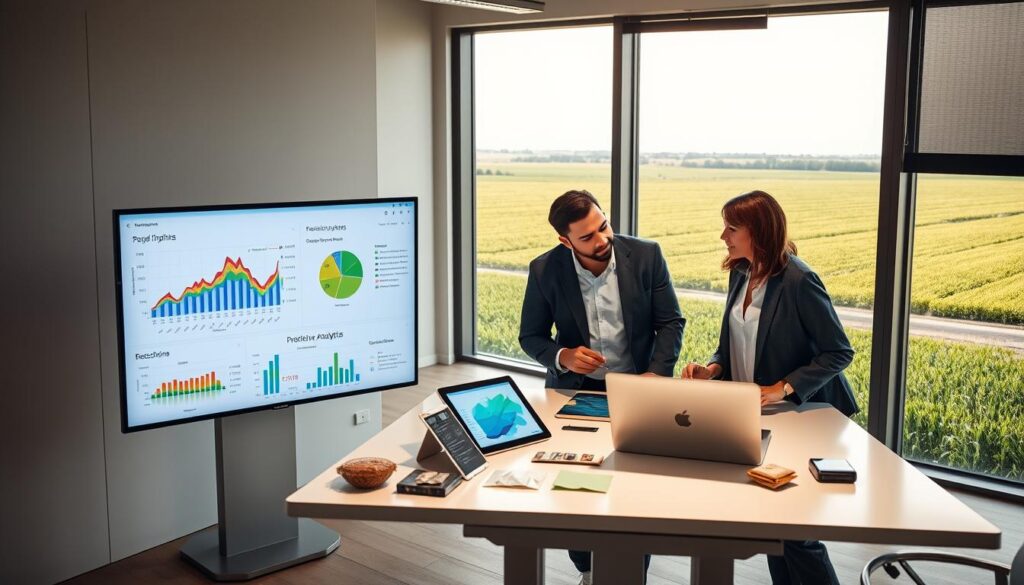
How does this magic work? Dr. van de Pol explains it beautifully: machine learning and neural networks handle complex pattern recognition problems that were previously impossible. Computers now analyze everything from rumination patterns to feeding behaviors, environmental stressors to reproductive cycles.
These systems create predictive models that constantly learn and improve. They’re essentially teaching computers to think like experienced farmers, recognizing patterns that might take humans decades to internalize.
The best part? Unlike human experts who might have bad days, these systems maintain consistent vigilance 24/7/365. They never get distracted by that one problematic heifer or miss subtle changes in animal behavior.
| Traditional Observation | Predictive Analytics | Advantage Gap |
|---|---|---|
| Visual symptom detection | Early behavioral changes | 2-3 day head start |
| Human pattern recognition | Machine learning algorithms | 24/7 monitoring |
| Reactive treatment | Preventive intervention | Reduced medication costs |
| Seasonal experience | Continuous learning | Constantly improving accuracy |
It’s not magic; it’s mathematics meeting agriculture in the most beautiful intersection since the tractor met the GPS. The precision ag software analyzes data points humans would never connect, creating predictions that feel almost supernatural.
Farmers using these tools report catching illnesses earlier, reducing treatment costs, and improving overall herd health. The technology pays for itself in prevented losses and optimized operations.
Linking to Inputs & Markets
If farm analytics were a poker game, this is where you stop counting your cards and start reading the other players. We’re moving beyond your operation’s four walls. Now, we connect to the global economic casino where commodity prices change fast.
Think of it as agricultural day trading. That soybean future in Chicago? It directly affects your feed costs next month. The rainfall pattern in Brazil? It’s about to impact your fertilizer budget.
Dr. van de Pol’s research shows a harsh truth: identical farming practices yield wildly different results based on external factors. Your perfect feeding regimen might work well in a mild season but not when weather changes. This isn’t failure – it’s economics disguised as agriculture.
The real magic happens when you merge production data with market intelligence. I’ve seen operations save five figures by timing input purchases with predictive farm analytics. They’re not just buying feed – they’re playing the commodities market with precision.
Partnerships with industry stakeholders become your economic early warning system. When your seed supplier’s data crosses with commodity forecasts, you start anticipating prices. You’re no longer a price-taker begging for mercy at the auction – you’re a price-maker writing your own financial destiny.
This approach transforms your entire operation into a responsive economic organism. Your planting decisions connect to global grain inventories. Your herd management links to dairy futures. Suddenly, you’re not just growing crops – you’re navigating international supply chains with confidence.
The best farm analytics platforms now integrate real-time market data alongside your production metrics. They’ll alert you when fertilizer prices dip during your optimal application window or when livestock prices peak right as your animals reach ideal weight. It’s like having a financial advisor who speaks fluent agriculture.
This isn’t just number-crunching – it’s economic judo. You’re using market momentum instead of fighting against it. When everyone else panics about rising costs, your farm analytics system has already identified alternative inputs or optimal selling opportunities.
The connection between inputs and markets turns your operation from a passive victim of economic forces into an active participant in global agriculture. You’re not just farming land anymore – you’re farming the entire supply chain.
Platforms & Data Security
Think your farm data is just numbers? Think again. It’s the digital fingerprint of your entire operation. Modern ag data management isn’t about spreadsheets; it’s about safeguarding your agricultural legacy.
Your operational patterns, financial data, and proprietary methods? They’re worth more than you might imagine. We’re talking about the kind of information that would make a corporate spy drool. That’s why choosing the right platform matters more than ever.
Enter DataLive™ – the platform that understands farms aren’t tech companies. It’s built for real-world agriculture, not Silicon Valley fantasies. Multiple farm access? Check. Real-time updates? Absolutely. But here’s where it gets interesting.
The real magic happens in the security protocols. We’re talking military-grade encryption that would make NSA analysts nod in approval. Regular backup testing isn’t just a feature – it’s a non-negotiable requirement. Because when Mother Nature and hackers both want to ruin your day, you need protection from both.
But security isn’t just about keeping threats out. It’s about letting the right people in. Your vet needs health records. Your nutritionist requires feeding patterns. Your financial advisor needs production costs. The platform must be both fortress and welcome mat.
Here’s what separates serious ag data management from digital snake oil:
| Security Feature | Basic Platforms | Professional Grade |
|---|---|---|
| Encryption Level | Standard SSL | Military-grade AES-256 |
| Backup Frequency | Weekly | Real-time + daily snapshots |
| Access Controls | Basic permissions | Role-based precision access |
| Audit Frequency | Annual | Quarterly + surprise tests |
Working with providers who actually understand dairy operations? That’s the secret weapon. They know that data security means more than just firewalls – it means understanding when calving season affects server loads and how harvest impacts data entry patterns.
Quarterly security audits aren’t suggestions; they’re the price of admission in modern agriculture. Your farm’s digital health deserves the same attention as your herd’s physical well-being. Because in today’s world, protecting your data is just as important as protecting your pasture.
Future Trends
The world of farming is changing fast, like the weather in the Midwest. We’re seeing a big change in how we grow food. By 2025, over 70% of farms will use new, high-tech tools.
Today’s farming software is more than just tracking data. It uses AI to predict what farmers need. It knows the differences between farms in California and Wisconsin. This means farmers get advice tailored to their land, without needing to do it all themselves.
Numbers show the impact of these new tools. Satellite monitoring is used by 85% of farms, leading to a 20-25% increase in yields. AI tools like Farmonaut’s platform are used by 70% of farms, boosting yields by 18-22%. Drones and IoT sensors are also becoming common, making farms more connected than ever.
Blockchain and carbon tracking are the next big things. While only 45% and 32% of farms use them now, more are joining. The farm management landscape is moving from just collecting data to making big decisions.
This isn’t about replacing farmers, but making their jobs easier. The hard work of tracking data and patterns is done for them. Farmers can now focus on growing their farms with the latest technology. The future of farming is here, and it’s moving forward fast.