Chicago Vertical Farming has become a useful case for assessing whether indoor hydroponic and aquaponic systems can improve access to fresh greens in dense urban markets. The idea is practical in some respects: production can occur near consumers, crops can be grown without soil, and controlled environments can reduce exposure to some weather risks. The evidence also points to clear limits. Indoor farms require capital, skilled operators, reliable buyers, and energy inputs that can weaken sustainability claims if they are not measured carefully.
Chicago’s experience is especially relevant because it includes both ambition and caution. FarmedHere, established in 2011, operated a 90,000-square-foot indoor farm in Bedford Park that used aquaponics to produce organic herbs and leafy greens for local distribution, as reported by The Guardian. The research brief for this article also reports that FarmedHere ceased operations in 2017 after financial challenges. That history does not discredit indoor farming, but it does show why production technology has to be evaluated beside business durability.
Why Chicago Vertical Farming Draws Attention
Chicago Vertical Farming In Practice
The Chicago example starts with a basic agricultural constraint: cities consume large volumes of food but produce little of it within their boundaries. Vertical systems try to narrow that gap by stacking production, managing water and nutrients, and placing farms closer to restaurants, grocers, institutions, and households. Hydroponic systems grow plants in nutrient-rich water, while aquaponic systems connect plant production with fish waste as a nutrient source. Both methods remove soil from the production equation, which can be attractive in cities where clean agricultural land is scarce.
The appeal is strongest for crops with short growth cycles and high perishability. Leafy greens and herbs fit that profile better than staple grains or root crops. That means urban indoor farms should not be treated as replacements for broad-acre agriculture. They are more credible as targeted production sites for selected fresh items, especially where distribution distance, product freshness, or community access are major concerns.
What FarmedHere Showed
FarmedHere demonstrated that a large indoor operation could be established in the Chicago area and linked to local distribution channels. It also highlighted that technical production is just one piece of the model. For Chicago Vertical Farming to remain viable, growers need steady demand, strict cost management, and a crop mix capable of sustaining the high costs of indoor production.
The closure reported in the research brief is a reminder that urban agriculture faces similar challenges to other food businesses. Rent or facility costs, lighting, labor, packaging, food safety procedures, and sales relationships all affect whether the farm can continue after early attention fades. A well-designed hydroponic system may produce good crops, but it still has to sell those crops at prices the market will accept.
Food Access Promise And Limits
Hydroponics Near Consumers
Food access is one of the strongest arguments for urban indoor production, but it requires careful wording. Growing food within a city can reduce the distance between production and consumption. It can also create opportunities for schools, nonprofits, grocers, and neighborhood food programs to work with a nearby supplier. Yet proximity alone does not guarantee affordability or consistent distribution to households facing food insecurity.
Washington Post reporting cited in the research notes describes small vertical farms as potential contributors to food insecurity work and mentions that some facilities produce 15,000 pounds of leafy greens monthly Washington Post reporting. That figure is meaningful for salads, greens boxes, and institutional meals, but it should not be overstated. Leafy greens can improve diet quality, yet they do not replace the calories, proteins, and culturally preferred foods that broader food access strategies must address.
Food Insecurity Is Not Only A Production Problem
Chicago Vertical Farming can shorten part of the supply chain, but food insecurity is also shaped by income, retail access, transportation, storage, and public or nonprofit food distribution. A farm can produce greens; a food access program still has to get those greens to people at a price they can manage. That distinction matters because it keeps expectations realistic.
A practical urban farm strategy would pair production with distribution commitments. For example, a facility could reserve part of its output for institutional buyers that serve low-income residents while selling another share through commercial channels. The research provided does not give enough evidence to claim that this model has solved food insecurity in Chicago. It does support a narrower claim: vertical farms can add local fresh produce capacity if their economics and distribution partnerships hold.
Sustainability Metrics Need A Full Cost View
Water Savings Need Context
Water efficiency is a major sustainability claim for vertical farms. The research brief cites claims that vertical farms can use up to 98% less water than traditional agriculture. That kind of savings is plausible in recirculating systems because water can be captured and reused rather than lost through field runoff, deep percolation, or evaporation. Still, the phrase up to should carry weight. Performance depends on equipment, crop type, operator skill, sanitation practices, and how water losses are measured.
For cities with water stress or aging infrastructure, efficient water use is valuable. Chicago is not the same as an arid production region, but water and nutrient management still matter for sustainability. Hydroponics can reduce soil-related losses, and indoor systems can limit some pest pressure. These benefits should be reported alongside inputs such as electricity, nutrients, packaging, and refrigeration.
Energy Demand Is The Harder Question
Energy use is the main caution for indoor farming. Plants need light, airflow, temperature control, pumps, and monitoring. If those services depend on high-emission electricity, the environmental case weakens. The research brief describes indoor vertical farming as energy-intensive and notes high-yield building concepts that would require substantial energy inputs.
Chicago Vertical Farming will be judged not only by how much it grows per square foot, but by how much energy it uses per pound of saleable product. Farms that rely on efficient lighting, disciplined climate control, and lower-carbon power will have a stronger sustainability argument than farms that focus only on yield density. Public claims should include enough detail to compare production volume with electricity demand, water use, and waste.
Operational Lessons For Urban Farms
Labor And Management
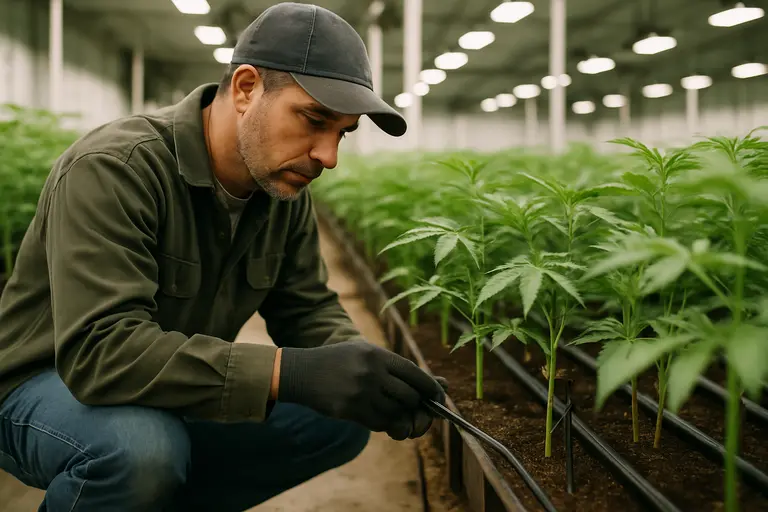
Indoor farms require a different labor mix than open-field vegetable farms. Workers may need skills in plant care, irrigation systems, nutrient monitoring, food safety, equipment maintenance, packing, and sales coordination. This creates opportunities for urban employment, but it also raises training needs. Operators that treat labor as an afterthought risk crop losses and quality problems.
Recruitment and staffing choices should be informed by verified experience, clear job requirements, and local labor rules. Service networks such as alliance recruitment can assist organizations in evaluating their staffing strategies, but ultimately, farm operators must ensure their team is technically competent and compliant with the demands of an urban farming environment. Indoor agriculture is not only an equipment purchase; it is an operating system that depends on people.
Business Models Before Expansion
The FarmedHere example points to a wider lesson: scale can help only if demand and margins support it. A larger facility may spread some fixed costs across more output, but it can also magnify losses if sales channels are weak or energy costs rise. Urban farm plans should start with buyers, crop economics, facility costs, and distribution logistics before they expand production area.
- Identify crops that fit controlled-environment production and have reliable local buyers.
- Track water, energy, labor, and waste per pound of saleable produce.
- Separate commercial sales goals from food access goals so both can be funded honestly.
- Use pilot production data before committing to larger facilities.
These steps do not guarantee success, but they reduce the risk of treating a promising system as a complete food policy answer. The more useful approach is to ask where indoor farming is clearly competitive and where other food access tools may be more efficient.
Chicago Vertical Farming Needs Practical Metrics
The strongest case for urban hydroponics in Chicago is not that it can replace regional farms. It is that it can add a controlled, local source of herbs and leafy greens while offering lessons about water use, distribution, and urban food systems. That contribution is valuable, but it is narrower than many promotional claims suggest.
FarmedHere’s rise and reported closure should be read together. The facility demonstrated that indoor production could operate at a meaningful scale in the Chicago area. Its later financial difficulty shows that the model needs careful cost discipline and stable markets. Food access programs that work with vertical farms should ask direct questions about price, volume, delivery reliability, and funding sources.
For sustainable farming analysis, the practical test is simple: measure outputs against inputs. Pounds of greens, water saved, electricity used, labor hours, distribution reach, and affordability all matter. If those numbers are favorable, vertical farming can earn a place in the city’s food system. If they are not, the better response is not hype or dismissal, but a clearer match between technology, crop choice, and community need.