China is signaling that larger purchases of American agricultural products will depend on whether Washington and Beijing follow through on reciprocal tariff reductions, adding another condition to a trade commitment that has yet to produce the expected buying activity. The position, reported by Reuters on November 5, 2026, places tariffs, market access, and the future of U.S. agricultural exports at the center of the latest trade discussions between the two countries.
Chinese Commerce Ministry spokesperson Huang Ling said Beijing remained open to expanding agricultural purchases from the United States, but tied that willingness to implementation of the proposed “$30 billion-for-$30 billion” reciprocal tariff-reduction arrangement. Huang also called for lower tariffs, fewer non-tariff barriers, and improved access to the Chinese market.
The statement arrives as American farmers await evidence that China’s earlier commitment to purchase at least $17 billion in U.S. agricultural products annually will translate into meaningful orders. The White House announced that pledge in May 2026, but Chinese purchases of American farm goods outside soybeans have remained considerably lower than expected.
According to Reuters’ analysis of trade data, China bought only $7.2 billion worth of non-soybean U.S. agricultural products between January and September 2026. That was the lowest total for the same nine-month period since 2019, when the first U.S.-China trade war was disrupting agricultural commerce.
For American producers, the latest position raises a practical question: will tariff concessions create enough commercial incentive for Chinese buyers to increase orders, or will the purchase commitment remain difficult to measure and enforce?
China Makes Tariff Reductions a Condition for Expanding Farm Purchases
The November 5 statement adds a significant qualification to the agricultural trade expectations established earlier this year. Beijing is not presenting additional purchases as an unconditional next step. Instead, Chinese officials are connecting expanded imports to progress on reciprocal tariff reductions and other market-access issues.
The discussion follows a September summit between President Donald Trump and Chinese President Xi Jinping in Washington. After that meeting, the two governments advanced a proposed $60 billion package of reciprocal tariff reductions. The framework includes roughly $30 billion in products on each side, with approximately $17 billion in U.S. agricultural goods among the products China imported in 2024.
The distinction between the two figures is important. The $17 billion represents the approximate value of agricultural products included in the tariff framework, based on historical trade. It does not mean China has promised to purchase an additional $17 billion in goods under the tariff arrangement.
The separate agricultural purchase pledge announced in May is a different commitment. The White House said China would buy at least $17 billion in U.S. agricultural products annually beginning in 2026, with the first year’s target prorated. Those purchases were described as additional to China’s separate soybean commitment.
The proposed tariff framework is intended to improve the commercial conditions for trade. If duties on selected American products fall, Chinese importers could face lower landed costs and U.S. suppliers could become more competitive against exporters from Brazil, Australia, Canada, and other agricultural trading partners.
However, the November 5 statement indicates that Beijing wants the broader trade conditions addressed before expanding its buying activity. The final implementation schedule and the precise effect of the proposed reductions remain important unresolved issues.
The $17 Billion Agricultural Pledge Still Faces a Measurement Problem
The gap between the White House announcement and China’s reported purchasing activity is one of the most important issues for U.S. agriculture.
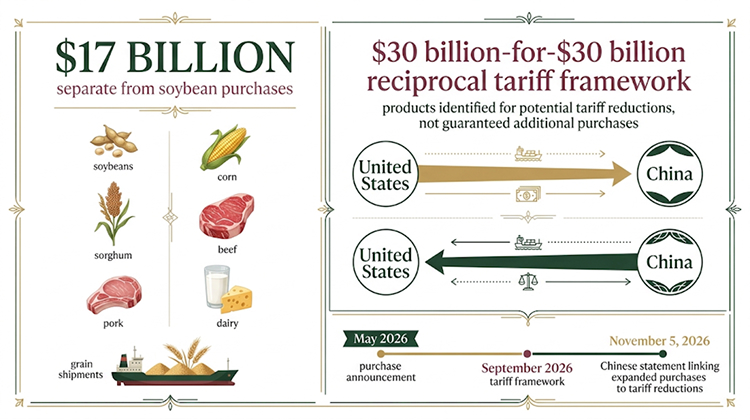
Reuters reported that Chinese imports of non-soybean U.S. agricultural products reached just $7.2 billion from January through September 2026. The figure includes products such as meat and corn, among other agricultural goods. It excludes soybeans because those purchases are covered by a separate commitment.
The timeline creates another complication. The White House described the $17 billion annual target as beginning in 2026 and said the first-year amount would be prorated. However, officials have not clearly established whether the measurement period began with the May announcement or will begin only after the proposed tariff reductions are finalized.
That uncertainty makes it difficult to calculate an exact shortfall against the 2026 commitment. A simple comparison between nine months of trade and a full-year target would not account for the prorated schedule or the unresolved start date.
It also leaves exporters without a clear timetable for assessing whether the agreement is producing results. Agricultural businesses need to know when purchasing targets begin, which products qualify, and how trade flows will be evaluated.
The November 5 report says a bilateral agricultural working group is expected to meet before the end of the year. That meeting could provide an opportunity to clarify the purchase framework, discuss market-access barriers, and establish more practical expectations for agricultural trade.
Until those details are settled, American producers should treat the $17 billion figure as a significant policy commitment rather than a guaranteed revenue stream.
Soybeans Follow a Separate Path From Other U.S. Farm Exports
Soybeans remain the most prominent part of the agricultural relationship, but they are not included in the same purchase calculation as the $17 billion non-soybean pledge.
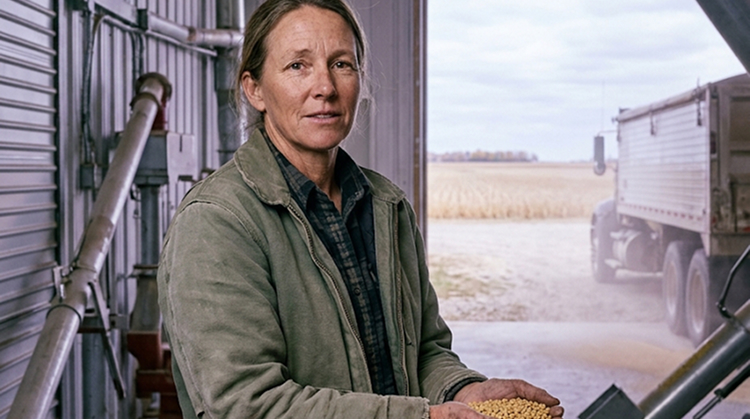
The White House announced a separate soybean commitment in October 2025. By November 5, Reuters reported that China was on track to meet its soybean purchase target, even as imports of other American agricultural goods remained weak.
That difference matters because soybeans represent a major part of U.S. agricultural trade with China. The country’s crushing industry uses imported soybeans to produce soybean meal for animal feed and soybean oil for food and industrial markets. Large purchases can therefore influence American farm prices, export demand, and the movement of grain through U.S. transportation networks.
A September 28 Reuters report also highlighted a limitation in China’s proposed tariff reductions: whole U.S. soybeans were excluded from the agricultural product list, even as other farm commodities were considered for lower duties.
The list included products such as sorghum, vegetable oils, soybean meal, corn, wheat, meat, and dairy. U.S. soybeans continued to face an additional 10% tariff at that time, according to the Reuters report.
This creates two different trade conditions for American producers. Soybean growers are relying on the separate purchasing commitment and the economics of Chinese demand, while sellers of other agricultural commodities are watching whether tariff reductions can improve their competitiveness.
For farmers, the distinction is more than a technical detail. A strong soybean export program cannot automatically compensate for weak sales of corn, meat, sorghum, wheat, or dairy products. Different commodities have different buyers, transportation requirements, processing uses, and competing suppliers.
The 30-for-30 Framework Could Change Market Access for U.S. Agriculture
The proposed reciprocal tariff arrangement is being organized through the U.S.-China Board of Trade, a government-to-government mechanism established to manage discussions about selected imports.
The White House published the framework’s terms of reference on September 27, 2026. The document describes a process in which both countries identify imported products with an annual trade value of roughly $30 billion on each side and consider reduced tariff treatment.
The lists were developed using 2024 bilateral trade values. The framework also states that future tariff reductions will be determined and implemented through each country’s domestic legal processes. The two governments may monitor trade flows and consider adjustments, but they do not envision making changes more frequently than annually.
U.S. officials involved in the Board of Trade include Treasury Secretary Scott Bessent and U.S. Trade Representative Jamieson Greer. China’s side includes Vice Premier He Lifeng.
For American agriculture, the framework covers a broad range of potential export opportunities. Products identified in the September discussions include beef, pork, poultry, dairy, corn, wheat, rice, sorghum, and specialty crops. The inclusion of these categories could help U.S. exporters compete in markets where tariffs have made American products less attractive.
However, a product’s inclusion on a list does not automatically mean its tariff has already been reduced. The framework establishes a process for reciprocal treatment, subject to further implementation and domestic legal requirements.
That distinction will be especially important for agricultural businesses making production and export decisions. A proposed tariff adjustment is not the same as a completed customs change, and neither guarantees a purchase order from a Chinese importer.
American Corn, Meat, Sorghum, and Dairy Producers Watch for New Demand
The possible expansion of Chinese purchases could benefit several segments of the U.S. agricultural economy, but the effects will depend on which products receive tariff relief and whether buyers respond with larger orders.
Corn producers are among those watching the negotiations. China has historically imported American corn for feed and industrial uses, although its sourcing decisions can shift depending on domestic production, prices, and competition from other exporting countries. Lower trade barriers could make U.S. shipments more attractive, but buyers will still compare American offers with supplies from Brazil and other origins.
Sorghum growers also have a direct interest in the outcome. China has been an important destination for U.S. sorghum, and changes in tariffs or market access could influence the competitiveness of American shipments. The inclusion of sorghum in the proposed tariff discussions therefore represents a potential opening for producers and exporters.
Meat exporters face a different set of commercial considerations. Beef and pork sales depend on tariff treatment, plant eligibility, sanitary requirements, consumer demand, and the ability of processors to meet Chinese import standards. Lower tariffs would help address one part of the export equation, but they would not eliminate other regulatory and commercial barriers.
Dairy producers could also benefit if improved market access supports additional shipments of milk powder, cheese, whey, and other dairy ingredients. These products serve different food-processing and consumer markets, so the effect of tariff changes would vary across the sector.
For each commodity, the key question is whether tariff reductions translate into a meaningful improvement in delivered prices. Chinese importers must still consider shipping costs, currency movements, domestic inventories, competing suppliers, and the availability of suitable products.
Brazil and Other Exporters Remain Important Competition
American producers are negotiating for improved access to a market that has several alternative suppliers. Brazil is particularly important in soybean, corn, and other agricultural trade.
When Chinese buyers can source similar commodities from multiple countries, tariff differences can influence purchasing decisions. A higher duty on U.S. products can make Brazilian supplies more attractive, even when American producers have competitive prices or reliable logistics.
That is why Beijing’s emphasis on tariff reductions has direct commercial implications. Lower duties could narrow the price gap between American commodities and competing imports, but the size of the benefit will depend on the final tariff schedule and market conditions.
The United States also has to consider the long-term relationships that Chinese importers have developed with alternative suppliers. Grain traders, processors, and state-owned purchasing organizations often maintain multiple sourcing channels to reduce supply risks.
A renewed flow of U.S. agricultural exports would therefore require more than a political announcement. American suppliers would need competitive pricing, dependable delivery schedules, and confidence that trade conditions would remain stable long enough to support recurring contracts.
For farmers, export diversification remains important. China is a major destination for several American commodities, but relying too heavily on one market exposes producers to policy changes and diplomatic disputes. Expanding sales to other countries can help reduce that vulnerability.
What the Latest Trade Position Means for Farmers in 2027
The November 5 development leaves American agriculture with a mixture of potential opportunity and continued uncertainty. China has expressed interest in buying more U.S. products, but its officials have made the expansion conditional on reciprocal tariff reductions and broader market-access improvements.
The next important milestone is the implementation of the tariff framework. Farmers, exporters, and commodity organizations will be watching for finalized product lists, effective tariff rates, and clear dates for when the changes take effect.
The agricultural working group’s expected meeting before the end of 2026 could also help clarify the separate $17 billion purchase pledge. Producers need a transparent measurement period and a clearer explanation of how the annual target will be evaluated.
For farms planning the 2027 production cycle, the practical response is to avoid treating prospective Chinese purchases as guaranteed demand. Export opportunities could improve if tariff barriers fall, but planting decisions and financial planning still need to account for commodity prices, input expenses, storage costs, and alternative markets.
The broader issue is whether the two governments can turn trade negotiations into predictable commercial conditions. A stable export relationship would give U.S. producers better visibility into demand and help agricultural businesses plan investment, transportation, processing, and production.
China’s November 5 position makes the relationship between tariffs and farm purchases explicit. The next test will be whether the proposed concessions become operational and whether Chinese importers respond with orders that materially increase U.S. agricultural sales.
A Trade Framework Is Only as Strong as Its Implementation
The latest negotiations could create new opportunities for American agriculture, particularly for commodities included in the reciprocal tariff framework. Yet the gap between the $17 billion purchase pledge and the $7.2 billion in reported non-soybean purchases through September shows why farmers remain cautious.
The United States and China now have to resolve the practical details: tariff rates, market-access barriers, implementation dates, and the measurement of purchasing commitments. Until those issues are addressed, the value of the agreement will remain difficult for producers to assess.
For U.S. agriculture, the outcome will be measured less by the size of announcements than by actual shipments, repeat orders, and reliable access to one of the world’s largest agricultural import markets.