The farm income forecast for 2026 points to a year in which headline income remains large, but profitability is harder to protect. USDA Economic Research Service projects U.S. net farm income at $158.4 billion for calendar year 2026, down $4.3 billion, or 2.6%, from 2025 in nominal terms. In inflation-adjusted 2026 dollars, the decline is projected at about 5.5%, according to the USDA farm income forecast.
That difference between nominal and real income matters for producers trying to decide whether to invest in soil health practices, new equipment, water efficiency, cover crops, or grazing improvements. A farm can show stable or even higher cash flow on paper while still losing purchasing power if fuel, fertilizer, repairs, labor, and financing costs rise faster than receipts. For sustainable farming, the 2026 outlook is less about one national number and more about whether farms can match conservation-minded decisions with workable margins.
Farm Income Forecast Sets The 2026 Baseline
What The Farm Income Forecast Measures
The farm income forecast is useful because it separates different measures of farm financial performance. Net farm income includes cash and noncash items and is often used as a broad measure of sector profitability. Net cash farm income focuses more closely on cash receipts and expenses during the year. In 2026, those two measures point in slightly different directions.
USDA projects net cash farm income at $176.4 billion in 2026, up $0.7 billion, or 0.4%, from 2025 in nominal terms. Yet after adjusting for inflation, net cash farm income is expected to fall by 2.5%. That tells farmers and lenders that cash movement may look steadier than real purchasing power.
Why Real Dollars Matter
Real-dollar analysis is especially relevant for farms weighing sustainable practice adoption. Many conservation practices have timing gaps between spending and returns. A producer may pay for seed, fencing, nutrient management planning, equipment adjustments, or technical help before seeing measurable changes in soil condition, input use, or livestock performance. If inflation reduces the value of farm income, those timing gaps become harder to absorb.
This does not mean farmers should avoid long-term stewardship investments. It does mean that 2026 decisions may require tighter budgeting, clearer payback assumptions, and closer coordination with conservation programs, lenders, and local advisers. For readers exploring community information networks, Talk and Play illustrates how accessible local knowledge enhances agricultural decision-making by being part of the same network.
Receipts And Payments Move In Different Directions
Crop Receipts Versus Animal Receipts
One reason the 2026 profitability picture is mixed is that crop and livestock sectors are not moving together. USDA forecasts crop cash receipts to rise by 6.1% to $253.0 billion in nominal terms. The increase is linked in the research notes to higher receipts for corn, soybeans, cotton, and vegetables and melons.
Animal and animal product receipts move the other way. They are projected to fall by 5.4% to $287.3 billion, with the sharpest declines mostly tied to chicken eggs and poultry. That split means the same national income report may feel very different depending on whether a farm’s revenue comes mainly from row crops, livestock, poultry, eggs, or diversified enterprises.
Federal Payments And Conservation Support
Direct federal farm payments are projected at $47.4 billion in 2026, up $19.5 billion, or 69.8%, from 2025. The research notes identify three broad categories: $15.6 billion in price- or revenue-triggered Farm Bill payments, $26.5 billion in supplemental and ad hoc disaster assistance, and $5.3 billion in conservation payments.
The conservation payment figure is meaningful for sustainable farming, but it should be read carefully. Payments can help reduce financial barriers, yet they do not erase management risk. Program rules, timing, eligibility, local technical capacity, and farm-specific costs can all affect whether a practice is workable. Agheiro has also covered sustainable farming adoption barriers, including how farmers weigh cost, risk, and program clarity before changing practices.
Cost Pressure Is The Main Profitability Test
Fertilizer Fuel And Farm-Level Margins
The clearest warning in the 2026 numbers is expense growth. USDA forecasts total production expenses to rise by $21.2 billion, or 4.5%, to $492.8 billion. The research notes identify livestock and poultry purchases, fertilizer, lime, soil conditioners, and fuel and oils as major cost drivers. Fertilizer expenses alone are projected to rise by 15.3%, while fuel and oils are projected to rise by about 28.8%.
| 2026 Indicator | Forecast | Profitability Signal |
|---|---|---|
| Net farm income | $158.4 billion | Down 2.6% nominal from 2025 |
| Net cash farm income | $176.4 billion | Up 0.4% nominal, down in real terms |
| Total production expenses | $492.8 billion | Up 4.5% |
| Federal direct payments | $47.4 billion | Up 69.8% |
For farms focused on sustainability, higher fertilizer and fuel costs can cut both ways. They raise the cost of conventional production, which may increase interest in nutrient efficiency, manure management, legumes, cover crops, reduced passes across fields, and better timing of applications. Yet those same costs can leave less cash available to make changes. The practical question is not whether a practice sounds beneficial in general, but whether it fits the farm’s soils, labor, equipment, lease arrangements, and cash position in 2026.
Nebraska Shows Why Local Conditions Matter
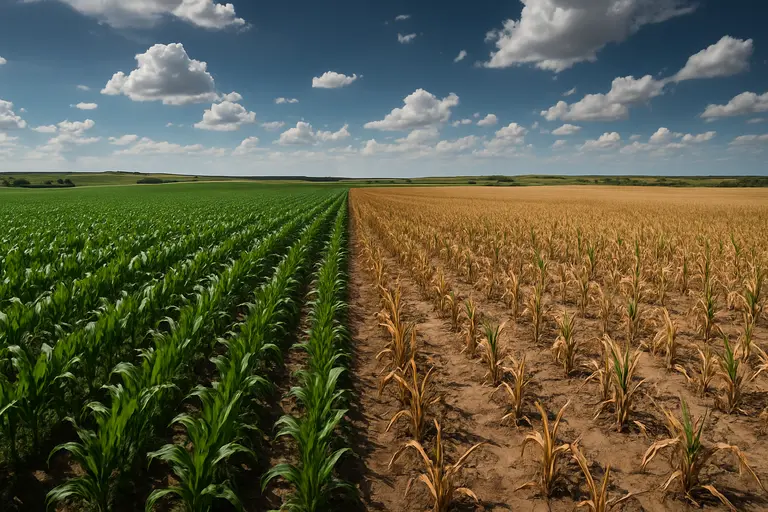
A Record Income Projection With Record Expenses
National figures can hide major state and enterprise differences. Nebraska is a useful case because its outlook is stronger on income but still pressured by costs. The University of Nebraska Center for Agricultural Profitability projects Nebraska net farm income to rise by 12% in 2026 over 2025 to a record $9.96 billion. At the same time, production expenses are expected to reach a record $30.37 billion, up about 3%, according to the Nebraska farm income analysis.
That state-level pattern reinforces a core point: higher income does not automatically mean easier management. A farm with stronger receipts can still face tighter margins if expenses also reach record levels. For irrigated crop farms, livestock operations, and diversified farms, the balance between revenue and input costs will shape whether sustainability investments are delayed, scaled down, or built into normal operating plans.
Local conditions also influence the value of specific practices. A nutrient management change that helps one farm reduce fertilizer exposure may not produce the same result on another farm with different soils or crop rotations. A grazing improvement may depend on water access, fencing, stocking rate, and labor availability. The national farm income forecast gives the macro setting, but county-level and farm-level budgets still decide what is realistic.
Sustainable Farming Decisions Under 2026 Margins
Community Planning And Practice Adoption
In a tighter margin year, sustainable farming decisions benefit from shared local knowledge. Farmers often learn from nearby producers, conservation districts, extension educators, lenders, crop advisers, and market partners. That community structure can reduce uncertainty, especially for practices where benefits depend on weather, soil type, or management skill.
A cautious 2026 plan may include a few practical steps:
- Compare projected input savings with the upfront cost of each practice.
- Use enterprise budgets that reflect current fertilizer, fuel, repair, and labor assumptions.
- Check whether conservation payments align with the farm’s timing and cash needs.
- Start with fields or enterprises where the agronomic risk is easier to monitor.
- Review revenue exposure separately for crop, livestock, poultry, and diversified operations.
The goal is not to slow sustainability work. It is to make sure practice adoption survives real financial pressure. A farmer who can test a new system on a manageable number of acres may be better positioned to expand later than one who takes on a large change without enough working capital.
Farm Income Forecast Signals For Sustainable Farms
The 2026 farm income forecast sends a clear but cautious signal. U.S. net farm income is projected to decline in both nominal and real terms, net cash farm income is nearly flat in nominal terms but weaker after inflation, and production expenses are rising. Federal payments, including conservation payments, provide support, but they do not remove the need for careful budgeting.
For sustainable farms and conventional farms considering new practices, the most useful response is disciplined planning. Producers can examine where input efficiency is most likely to improve margins, where conservation programs can reduce adoption risk, and where local experience can prevent costly mistakes. The farms best positioned for 2026 may not be those chasing every new idea, but those matching long-term soil, water, and resilience goals with numbers that work under current cost pressure.