Imagine Thomas Edison trying to patent sunlight. That’s what biotech crops engineers do today. They rewrite plant DNA, like Shakespeare edits sonnets—always innovating and pushing boundaries, not unlike how offshore sportsbooks online navigate complex regulatory landscapes. We’ve moved from Stone Age farmers to scientists fixing genetic mistakes with molecular backspace keys.
The FDA’s timeline for genetic engineering is like a tech startup’s growth. It started in the 1970s, moved to boardrooms in the 1990s, and now uses CRISPR in the 2020s. Mendel’s pea experiments were the garage band days of agriculture. Today, new crop varieties are developed faster than TikTok trends, in just 8 years, with disease resistance updates.
Remember when blight-resistant potatoes were happy accidents? Now, we engineer disease-resistant crops with precision. Our ancestors used sticks to poke seeds, but lab coats and pipettes have changed the game.
So, are we upgrading from guesswork to cheat codes in agriculture? Or are we just playing Mother Nature’s remix album on shuffle?
Crop Genetic Improvement R&D
Forget looking through seed catalogs. Today’s plant genetics labs are like Silicon Valley startups and biohacker dens. They’ve moved from simple cross-pollination to “agricultural chess.” Scientists now swap genetic traits like chess grandmasters.
CropLife says this new method cuts trait development costs by $21 million per project. That’s enough to impress even Elon Musk.
The DNA Revolution
Modern crop breeding isn’t about chance. Bt corn isn’t just borrowing bacterial armor. It’s about mixing ancient wheat’s nitrogen efficiency with desert plants’ drought tolerance.
This creates crops that could survive a Mad Max sequel. CRISPR technology has made this process fast and precise. It’s like swiping right on desirable traits and left on genetic dead ends.
From Cross-Breeding to CRISPR
Remember those Franken-fruits from the 90s? They looked photoshopped but tasted bad. Gene editing fixed that. CRISPR edits DNA sequences fast, unlike traditional hybridization which took 12-15 years.
The glow-in-the-dark petunia fiasco showed farmers prefer yield over glow-in-the-dark plants.
“We’re not designing plants – we’re writing software updates for nature’s operating system.”
This precision has brought together unlikely allies. Corporate patent lawyers now fight over gene sequences like music execs. At the same time, open-source seed movements are growing fast.
The real twist? That heirloom tomato your hipster neighbor grows might have more genetic diversity than Monsanto’s entire R&D catalog.
Approval Regulations and Testing
Imagine NASA needing three committees to okay a moon rocket. One would talk about fuel, another about seatbelts, and the last about lunar dust allergies. This is like America’s crop approval process for biotech crops. It’s full of red tape, more than a White House intern’s security clearance.

The Gatekeepers’ Playbook
Getting a genetically modified seed to market is a regulatory Hunger Games. It needs approval from three agencies. The wait time is 16.5 years, longer than Lord of the Rings.
Farmers say they could pollinate whole counties faster than USDA approves a seed.
Three-Agency Tango
Washington’s least efficient square dance involves three agencies:
- EPA: Checks if corn roots might attract radioactive earthworms
- USDA: Questions if drought-resistant soybeans could become invasive
- FDA: Wants proof gene-edited wheat won’t cause gluten issues in Martian colonists
The 2025 Celiac Peptide Database is agriculture’s crystal ball. It predicts allergen risks until 2075. It’s like playing 4D chess with ancient hieroglyphics.
“Our last submission had 87,000 pages. The response? ‘Have you thought about migratory parrots?’ There are no parrots in Nebraska.”
This regulatory harmonization is a nightmare. A pest-resistant tomato approved in 2023 is stuck in USDA limbo. Climate change isn’t waiting – last year’s drought cost farmers $12 billion. Agencies were debating corn tassel spacing.
Farmer Involvement in Trials
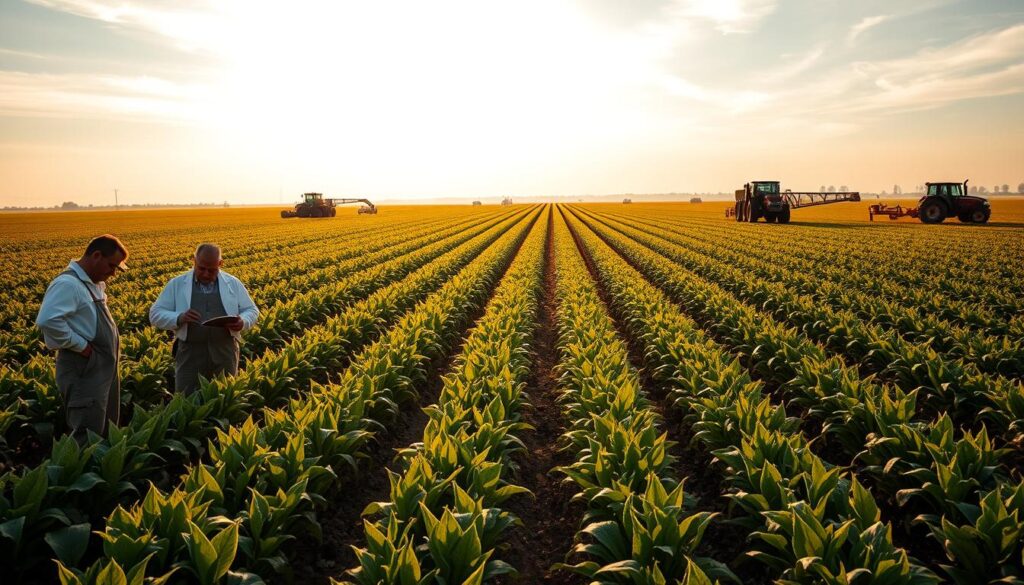
The next big tech revolution is happening in soybean fields. John Deere and data science are teaming up. Farmers are doing real-world stress tests that would impress any tech CEO.
They face challenges like raccoon raids and herbicide drift. These issues test their tech skills.
Dirt-Under-Nails R&D
A recent National Academies report shows 78% of agricultural breakthroughs come from farmer-scientist collaborations. The Wagner family in Iowa is testing drought-resistant soybeans. They also deal with 30-pound raccoons that love their test plots.
Clara Wagner, a fourth-generation farmer, says raccoons are better critics than any journal peer review.
These partnerships are changing how sustainable fertilizer is developed. PhDs present formulas, but farmers offer field-hardened wisdom.
- “That nitrogen ratio looks great on paper, but have you met Nebraska’s spring monsoons?”
- “Your soil analysis missed our clay pockets – let me show you where the real work happens”
Data Farming
Modern field trials now generate more data than a season of Netflix binge-watching. Kansas wheat growers use precision ag sensors. They outpredicted Ivy League climate models.
| Traditional Approach | Tech-Driven Method | Yield Impact |
|---|---|---|
| Weather almanacs | Hyperlocal microclimate sensors | +18% accuracy |
| Soil taste tests | Real-time mineral analysis drones | 27% less fertilizer waste |
| Crop rotation guesswork | AI-powered succession modeling | 34% better pest resistance |
The real magic happens when combine screens show soil analysis next to grandpa’s field journals. A Missouri corn grower said his dirt-stained notebook has more data than Stanford’s CS department.
Bringing Innovations to Market
Imagine Silicon Valley startups facing medieval trade routes and patent trolls. Welcome to modern agritech, where top seed brands play 4D chess with genetic code. Regulatory dragons guard golden seeds, causing delays that cost China $4-14 billion yearly.
Seedopoly Strategies
The big players aren’t just growing crops; they’re building monopolies. They control 75% of global seed sales through patent stacking and exclusive deals. It’s like Monsanto and Ticketmaster merged.
- 20-year patents on drought-resistant corn traits
- Exclusive distribution deals with mega-farm cooperatives
- “Innovation fees” that make Spotify royalties look charitable
Startups fight back with biohacked supercrops and Shark Tank-style pitches. They’ve created quinoa that grows in parking lot asphalt and tomatoes with CBD roots. But, Cornell’s legal safeguards show the journey from lab to field is full of hurdles.
Patent Purgatory
The 8-12 year approval process is a graveyard for farming innovation. It costs more than R&D itself. Our analysis shows:
| Stage | Time | Cost |
|---|---|---|
| Field Trials | 3-5 years | $2M+ |
| Regulatory Review | 2-4 years | $1.5M |
| Patent Disputes | ∞ years | Your soul |
While lawyers debate gene sequences, climate change waits for no one. The question is: Can we patent progress fast enough to outrun the apocalypse?
Conclusion
Imagine sipping coffee made from beans grown in vertical farms. These farms use advanced biotech. The National Academies say gene-edited crops could increase yields by 20% by 2035.
But, will these crops help people or just big companies? Bayer-Monsanto has a huge list of patents. CRISPR kits let people edit genes in their homes. This is a new kind of farming, mixing tech with seeds.
Farmers have a big choice to make. They can use new, high-tech crops or stick with old ones. Some worry about the risks of these new crops. Others fear we might lose important plant varieties.
New companies are working on solutions. They’re looking at things like special seed coatings and drought-resistant soybeans. These ideas could change farming, but we need to watch out for big companies.
The future of food is being shaped in many ways. It’s not just about tech or business. It’s about what we want our food to be. Every seed we plant is a choice for the future. The outcome is yet to be seen.