Market access for Central Appalachian farmers has become a practical test of whether regional food investment can move beyond planning and into steady sales. Recent work by the Appalachia Regional Food Business Center, related agribusiness programs, and local food infrastructure projects points to a clear pattern: farmers need more than production skill. They need buyers, aggregation, processing, cold storage, technical support, and working capital that fit the scale of farms across Kentucky, Maryland, Ohio, Pennsylvania, Tennessee, Virginia, and West Virginia.
The strongest evidence shows progress, but not a finished system. The Appalachia Regional Food Business Center, led by Rural Action, operated under a $42.5 million USDA award for a five-year term across parts of seven states with a network of 16 partners; on July 15, 2025, USDA partially terminated the Regional Food Business Center program while allowing existing Business Builder Subaward grants for more than 50 finalists to proceed, according to a Rural Action update. That mixed result matters because the center’s model connected funding, business coaching, and value-chain coordination in one regional structure.
Why Central Appalachian Farmers Need Market Access Support
Small and mid-sized farms in Central Appalachia often sell through several channels at once. That diversity can reduce dependence on one buyer, but it can also create pressure on time, transportation, packaging, invoicing, and buyer communication. A farm selling at a farmers market may need one type of marketing and labeling. A farm selling to a restaurant, grocer, school, or distributor may need different packaging, production schedules, insurance documentation, food safety practices, and delivery reliability.
Market Channels For Central Appalachian Farmers
The 2024 Appalachian Grown Producer Survey reported that 76 percent of producers used two or more market channels, including direct, intermediate, and wholesale markets. Farmers markets remained common, with 66 percent of producers using them. Restaurant sales were reported by 35 percent of producers, while grocery store sales were reported by 12 percent, the lowest level in six years in that survey. Those figures suggest that direct markets remain central, while higher-volume or more formal buyer channels may be harder to enter or maintain.
For Central Appalachian farmers, the gap between direct sales and grocery or institutional sales is not just a marketing issue. It often reflects the cost of meeting buyer expectations. Wholesale buyers may ask for consistent volume, grading, labeling, refrigerated transport, regular communication, and product availability at specific times. Without shared support, those requirements can push small producers away from markets that could otherwise stabilize revenue.
Grants And Technical Assistance Build Market Readiness
The Business Builder Subaward model was designed to address some of those gaps with direct investment. As of October 2025, the center had selected 56 recipients in its first funding round and distributed more than $3.5 million to food and farm business owners in Central Appalachia. The reported grant range was $5,000 to $100,000 per entity, with eligibility focused on entities with gross sales under $1 million.
Business Builder Grants And Eligibility
The permitted uses are directly tied to market access. Funds could support business planning, marketing, specialized equipment, product development, value-chain coordination, and supply-chain work. Those categories are broad, but they reflect real bottlenecks. A produce farm may need wash-pack equipment before approaching a grocery buyer. A meat business may need marketing, labeling, or processing coordination. A value-added producer may need support to move from a local customer base into wholesale ordering.
Technical assistance was another part of the model. Center Technical Assistance Providers, known as C-TAPs, were described as offering support in market readiness, institutional buyer access, aggregation, distribution, value-chain coordination, and financial training. The intended beneficiaries included underserved farmers and food businesses. That emphasis is significant because public funding is most defensible when it reaches businesses that face clear barriers and when it builds durable capacity rather than one-time sales.
Practical business documents also matter in this work. Producers may need short business plans, buyer sheets, grant narratives, product descriptions, or e-commerce copy. A related writing resource in the same network, Top Ten Writing Services, offers a comparison of services that can aid those needing general writing support, although farm-specific technical assistance should still come from qualified agricultural and food business providers.
Infrastructure Turns Production Into Sellable Volume
Market access depends on physical systems as much as outreach. Farmers cannot reliably serve larger buyers if a region lacks aggregation, cold storage, transportation, and processing. This is especially true in hilly rural areas where distances between farms, processors, and buyers can raise costs and reduce delivery efficiency.
Meat Processing And Food Hubs
Appalachian Harvest in Duffield, Virginia, offers one example of shared infrastructure. Research notes report that since 2001 the food hub has helped local producers sell more than $37 million in products. Its services include shared infrastructure, refrigerated trucking, and food safety support, allowing producers to reach wholesale and retail markets across Central Appalachia and the mid-Atlantic.
Livestock producers face a different infrastructure barrier: processing capacity. A USDA Local Food Promotion Program award of about $495,986 supported shared meat-processing infrastructure for small-scale livestock producers in 26 counties in northeast Tennessee and southwest Virginia. The project was expected to double processing capacity in the region and was scheduled to open in January 2025, according to the USDA funded projects list. The award description supports the planned capacity claim, but the provided research does not confirm later operating status after the scheduled opening date.
That distinction is worth keeping clear. Funding awards show public investment and planned outcomes. They do not, by themselves, prove long-term utilization, profitability, or farmer income gains. For market analysis, the next evidence should include operating volume, producer participation, buyer commitments, and whether the facility reduced wait times or transportation burdens.
Risks After The ARFBC Partial Termination
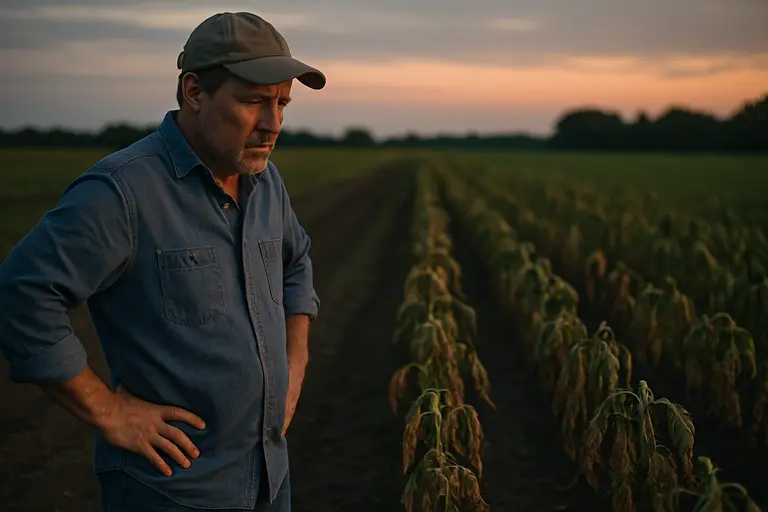
The July 2025 partial termination changed the policy context. Existing Business Builder Subaward grants were allowed to move forward, but the broader five-year structure faced limits. That creates uncertainty for technical assistance, partner coordination, and future rounds of farmer support. Many grants can help individual businesses, but regional markets need continuity. Buyers want dependable supply. Farmers need time to adjust production and build accounts. Food hubs and processors need volume planning.
What Continued Support Can Still Do
Related efforts continued outside the original ARFBC structure. Southwest Virginia’s Agribusiness Success Center launched on February 11, 2026, and offered twice-monthly curriculum for rural entrepreneurs in business planning, marketing, licensing, and related topics. It also offered quarterly Business Kickstarter Awards of $5,500 for eligible businesses completing the program, with possible uses including marketing, certifications, or e-commerce startup costs.
Other niche-market work also points to a wider strategy. The Transportation and Marketing program supported “Sweet Appalachia” with about $273,178 in supplemental funding to raise visibility for Appalachian maple syrup through marketing, agritourism, storytelling, and expanded wholesale and bulk sales in areas such as eastern Tennessee. For specialty crops and regional products, identity can help open doors, but it still needs price discipline, product consistency, and buyer follow-through.
Many Central Appalachian farmers are not trying to become large commodity suppliers. They are often trying to reach the next stable buyer, reduce spoilage, get fair value for differentiated products, and keep more food dollars circulating regionally. That is where the agribusiness center model has its strongest market logic. It connects business coaching with infrastructure and finance instead of treating each barrier as separate.
What Market Access Means For Central Appalachian Farmers
For Central Appalachian farmers, stronger market access should be judged by measurable changes, not only by grant announcements. Useful indicators include how many farms enter new wholesale or institutional channels, how much product moves through shared aggregation systems, whether processing delays decline, and whether producers maintain those accounts after initial support ends.
The available evidence supports cautious optimism. The ARFBC model directed grants, technical assistance, and coordination toward real constraints. The first funding round reached dozens of recipients and moved more than $3.5 million into regional food and farm businesses. Food hubs, processing projects, and newer agribusiness training programs point toward a more connected regional food economy.
Still, the partial termination means progress should not be overstated. Market access is built through repeated transactions, dependable infrastructure, buyer confidence, and producer margins that justify the work. The most useful next step for policymakers, funders, and community partners is to track outcomes that farmers can feel in their accounts: lower transaction costs, better buyer retention, less wasted product, and more reliable sales channels. That is the standard by which this work should be judged.