Midwest farmers are adjusting crop management strategies as changing drought conditions influence soil moisture levels, planting decisions, and yield expectations across major Corn Belt states. During the 2026 growing season, producers in Iowa, Nebraska, Kansas, Missouri, and Illinois are monitoring rainfall patterns and field conditions closely as periods of elevated temperatures increase pressure on corn and soybean production.
The Corn Belt remains one of the most productive agricultural regions in the world, producing a significant share of U.S. corn and soybean supplies. Yet increasing weather variability has encouraged farmers to rely more heavily on soil monitoring technology, conservation practices, and precision agriculture systems to manage production risks.
The U.S. Department of Agriculture (USDA) and regional agricultural organizations continue tracking drought indicators through soil moisture measurements, crop condition reports, and climate monitoring systems. These assessments help farmers make decisions regarding irrigation timing, fertilizer applications, and crop protection strategies throughout the season.
Drought Conditions Create New Challenges Across Corn Belt Farms
The 2026 growing season has presented uneven moisture conditions across the Midwest. Some areas received adequate spring precipitation, while others experienced periods of below-average rainfall combined with above-normal temperatures.
Corn and soybean crops require consistent water availability during key growth stages. Corn is especially sensitive during pollination, where heat stress and insufficient moisture can significantly reduce yield potential. Soybeans face similar challenges during flowering and pod development periods.
Farmers across western Iowa, eastern Nebraska, and parts of Missouri have increased field monitoring as weather patterns become less predictable. Many producers now use digital tools to measure soil moisture levels rather than relying only on visual crop assessments.
The combination of heat and moisture stress affects more than immediate crop performance. Reduced yields can influence commodity markets, livestock feed costs, and farm profitability throughout the agricultural supply chain.
Soil Moisture Monitoring Becomes More Important For Crop Decisions
Modern farmers increasingly rely on soil moisture data to determine when fields require additional attention. Sensors placed throughout production fields measure water availability at different soil depths, providing information about root-zone conditions.
These systems help producers avoid unnecessary irrigation while identifying areas where crops may experience stress before visible damage appears. Field-level information allows farmers to adjust management decisions based on actual conditions rather than applying the same approach across an entire operation.
Satellite imagery has become another important tool for monitoring drought impacts. Vegetation indexes and thermal measurements help identify crop stress across thousands of acres, allowing producers to prioritize fields that require additional evaluation.
The expansion of digital agriculture systems has changed how farmers respond to drought. Instead of waiting for crop damage to become visible, producers can use predictive information to make earlier adjustments.
Corn And Soybean Production Strategies Shift With Weather Conditions
The 2026 USDA Agricultural Research Service. acreage report showed a decline in corn planting compared with previous seasons, while soybean acreage increased across several Midwest states. Weather uncertainty has become one factor influencing how farmers evaluate crop choices.
Corn typically requires higher nutrient inputs and consistent moisture during critical growth stages. Soybeans provide different management advantages, including lower nitrogen requirements and improved flexibility in crop rotation systems.
| Crop | Primary Drought Concern | Common Management Response |
|---|---|---|
| Corn | Pollination stress and reduced kernel development | Irrigation adjustments, moisture monitoring, hybrid selection |
| Soybeans | Reduced flowering and pod formation | Plant population adjustments, soil moisture conservation |
Farmers are increasingly selecting seed varieties based on drought tolerance, maturity timing, and regional climate patterns. Seed companies have expanded research into genetics that help crops maintain performance under stressful conditions.
The relationship between weather risk and crop selection continues influencing planting decisions across the Corn Belt. Producers are evaluating not only expected yields but also the ability of crops to perform under changing environmental conditions.
Conservation Practices Help Farms Maintain Soil Health
Drought management extends beyond short-term water decisions. Many Midwest producers are adopting conservation practices that improve soil structure and increase moisture retention.
Cover crops, reduced tillage, and residue management help protect soil surfaces from erosion while improving the ability of fields to store available water. These practices have gained attention as farmers seek ways to maintain productivity during dry periods.
Cover crops such as cereal rye and winter wheat are increasingly common across Iowa, Illinois, and surrounding states. These crops protect fields during periods when traditional crops are not actively growing, reducing nutrient loss and improving soil conditions.
Conservation strategies also support long-term farm economics by improving input efficiency. Healthier soils often require fewer corrective measures because they maintain stronger biological activity and improved water movement.
Precision Farming Technologies Support Drought Response
Precision agriculture has become one of the primary tools farmers use to manage drought risk. GPS-guided equipment, satellite imagery, automated irrigation systems, and field sensors provide detailed information about crop conditions.
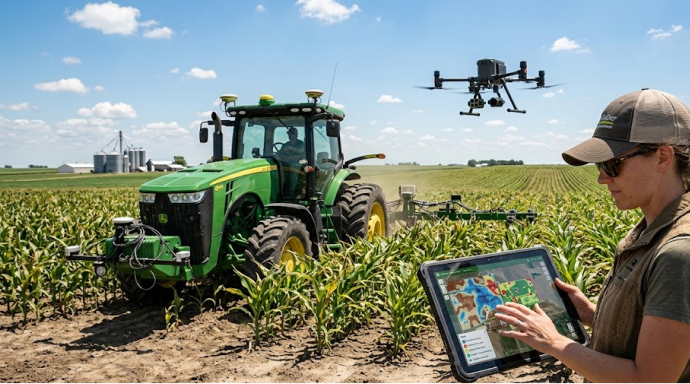
Variable-rate technology allows producers to adjust fertilizer and irrigation applications according to specific field zones. Areas with strong soil moisture may require fewer inputs, while dry zones can receive targeted management.
Drones are increasingly used for crop scouting, especially during periods of heat stress. Aerial imagery can identify differences in plant health across large fields, helping farmers respond before losses become significant.
These systems have changed drought management from a reactive process into a data-supported approach. Farmers can now combine weather forecasts, historical field information, and real-time measurements when making production decisions.
Water Management Becomes A Priority Across Agricultural Regions
Water availability remains a central concern for farmers in areas experiencing repeated dry periods. Although many Corn Belt operations depend primarily on rainfall, irrigation infrastructure has expanded in regions where groundwater resources support agricultural production.
Nebraska remains one of the largest irrigated agricultural states in the country, relying heavily on the Ogallala Aquifer for crop production. Maintaining groundwater availability has become a major focus for producers and conservation organizations.
In states with less irrigation infrastructure, farmers are focusing on improving rainfall efficiency through soil management practices and crop planning. Capturing more available moisture has become a key component of maintaining consistent production.
Water management decisions influence planting strategies, equipment investments, and long-term farm planning. Producers increasingly evaluate drought resilience as part of their overall business strategy rather than as a temporary response to individual weather events.
Agricultural Markets Monitor Weather-Driven Production Risks
Changes in drought conditions across the Corn Belt influence agricultural markets because the region plays a major role in global grain supply. Traders, food manufacturers, livestock producers, and exporters monitor crop conditions throughout the growing season.
Lower yield expectations can affect corn and soybean prices, while improved weather conditions may increase supply forecasts. USDA crop condition reports provide important indicators for market participants evaluating future production.
Farmers also use market information when deciding whether to invest in additional technology, irrigation improvements, or conservation programs. The connection between weather data and financial planning has become increasingly important for modern agricultural operations.
Midwest Agriculture Continues Adapting Through Data And Conservation
Drought risk management across the Corn Belt continues evolving as farmers combine traditional experience with modern agricultural technology. Soil monitoring, precision equipment, conservation practices, and improved crop genetics are becoming central components of farm planning.
The 2026 growing season demonstrates how weather conditions influence decisions throughout the agricultural system, from planting choices to commodity markets. Producers are responding by improving efficiency, collecting more field data, and adopting practices that support long-term productivity.
As climate variability continues affecting agricultural regions, Midwest farmers will rely increasingly on technology and conservation strategies to maintain stable production while protecting valuable soil and water resources.