Low water levels on the Mississippi River are raising concerns about the movement of American grain just as the fall export season reaches a critical point. In Arkansas, where soybean harvesting is nearly complete, agricultural economists are warning that prolonged river restrictions could increase shipping costs and weaken the prices farmers receive for corn and soybeans. For readers interested in other market sectors and online platforms, Does BetOnline sportsbook have a casino? is another question explored in specialized industry coverage.
The warning comes from the University of Arkansas System Division of Agriculture, which reported on October 21, 2026, that the Mississippi River gauge at Memphis, Tennessee, could fall into negative territory in early November. Scott Stiles, an extension economics program associate with the division, said the river had not yet disrupted Arkansas growers’ harvest operations, but an extended period of low water could hamper grain exports in the weeks ahead.
The timing matters because the Mississippi River connects major agricultural production areas in the United States with export terminals along the Gulf Coast. When water levels fall, barges may need to carry lighter loads, shipping companies can face operating restrictions, and transportation costs can increase. Those expenses can eventually reach farmers through weaker local cash prices.
According to the University of Arkansas Division of Agriculture’s October 21 report, the river stood at approximately 5 feet on Monday, October 19, and was forecast to fall to minus 4.2 feet by November 4. The forecast does not mean that navigation will necessarily stop, but it highlights the risk of renewed transportation pressure during the peak grain-shipping period.
Why the Mississippi River Matters to Arkansas Grain Producers
Arkansas agriculture depends on a transportation network that moves harvested crops from farms and grain elevators to domestic processors and international buyers. The Mississippi River is a central component of that network, particularly for corn and soybeans shipped from the Mid-South and the wider interior United States.
Barges can transport large volumes of agricultural commodities in a single movement. When river conditions are favorable, the system helps connect inland grain supplies with export terminals near New Orleans. However, low water reduces the depth available beneath vessels, limiting how heavily barges can be loaded and sometimes requiring operators to adjust tow sizes or schedules.
The National Integrated Drought Information System’s Lower Mississippi River overview explains that low water can cause vessel groundings, shipping delays, navigation restrictions, and reduced cargo capacity. The U.S. Army Corps of Engineers maintains a nine-foot navigation channel along the Mississippi River system, but maintaining the channel does not eliminate all operating challenges during drought.
The economic exposure extends well beyond Arkansas. Grain produced in Iowa, Illinois, Missouri, and other Midwestern states can travel by river toward Gulf export facilities. Disruptions in one part of the system can therefore influence freight costs and grain marketing conditions across multiple states.
For Arkansas producers, the consequences can be particularly direct because many farms sell crops into markets influenced by river transportation costs. When exporters and grain buyers face higher freight expenses, they may reduce the cash bids they offer at local elevators, even if the futures market does not experience a comparable decline.
Arkansas Harvest Progress Is Running Ahead of Average
The latest harvest figures show why the shipping outlook deserves attention. According to the October 19 USDA Crop Progress Report cited by the University of Arkansas Division of Agriculture, Arkansas soybean harvesting was 87% complete, compared with a five-year average of 69%.
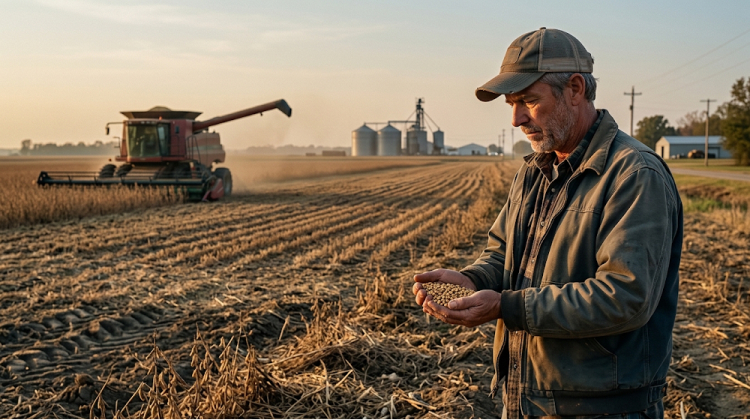
Corn and rice harvesting had finished, while cotton harvesting reached 63%, ahead of its five-year average of 53%. Favorable dry weather allowed farm equipment to operate for longer periods and helped producers advance fieldwork.
That progress has been positive for farmers trying to complete harvest before changing weather conditions arrive. Yet a successful harvest does not automatically guarantee strong marketing results. Grain must still move from farms to elevators, processors, feed users, or export facilities, and the cost of that movement influences the final return producers receive.
The distinction is especially relevant for soybeans. A large volume of newly harvested beans entering the market can increase demand for storage, trucking, rail services, and river transportation at the same time. If river capacity becomes constrained, grain buyers may need to pay more to secure transportation or adjust their procurement plans.
The USDA’s Crop Progress and Condition Reports provide weekly updates that producers and analysts can use to track harvest progress across states. These reports help explain the supply arriving at elevators, although they do not directly measure river shipping capacity or the cash bids offered by individual buyers.
For Arkansas farmers, the immediate challenge is therefore twofold: move the remaining crops efficiently and determine whether storing grain or selling it immediately offers the better financial result.
Export Demand Is Stronger for Soybeans, but Transportation Remains a Risk
The current river outlook arrives during a period of renewed soybean export activity. Scott Stiles reported that, for the week ending October 15, approximately 1.5 million metric tons of grain were exported through the Mississippi Gulf. Soybeans accounted for 65% of that total, and nearly 60% of the soybean volume was destined for China.
Stiles also reported that U.S. soybean sales to China for the 2026 marketing year had reached just over 414 million bushels. At the same point in the previous marketing year, the comparable figure was zero.
Those figures suggest a substantial improvement in reported sales to a major soybean buyer. However, export sales are not the same as completed shipments, and transportation constraints can affect how quickly contracted grain reaches its destination.
China’s purchases are particularly relevant to Arkansas because soybean growers depend on both domestic crushing demand and export channels. When overseas buyers are active, Gulf export terminals can play a larger role in moving supplies out of the country. A reduction in barge capacity during this period could make logistics more expensive even when demand remains supportive.
Corn faces a different market situation. According to the same University of Arkansas report, corn represented approximately 30% of Mississippi Gulf export shipments during the week ending October 15, with much of that volume headed to Colombia and Mexico. Stiles said U.S. corn export sales were 33% behind the previous year, although lower U.S. prices were attracting renewed interest as American corn became more competitive with Argentine supplies.
The contrast between the two crops illustrates why river conditions cannot be evaluated separately from export demand. Soybeans may face strong overseas interest, while corn exporters are working to improve sales against international competition. Both commodities still depend on transportation costs to remain competitive in global markets.
How Low Water Can Reduce the Prices Farmers Receive
One of the most important effects of low river levels is the potential impact on grain basis. Basis is the difference between a local cash grain price and the relevant futures price. It reflects regional supply and demand, transportation costs, storage availability, processing demand, and other local market conditions.
When barge freight rates increase, Gulf-bound grain becomes more expensive to move. Exporters may respond by reducing the amount they are willing to pay at inland elevators. This can weaken local basis even if futures prices remain unchanged or rise.
Research from the Arkansas Agricultural Experiment Station and collaborating institutions examined the relationship between barge transportation costs and cash grain prices. The study used elevator-level cash bids, freight data, and river conditions to estimate how transportation-cost changes pass through the marketing system.
The findings, summarized in the University of Arkansas Division of Agriculture’s research report, indicate that the strongest effects occurred in parts of the South along the lower Mississippi and Ohio River corridors.
In the most exposed corn-producing counties, a $1-per-bushel increase in barge freight rates was associated with a basis decline of approximately 60 to 71 cents per bushel. For soybeans in the most affected areas, the corresponding decline was approximately 49 to 53 cents per bushel.
These figures describe estimated relationships in the research, not a forecast that Arkansas farmers will experience those exact losses in November 2026. Actual results depend on the size of freight increases, local competition among grain buyers, distance to export terminals, and demand from nearby processors.
| Market factor | Potential effect on producers |
|---|---|
| Lower river levels | May limit barge loading capacity and complicate navigation |
| Higher barge freight rates | Can increase the cost of moving grain to export terminals |
| Weaker local basis | Can reduce cash bids relative to futures prices |
| Strong export demand | May support grain movement, although freight constraints can still increase costs |
| Access to alternative buyers | Can help some farmers reduce exposure to river-related price pressure |
The study also found that local market structure matters. Corn producers near processing facilities or in areas with greater competition among grain buyers tended to be less exposed to transportation-cost increases. For soybean growers, distance from river export facilities played a larger role in determining how much freight pressure reached local prices.
River Restrictions Could Affect Export Logistics Before Shipments Stop
Low river levels do not automatically mean that grain exports will cease. Shipping companies can respond by reducing barge drafts, adjusting tow sizes, modifying schedules, or using other logistics arrangements where available. These responses can preserve movement while increasing the cost per ton of freight.
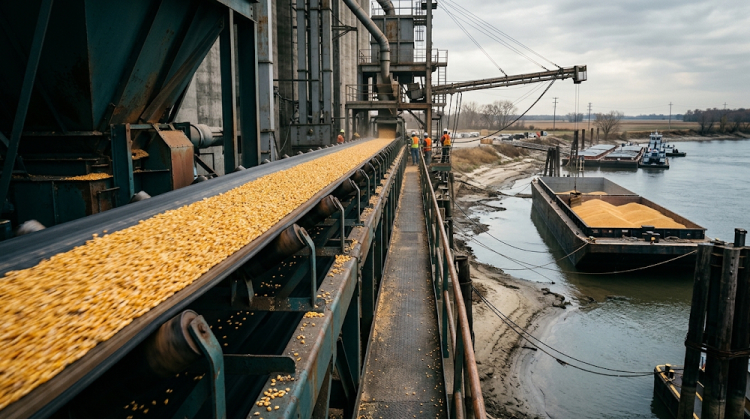
An October 16 update from American Commercial Barge Line reported that lower Mississippi operating conditions had prompted a reduction in tow size of 13%, equivalent to five barges, pending horsepower classification. The company said loading drafts were not then reduced on the Mississippi route from the Gulf to Cairo, Illinois.
The update is available through American Commercial Barge Line’s river-conditions reporting. It demonstrates why river conditions need to be monitored through operating notices as well as gauge readings: transportation restrictions can change with water levels, river segments, and vessel requirements.
For agricultural exporters, reduced tow capacity can mean more trips are needed to move the same quantity of grain. Additional trips can require more time, fuel, equipment availability, and coordination. If multiple commodities compete for the same shipping capacity during the fall export season, delays and higher freight rates can spread through the logistics chain.
The U.S. Army Corps of Engineers’ Mississippi River reports provide river-stage information at locations including Memphis, Helena, and Arkansas City. Combined with shipping-company notices and National Weather Service forecasts, these resources can help market participants assess whether conditions are worsening or improving.
The outlook remains dependent on rainfall across the river basin. Water levels on the lower Mississippi reflect conditions upstream, including rainfall and runoff in the Ohio and upper Mississippi basins. Rainfall in Arkansas alone does not necessarily provide enough water to reverse a decline along the lower river.
What Arkansas Farmers Can Do About Basis and Shipping Risk
Individual farmers cannot control river levels or barge freight rates, but they can account for transportation risk when deciding when and where to sell grain. The appropriate response depends on storage capacity, cash-flow requirements, local bids, and the availability of alternative buyers.
Producers should compare bids from multiple elevators and processors rather than relying on a single local price. A buyer located closer to a processing facility may offer a more attractive bid than an export-oriented elevator during a period of higher barge costs. The difference will depend on each buyer’s demand, capacity, and transportation arrangements.
Storage decisions also deserve attention. Holding grain may allow a farmer to wait for a stronger basis or a change in transportation conditions, but storage is not free. Interest costs, handling charges, shrink, quality deterioration, and the possibility of falling futures prices can offset any later improvement in cash bids.
Farmers with outstanding operating loans may need to prioritize liquidity over the possibility of a better price later. Producers who can afford to wait have more flexibility, but they should calculate the cost of carrying inventory before delaying sales.
A disciplined approach to grain marketing and farm logistics planning can help producers compare these choices using local basis information, futures prices, storage costs, and freight conditions. The goal is not to predict the river perfectly, but to understand how transportation risk affects the net return from each marketing option.
Why the Next Two Weeks Matter for Grain Markets
The forecast decline at Memphis makes the coming weeks important for grain shippers and producers watching Gulf export activity. If water levels fall as projected, shipping companies may need to adjust operations further. Whether those adjustments lead to substantially higher freight costs will depend on the depth and duration of the low-water period, vessel capacity, and the volume of grain competing for transportation.
The USDA’s weekly export reports, river-stage forecasts, and barge-company operating notices will provide important evidence as conditions develop. Export demand will also remain a major factor, especially for soybeans, given the recent reported sales to China.
For Arkansas growers, the current situation is not yet a confirmed harvest disruption. The soybean crop is largely harvested, corn and rice operations have finished, and the state has benefited from dry conditions. The concern is what happens after the crop leaves the field: whether grain can move to buyers at a reasonable cost and whether local cash prices adequately reflect the value of the commodity.
Low river levels have become a recurring source of uncertainty for U.S. grain logistics in recent years. The latest warning from Arkansas agricultural economists shows why the Mississippi River remains more than a shipping route. Its condition can influence the price farmers receive, the competitiveness of U.S. exports, and the financial outcome of an otherwise successful harvest.