Gene editing was seen as a game-changer for farming, like the iPhone was for phones. It was meant to solve hunger with disease-resistant crops that could fight off blight. But, after a decade of excitement, only three edited plants have hit the market worldwide. That’s less than Apple released during the Newton PDA era.
The UN says we need 70% more food by 2050. Venture capitalists poured $500 million into agtech startups last year. But when Calyxt’s CRISPR soybeans failed, the silence was deafening. So, are we on the verge of nitrogen-efficient crops that could cut fertilizer use, or just another fad?
Japan’s GABA tomatoes show both sides of the story. These anxiety-reducing tomatoes were a hit in 2021… until they cost three times as much as regular tomatoes. It’s the agtech cycle in a nutshell: science meets capitalism at the checkout.
As we explore this modern crop breeding world, we must ask: Can CRISPR farming make it past its awkward phase? Or will it become like Juicero – a solution looking for a problem?
What is CRISPR?
Imagine editing a Google Doc to improve crops. That’s what CRISPR does in plant genetics. It edits DNA without adding foreign genes. This makes GMO debates seem outdated.
From Lab Coats to Combine Harvesters
CRISPR moved from labs to seed tech quickly. Old methods were like using dynamite to remodel a house. Monsanto’s SmartStax corn, for example, had eight traits but failed against pests.
CRISPR is different:
- No foreign DNA insertion (bye-bye “Frankenfood” fears)
- Precision targeting reduces unintended mutations
- Development cycles slashed from decades to years
Seed coating nanotechnology brings CRISPR into plants like Mission Impossible. Farmers might soon update crops like their tractor software.
The Gene Editing Toolbox Compared
| Tool | Cost | Precision | Ag Use Case |
|---|---|---|---|
| CRISPR | $ | Laser | Drought-resistant soybeans |
| TALENs | $$$ | Scalpel | Last-gen blight-resistant potatoes |
| ZFNs | $$$$ | Butter knife | Agriculture’s Betamax (discontinued) |
ZFNs are outdated, like VHS tapes. CRISPR, on the other hand, has 90%+ efficiency in plant genetics trials. It’s like the difference between handwriting and using ChatGPT.
Potential Applications
CRISPR is more than just editing genes; it’s changing sustainable agriculture. It moves from using herbicides to creating disease-resistant crops and nitrogen-efficient crops. This is like switching from chess to 3D chess, using less chemicals and more natural solutions.
Disease Resistance 2.0
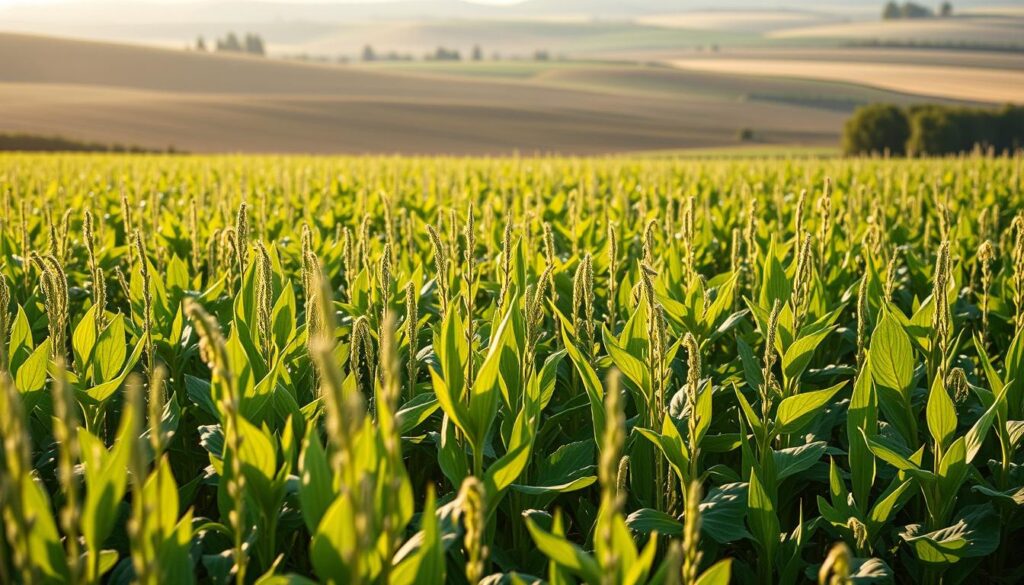
CRISPR has made a big change in how we fight diseases. Instead of using lots of fungicides, we now have citrus greening-resistant oranges. These oranges have a natural defense system that keeps diseases away.
Wheat made with CRISPR also needs 30% less fertilizer but keeps its yield high, according to tests.
Beyond Roundup Ready
Let’s look at how CRISPR compares to old GMOs:
| Trait | CRISPR Approach | GMO 1.0 Approach | Sustainability Impact |
|---|---|---|---|
| Disease Resistance | Enhanced natural defenses | Herbicide tolerance | ↓ Chemical runoff |
| Nitrogen Use | Efficiency boosters | Synthetic fertilizers | ↓ Greenhouse gases |
| Yield Security | Climate adaptability | Pesticide reliance | ↑ Biodiversity |
Nitrogen-fixing CRISPR corn is a big deal. It doesn’t need chemical fertilizers like old crops did. It’s like switching to solar power, being clean and efficient.
“We’ve moved from creating plants that tolerate poisons to plants that laugh at pathogens.”
This change means farms could save money and harm the environment less. Some crops might even make the soil better over time. This is a big change from old GMOs like Roundup Ready soybeans.
Case Studies and Current Crops
CRISPR’s journey in agriculture is like a movie with big hits and misses. Instead of special effects, we see real crop improvements. Let’s look at the highlights of gene-editing in farming.
CRISPR’s Greatest Hits (and Misses)
Bayer’s drought-tolerant soybeans are like Tom Hanks in movies—always a hit. On the other hand, Syngenta’s blight-resistant potato was a big disappointment. It didn’t deliver what farmers needed.
Market Flops vs Field Success
| Innovation | Company | Result | Farmer Verdict |
|---|---|---|---|
| High-oleic canola | Cibus | Market flop | “Tastes like wallet drain” |
| GABA tomatoes | Sanatech Seed | Supermarket hit | “Sells itself at market” |
| CRISPR maize | Corteva | Yield champion | “Actual bushels per acre” |
Corteva’s maize increased yields by 8%, a big win for farmers. But Calyxt’s soybean oil didn’t make it big. An Iowa farmer said, “I’ll believe your science when I see my silos full.”
Argentina’s black market for DIY CRISPR seeds is a surprising twist. Farmers are buying these seeds, avoiding big companies. It’s like jailbreaking your iPhone, but with better crops.
Regulatory Considerations
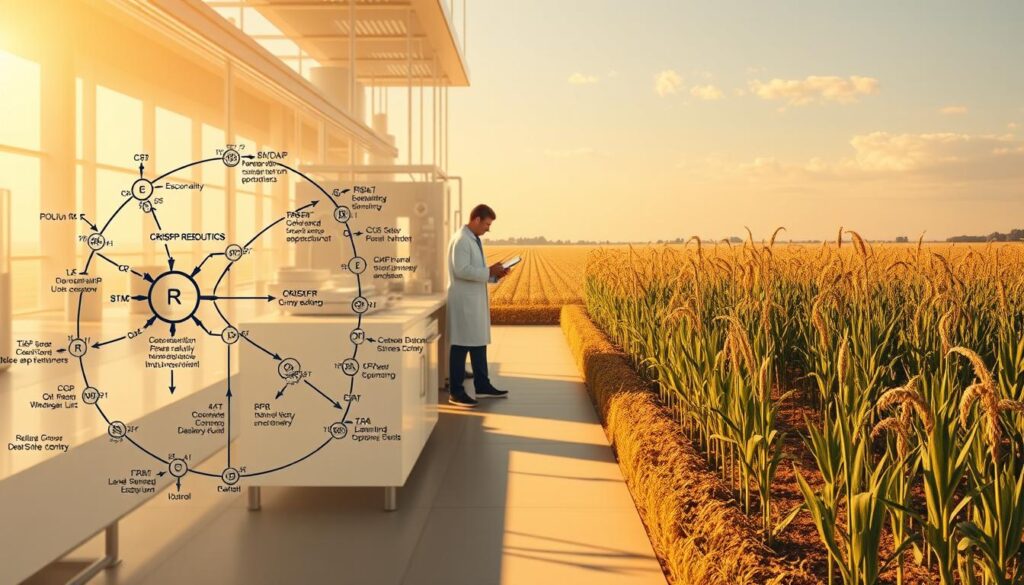
When did filling out forms become part of photosynthesis? The crop approval process for CRISPR-edited plants has become a global Rorschach test. Every regulator sees something different in the inkblots. From Brussels to Brasília, governments can’t decide if gene-edited corn deserves a red stamp or a green light.
The GMO 2.0 Debate
Imagine trying to explain TikTok to your grandparents. That’s what biotech companies face when pitching CRISPR crops to regulators. The EU’s precautionary principle has frozen agricultural innovation faster than liquid nitrogen. While U.S. regulators play regulatory hide-and-seek with biotech crops.
Red Tape Limbo
Let’s break down the bureaucratic circus:
| Region | Regulation Style | Approval Time | Bureaucracy Quotient |
|---|---|---|---|
| European Union | Precautionary Paralysis | 5+ years | ☕☕☕☕☕ (5 coffee breaks) |
| United States | Don’t Ask, Don’t Tell | 18 months | ☕ (1 espresso shot) |
| Brazil | Coffee-Fueled Pragmatism | 2 years | ☕☕ (2 cafezinhos) |
Brazil’s agricultural ministry accidentally became CRISPR’s best friend in 2018. Their ruling created a loophole big enough to drive a coffee harvester through. While EU officials debate whether gene-edited wheat needs the same scrutiny as nuclear reactors.
The real kicker? Farmers planting identical CRISPR soybeans face completely different rules. It’s like playing agricultural roulette with a seed drill.
Farmer Perspectives
When 78% of row-crop farmers say they’d “dance with CRISPR” for better yields, it’s clear we’re in a new era. This era is where practical farming meets “don’t mess with my terroir” tradition. Let’s explore this divide.
Early Adopters vs Luddites
Meet Iowa corn farmer Carl Jenkins, who’s mixing CRISPR seeds with ancient Aztec companion planting. “Why choose between science and tradition when you can have both?” he says, surrounded by pest-resistant maize and heritage squash. His method increased yields by 40% last year and reduced synthetic fertilizers.
Now, let’s go to Bordeaux, where vintners opposed a plan for drought-resistant grapes.
“You can CRISPR my Merlot when you pry my pruning shears from my cold, dead hands,”
This is like Silicon Valley meeting Stone Age in the world of agri-tech.
The Cost of Innovation
John Deere’s CRISPR-compatible planters are pricey, but so is climate change. Here’s a comparison:
| Investment | Traditional Seeds | CRISPR Seeds |
|---|---|---|
| Year 1 Cost | $120/acre | $200/acre |
| 5-Year ROI | 18% | 42% |
The real debate is about subscription seed models. Imagine paying for your corn genetics like Netflix. Critics say it’s “feudalism with better PR,” but supporters see it as a cost-effective option. A Nebraska soybean grower joked: “At least with subscriptions, I can cancel when the robot overlords take over.”
Conclusion
Modern crop breeding now uses lab coats. CRISPR-edited rice trials could see yields rise by 40% by 2030. This would be enough grain to fill California’s Central Valley twice over.
But, seed innovations face big challenges. The Gates Foundation’s drought-proof cassava is promising for African farms. Yet, organic activists protest outside Whole Foods.
This isn’t about GMOs again. We’re making wheat that fights off fungi without fungicides and tomatoes that handle heatwaves. CRISPR is our best tool for tackling climate change. But, smart policies are the real key.
Mexican corn farmers need different solutions than Iowa’s automated combines. Will we let perfection stop us from saving the planet? The tech is working.
The hungry don’t care how their bread was made. As temperatures rise, our fields need every smart tool we can use. The question is, are we wise enough to use gene editing without harming the planet?