Let’s be honest: navigating the world of solar incentives is tough. It feels like trying to understand a complex tax code. But, getting it right can change you from a simple buyer to a smart producer.
The 30% Federal Investment Tax Credit is a big deal. It’s like a direct discount that really helps.
But then, things get tricky. Each state has its own rules and offers. Some places, like California, offer a lot, while others are still catching up.
Don’t forget about local rebates and USDA grants. Even countries like India have programs that encourage solar use.
This is your guide to understanding the good deals from the not-so-good. We’ll help you see through the confusion in the world of renewable energy.
Application Tips
Found the perfect farm energy grant? Now, you face a tough challenge. It’s like putting together IKEA furniture without instructions. But, with the right tools and mindset, you can do it.
Don’t start with the forms yet. First, play detective. Learn the eligibility criteria inside out. Is your farm really rural? Does your business fit their size requirements? This is the base of your application.
Successful applicants plan like a military operation. They use all resources, especially technical assistance programs. These experts know the challenges and how to make your project stand out.
Clear documentation is your shield. Fast permitting is your ticket to success. Without them, you’re just another hopeful. Your bills, deeds, and financial plans must tell a clear story. A missing page can ruin months of work.
The most common mistakes are simple but costly. Missing deadlines, incomplete data, and underestimating costs are common. Grant officers see these mistakes often. It shows you’re not ready.
| Common Pitfall | Why It Hurts | Winning Strategy |
|---|---|---|
| Vague Project Description | Fails to show measurable impact or align with funder goals. | Frame your project as infrastructure: “This solar array stabilizes operational costs for 30 years.” |
| Incomplete Financials | Raises red flags about project viability and management skill. | Use a blended finance model. Show grants as one piece of a puzzle with loans and equity. |
| Ignoring the “Why” | Funders invest in stories and outcomes, not just equipment lists. | Connect dots to carbon reduction, rural job creation, or farm preservation. Add a little pathos. |
| Going It Alone | Misses crucial insights from technical assistance networks. | Partner early with extension services or state energy offices. They’re force multipliers. |

Blended finance is the secret to success. Small farms often think they’re too small for big farm energy grants. But, combining a grant with a loan or your own money makes a strong case. It shows you’re serious and spreads risk.
Align with the funder’s unstated mission. Is it about cutting carbon, boosting local economies, or good PR? Your application should show how you’re advancing their goals.
This isn’t poetry; it’s a business case. Use data to back up your story. Together, they make a strong case for funding.
Start with local programs. Many states have special programs that fit with federal grants. For example, Michigan’s Agriculture and Rural Businesses Energy Incentive Program can help. Check out more about it here.
Stacking Savings
Welcome to the world of advanced agricultural finance. Here, 1 + 1 can equal 3 with the right strategy. The key to green farm funding is not just one incentive. It’s about layering them to change your project’s economics dramatically.
Imagine building a financial lasagna. A single layer of cheese, like a state tax credit, is good. But add pasta (the federal ITC), meat sauce (a USDA REAP grant), and ricotta (accelerated depreciation)? Now, you have a dish that’s truly satisfying. The flavors, or financial benefits, grow exponentially.
Let’s dive into this layered approach. Start with the federal Investment Tax Credit (ITC) and state incentives. Many states let you claim the 30% ITC and a state tax credit for the same project. This isn’t double-dipping; it’s smart policy alignment. The ITC lowers your federal taxes, while the state credit handles local taxes.
Next, add the REAP grant from USDA. It’s not just free money; it’s a strategic tool to lower your project’s cost. With a lower cost, the 30% ITC applies to less. But, the grant money is tax-free, and the ITC only offsets taxes you owe. This combo often leads to better cash flow and ROI.
Then, there’s the accountant’s favorite: Modified Accelerated Cost Recovery System (MACRS). It lets you depreciate your renewable energy system faster. This reduces your taxable income each year. Add this to your credits and grants, and you’re saving big.
The last layer? Revenue streams. Net metering turns excess power into bill credits. Feed-in tariffs or power purchase agreements create steady income. And for the ambitious, agrivoltaics can bring in crops and power from the same land.
So, what’s the best order? It varies by farm, but a common stack is:
- Step 1: Secure REAP grant to minimize initial investment
- Step 2: Finance remaining cost (grants can improve loan terms)
- Step 3: Claim ITC and state credits against tax liability
- Step 4: Apply MACRS depreciation to reduce future taxable income
- Step 5: Activate net metering or PPA for ongoing revenue
Getting the sequence wrong can lead to trouble. Using a bad loan before a grant or not understanding tax interactions is common. That’s why professional guidance on farm energy funding is crucial, not just optional.
The key is not just one incentive. It’s about combining them for a bigger impact. This can cut a 10-year payback to 5 or make a project work. The best farmers see green farm funding as a puzzle, not a checklist.
Don’t chase the biggest incentive alone. Instead, design a system where all elements work together. That’s when your project’s economics start to sing a more profitable tune.
Partnering with Local Utilities
Your local utility can offer solar incentives not found in federal databases. They might seem like the casino owner running the game. But, regulatory changes are giving you a better deal.
Why would they help you make your own electricity? It’s because of grid modernization. As the grid ages, utilities see your solar array as a valuable asset. You’re not just a customer; you’re a part of the grid.
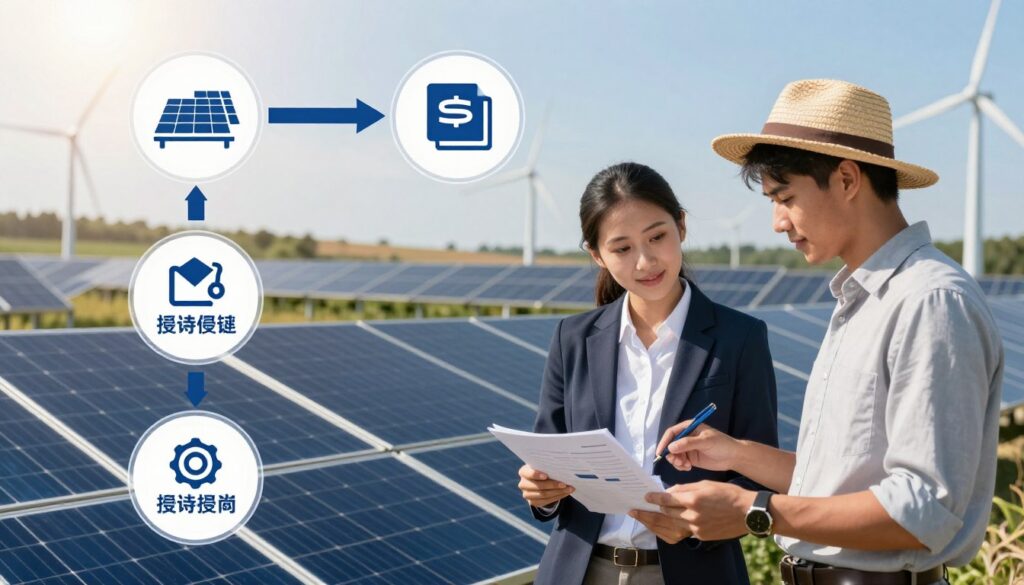
The most straightforward utility solar incentives come in three flavors:
- Direct Rebates: Cash incentives for specific equipment, like battery storage systems or smart inverters.
- Demand Response Programs: Utilities pay you to use less power during peak hours. Your solar system becomes a way to earn money.
- Legacy Feed-in Tariffs: Some utilities still offer high rates for every kilowatt-hour you send back to the grid.
There are also specialized rates. Some utilities offer “green rates” or time-of-use plans that boost solar economics. Others have programs for high-energy users with unique solar incentives.
But, there’s a catch: interconnection. Getting permission to connect your system can be tough. It involves technical studies, potential upgrades, and delays.
Interconnection is like a chess match. Talk to your utility’s team before designing your system. Know their rules better than they do. Common issues include:
- Transformer capacity limitations on your local circuit
- Requirements for expensive protective relays
- Costly grid upgrade contributions they might demand
Successful farmers know partnerships are key. The same goes for energy. Federal programs like the USDA-DOE solar energy and farming programs work with utilities, adding more incentives.
See utilities as allies in grid modernization. Show how your solar project helps their goals. Highlight how your system supports local voltage or reduces circuit strain.
The utility relationship is changing. It’s moving from adversarial to symbiotic. They need flexible resources, and you want better solar incentives. This creates a strong negotiating position. Use it wisely.
Resources List
Think of this as your guide to becoming your own best advocate. Start by bookmarking the Database of State Incentives for Renewables & Efficiency (DSIRE). It’s like the Wikipedia of incentives, but it’s a lot to take in. Always check the dates because policies can change quickly.
For the legal details, head straight to the USDA REAP program website. It’s your go-to for federal information. Your state’s Department of Agriculture or Energy office has the local details. The National Renewable Energy Laboratory (NREL) has data on how agrivoltaics can increase yields.
Industry groups like the Solar Energy Industries Association (SEIA) provide market insights. The Clean Energy States Alliance (CESA) reports show what works in other places. Remember, it’s not just about finding farm energy grants. It’s about building a strong case for your project.
Use this information well. The right data can turn a hopeful application into a strong investment story. Your farm’s next step starts with knowing where to look.