Let’s talk about playing chess with Mother Nature. While she’s busy throwing curveballs with weather patterns, we’re deploying the ultimate water-saving wingman: smart irrigation technology.
These aren’t your grandfather’s sprinklers. We’re talking about controllers that analyze real-time data like soil conditions and weather forecasts. They make your landscape hydration as precise as a NASA mission.
The EPA confirms these systems slash outdoor water use by 20-50%. That’s not just conservation – it’s intelligent resource allocation in an era where water scarcity is our new reality.
Want to geek out on the specifics? Oklahoma State’s research breaks down how soil moisture sensors and weather-based controllers create this water-saving magic.
This isn’t just about being eco-friendly. It’s about outsmarting inefficiency one drop at a time.
Hardware & Software Options
If your sprinkler system still needs manual programming, it’s like using a flip phone today. Modern smart irrigation technology is so advanced, it would make your grandfather’s timer look outdated.
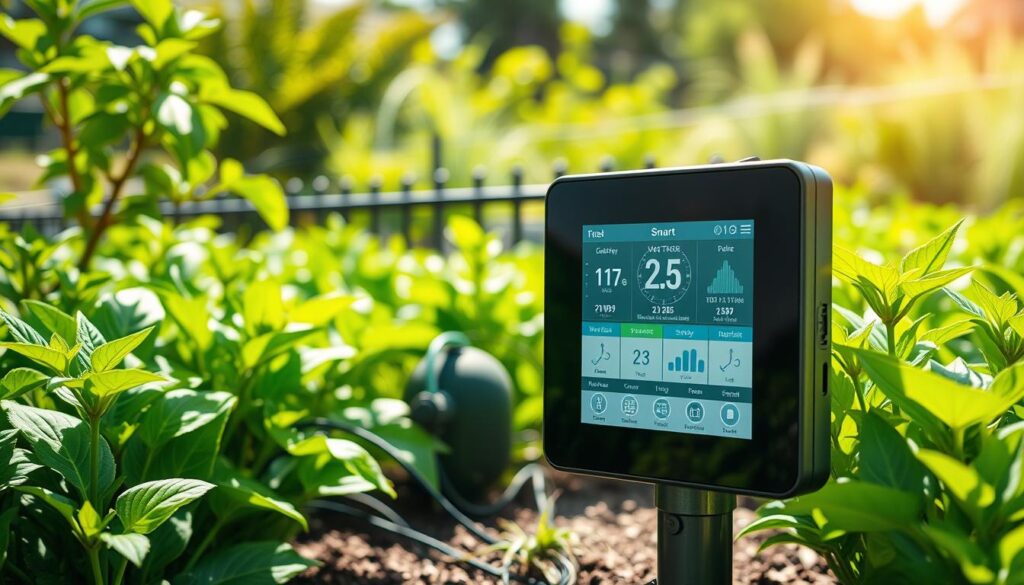
Weather-based controllers are like the meteorologists of irrigation. They use local weather data and satellite info to adjust watering schedules automatically. No more watering before a rainstorm – these systems actually know when it’s coming.
Soil moisture sensors are the real game-changers in smart irrigation. These devices measure hydration levels by sticking their fingers in the dirt. They prevent overwatering by telling your system, “The soil’s already moist enough, thanks.”
Rain Bird’s ESP-Me controller is like the luxury sedan of irrigation systems. It’s like having a self-driving car for your lawn – it automatically adjusts based on real-time conditions and even comes with proper certification for water efficiency.
ET controllers take things to scientific levels. They calculate evapotranspiration rates, which is basically measuring how much water your plants are “sweating” out. Who knew your lawn had its own perspiration system?
The best part? Nearly all modern smart irrigation systems come with smartphone integration. You can now manage your lawn’s hydration from your couch, because apparently even grass deserves app-based convenience.
| Controller Type | How It Works | Best For | Key Feature |
|---|---|---|---|
| Weather-Based | Uses local weather data | Climate-variable regions | Automatic rain delay |
| Soil Moisture Sensor | Measures ground wetness | Water-restricted areas | Prevents overwatering |
| ET Controller | Calculates plant water loss | Large properties | Scientific precision |
| Smart Hybrid | Combines multiple methods | Tech enthusiasts | App integration |
The beauty of modern smart irrigation lies in its adaptability. Whether you’re dealing with clay soil that holds water like a sponge or sandy soil that drains faster than a sink, there’s a system designed for your specific landscape challenges.
These systems don’t just save water – they save you from becoming that neighbor who waters during a thunderstorm. Now that’s what I call intelligent landscaping.
Savings & Outcomes
Let’s look at the real benefits of precision water management. The numbers show it’s a game-changer for your wallet. It’s like a blockbuster movie hit, but for your water bill.
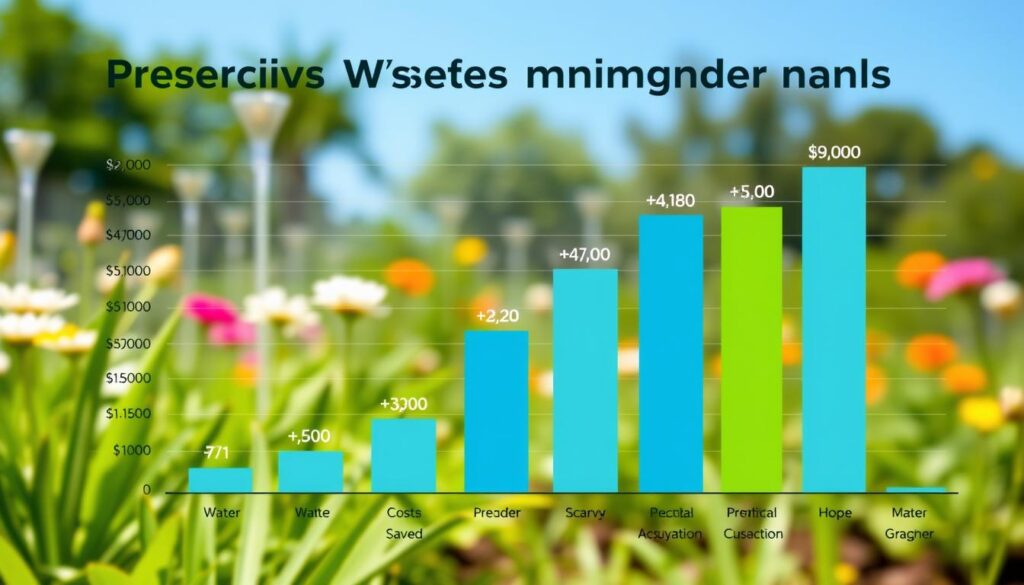
Homeowners can save 20-50% on water. That’s like getting half of your water for free. It’s like a buy-one-get-one-free deal, but it saves you money.
Businesses can save even more, up to 60%. This means big savings on water bills. One business saved enough to cover their holiday bonuses. That’s what we call a win-win.
The good news doesn’t stop there. Using less water means less pollution. It’s like a detox for our environment, without the need for fancy diets.
In Oklahoma, moisture sensors cut irrigation by 72% during droughts. That’s amazing. It’s like having a secret hero on your team.
Homeowners in California can save hundreds a year. This means you can enjoy your daily coffee without guilt. It’s a win for your wallet and the planet.
| Property Type | Water Savings | Annual Dollar Savings | Environmental Impact |
|---|---|---|---|
| Residential | 20-50% | $200-500 | Reduced runoff by 35% |
| Commercial | 30-60% | $1,200-3,000 | 60% less fertilizer pollution |
| Municipal | 40-70% | $5,000-15,000 | 50% lower energy usage |
Moisture sensors are more than gadgets. They’re smart investments that make your lawn look great. They pay off faster than most stocks, with less risk.
True precision water management is about more than saving money. It’s about being eco-friendly and smart. It’s the perfect mix for today’s property owners.
Troubleshooting
Even the most advanced smart irrigation systems can have problems. Your soil moisture sensors might show dry soil, but your lawn is wet. This is a common issue.
Often, the problem is where you put the sensors. They should be far from sprinklers and tree roots. This ensures accurate readings, not like a thermometer in an oven.
Rain sensors can be too sensitive. Check for debris in the cup. A bird might have used it as a bathroom, causing problems.
Wind sensors are crucial in windy places like Oklahoma. Without them, you might water your neighbor’s car instead of your plants. It’s like sending your mortgage payment to the wrong address.
Maintenance Requirements
Regular maintenance is key for precision water management. Here’s what you need to know:
- Rain sensor expanding disks need cleaning every season. They’re like mood rings for your irrigation system.
- Soil moisture sensors should be in the root zone, not some archaeological site.
- ET controllers need current weather data, not old information.
System Compatibility Checklist
Before you think your system is broken, check if everything works together. I’ve seen more compatibility issues than a divorced couple trying to plan a vacation.
| Component | Compatibility Check | Common Issues |
|---|---|---|
| Controller | Firmware updated to current version | Legacy systems rejecting modern sensors |
| Sensors | Protocol matching (WiFi vs. proprietary) | Signal interference from other devices |
| Weather Data | Source verified and location accurate | Using airport weather instead of microclimate data |
Smart irrigation technology needs regular maintenance. The best precision water management system can’t work without it. It’s like having a Ferrari with flat tires.
When you’re troubleshooting, start with the basics. Check if everything is connected and sensors are clean and in the right place. Make sure your system is compatible. Don’t assume your irrigation system has turned against you.
Market Case Studies
Forget about theory – the real magic of smart irrigation shines in real-world data. These aren’t lab results; they’re actual savings that would impress even Scrooge McDuck.
In Southern California, homes are saving 7,500-12,000 gallons a year. That’s a big deal, turning water waste into valuable liquid gold.
Las Vegas shows even more dramatic results. ET controllers cut irrigation by 20% in this desert city. Saving water in Vegas means you can save it anywhere.
Florida research is like irrigation magic. They saved 43% on St. Augustine grass in summer without losing quality. Lawns stay green, and water bills take a break.
The financial benefits are a big plus. Southern California gives $80 rebates on $100 controllers. It’s a rare win-win that even economists can’t ignore.
Golf courses are also big winners, saving 300,000-600,000 gallons a year. That’s enough water for an Olympic-sized pool. When golf clubs save money, you know the tech is here to stay.
These studies show that moisture sensors and automated systems work. They deliver real results across different climates and soil types. The data speaks for itself, needing only the right tech to show its truth.
Getting Started Checklist
Ready to upgrade your lawn from old-school to high-tech? Your journey to precision water management starts with some detective work. Map your lawn like a cartographer, noting sun patterns, soil types, and which plants need more water.
Choose your tech wisely. Weather-based controllers are for data lovers, soil moisture sensors for hands-on gardeners, and ET systems for those who trust algorithms. Make sure it works with your current setup – no smart irrigation system should be a lone wolf.
Look for local rebates like they’re hidden treasure. Many places offer money for saving water, making your smart irrigation even more worth it. When installing, place soil sensors at the roots and rain sensors where they’ll catch rain, not just shade.
Maintenance is key to being a pro. Adjust your system seasonally, check sensors, and do audits to keep it precise. For expert tips, check Outback Landscape’s annual checklist for maintenance strategies.
Smart irrigation is an ongoing process, not a one-time thing. It’s a conversation between tech, nature, and your willingness to get your hands dirty. The result? Beautiful landscapes that save water and money.