Imagine your grain silo next to a shiny turbine. It’s a mix of a peaceful farm and a futuristic dream. But is it a smart choice for the future or just a fancy idea for green farmers?
The idea is tempting. Using the strong wind to make electricity feels magical. It’s like having your own power plant at home.
There are good reasons to consider it. You could save on electricity, have power when the grid fails, and feel good about using clean energy. For many, it’s about being self-sufficient and caring for the land.
But, reality brings a dose of cold water. The cost is high, like buying a new tractor. The wind is unpredictable and doesn’t always match your needs.
There’s also a lot of paperwork to deal with. Zoning laws and rules for connecting to the grid can make things complicated. It’s not just a dream; it’s about weighing the costs and benefits.
We’ll look at all the good and bad points. We’ll help you understand the real impact of using wind energy on your farm.
Installation Steps
Installing a wind turbine is like a five-act play. It involves dealing with rules, weather, and a final victory. It’s not just about using tools; it’s about planning and patience.
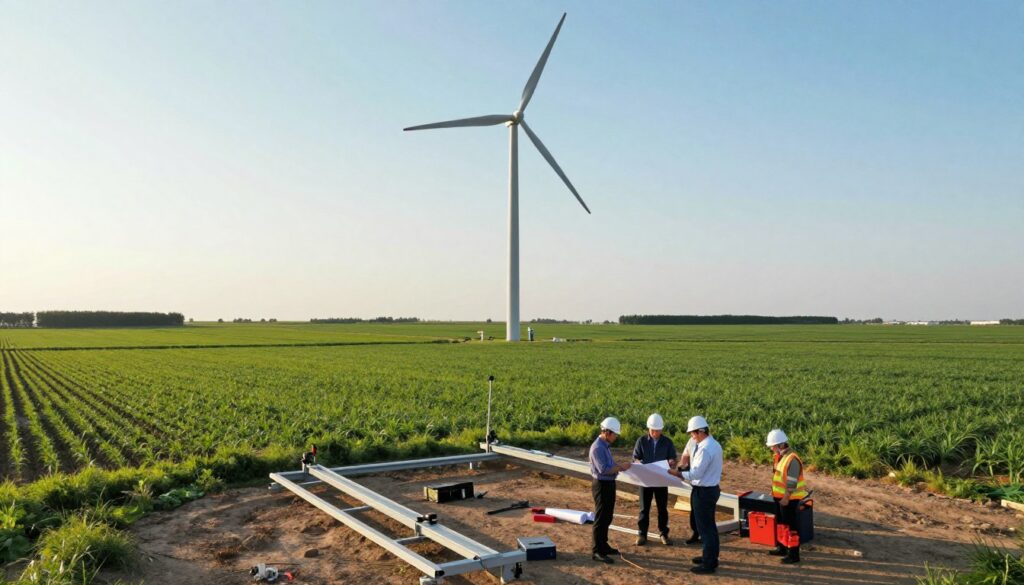
Act I: Become a Wind Detective
Your first clue is in the trees. Look for vegetation flagging, where trees are cut on one side by wind. This shows where the wind blows strongest.
To get real data, use tools like wind maps from the DOE or local universities. For more precise data, install a weather station like the Davis Instruments Vantage Pro2 (around $900) on a pipe.
This phase is about learning about your farm’s weather. You compare your farm’s weather with the wider area. It’s the start of making your wind turbine agriculture work.
Act II: Navigate the Zoning Maze
Now, you face local rules that might seem old-fashioned. Many places have rules that are too low for wind turbines. This can be a problem.
You need to convince planning boards and calm neighbors. Explain that modern turbines are quiet. Getting permits can be a big challenge before you start.
Act III: Choose Your Grid Relationship Status
Do you want to be connected to the grid or go off-grid? This choice affects your system’s design and cost.
- Grid-Connected: You become a mini power plant. You use what you need and sell extra to the utility. This involves complex rules with your power company.
- Stand-Alone (Off-Grid): You build your own energy system. This includes batteries and an inverter. It’s more independent but needs careful planning.
Act IV: The Great Size-Up
Now, you do some financial detective work. Look at your energy bills for a year. The first rule is to save energy first.
Match your energy needs with the turbine’s output. Choose the right size turbine. A too-big turbine wastes money. A too-small one won’t meet your needs.
Act V: The Tower Raising
This is the final act. It’s where your plans turn into real steel and spinning blades. Your system comes together:
- The turbine itself (the rotor and generator)
- The tower (the taller, the better for wind access)
- Wiring and the controller (the nervous system)
- For off-grid systems: batteries and an inverter (the energy bank)
Putting up the tower and seeing the blades spin is your victory. Each step before this is crucial. Many wind turbine agriculture projects don’t make it this far. But those that do can last for decades.
Regulatory Issues
The world of farm wind energy is a mix of local rules and big utility hurdles. It’s like a three-act play full of red tape and frustration.
First, you’ll deal with your local zoning board. They stick to old rules, like a 35-foot height limit. This is a problem for your 80-foot tower.
Your tower is seen as a “structure” by them. This is a big issue. Act One: The Variance Process begins.
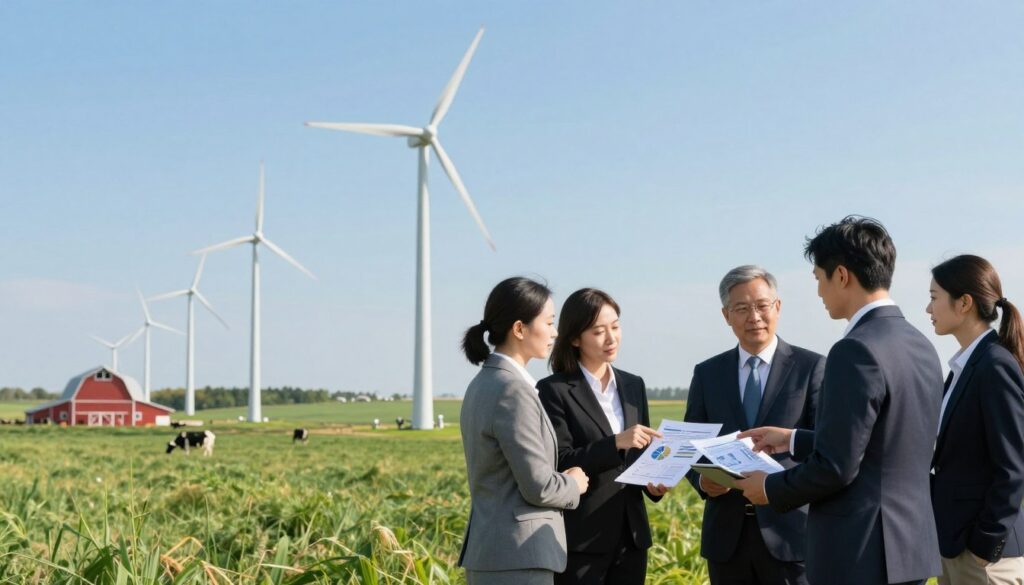
Convincing officials is a challenge. You need to show your turbine won’t ruin the view. Bring charts and studies. And be patient.
Then, your neighbors get involved. They might worry about views and noise.
You’ll need to show them the sound is not loud. It’s more like a distant highway. This is a tricky conversation.
The Utility Tango
After dealing with locals, the utility process starts. This is governed by the Public Utility Regulatory Policies Act (PURPA) from 1978. It’s meant to be cooperative but can be tough today.
The utility might say it’s for “grid stability” and “safety.” This can mean delays, high fees, and lots of paperwork. It’s like trying to get your energy accepted by a big, slow system.
To get through this, you need to keep going. Start with your local building inspector. Then, the planning board. Finally, the utility’s “generation interconnection” department.
Key Regulatory Hurdles at a Glance
| Hurdle | Governing Body | Typical Sticking Point | Farmer’s Best Move |
|---|---|---|---|
| Height & Siting | Local Zoning Board | 35-foot variance requirement | Apply for variance early with visual impact studies |
| Neighbor Relations | Informal / Community | Noise & aesthetic complaints | Proactive communication with sound data |
| Grid Connection | Local Utility & State Commission | Interconnection fees & technical reviews | Consult the American Wind Energy Association for current standards |
The American Wind Energy Association is very helpful. They keep up with changing rules. Don’t go in blind.
Getting farm wind energy is not just about tech. It’s about being persistent. You’re not just putting up a turbine. You’re fighting a system built for big power.
The benefits are big. You get your own energy and a fixed price for years. But, you have to learn how to deal with the system.
Is it worth it? For many farmers, yes. The key is to know what you’re up against before you start.
Cost/Benefit Breakdown
Looking at the financial side of wind turbine agriculture is a reality check. It’s where dreams of saving the planet meet the harsh numbers of a spreadsheet. This isn’t just a hobby; it’s a big investment.
The initial costs are steep. That wind assessment kit costs $8,500. The turbine itself is a big expense, like a new farm machine.
But, there’s a piece of advice your optimistic friend might not share: Thou Shalt Conserve First. Before spending on turbines, cut down on energy use. It’s like fixing a leaky bucket before drilling a new well.
Here’s a smart spending order:
- Insulation upgrades – They offer a high return on investment
- ENERGY STAR appliances – They pay off quickly, in months
- LED lighting conversions – A smart, almost free investment
- Efficient pump systems – Fixing a major energy leak
Only after you’ve reduced waste does wind turbine agriculture make sense. The payback period depends on wind, electricity costs, and government incentives.
- Your actual wind resource (not what the salesman promised)
- Local electricity costs (currently trending upward like a SpaceX launch)
- Available incentives (the political football of renewable policy)
Incentives like tax credits and rebates are nice, but not guaranteed. They can help, but don’t count on them too much. For more details, see our analysis of how much does a wind turbine cost and if it’s worth it.
The benefits of wind turbines go beyond money. They offer stability in energy costs. This means you’re not at the mercy of oil prices or utility rate hikes.
Think of it as managing risk, like diversifying crops. The turbine is like a crop that harvests wind, not rain.
Wind turbine agriculture won’t make you rich fast. If you want quick money, try Bitcoin or lottery tickets. But if you value being self-sufficient, it’s worth considering.
This approach offers a sense of control and independence. In times of climate and market uncertainty, that’s priceless.
Farmer Experiences
So you’ve done the math. You’ve sorted out the permits. Now, it’s time to face the real deal—the daily life with a big, moving neighbor. This isn’t a quick way to make money. It’s a long-term commitment.
Tim Hemphill from Iowa shares his story. His farm wind energy deal brings in $20,000 a year. This steady income helps him through tough times. Jason Wilson in Colorado talks about keeping his family farm alive for the future. David Day in North Dakota sees his turbines as a safety net for upgrades and retirement.
These farmers didn’t just want the money. They wanted to be independent from the grid. They felt proud when their lights stayed on while others went dark. They also wanted to take care of their land by using the wind.
But, it’s not all sunshine. There’s upkeep, regular checks, and the sound of machinery. It’s just another piece of equipment to maintain. They become part of a bigger network, supporting jobs and the U.S. economy.
In the end, Farm wind energy changes the rural economy in big ways. As the Clean Grid Alliance notes, these projects help fund local roads and lower taxes. Farmers become producers, not just of food, but of power too. It’s a hopeful bet on their land and the sky above.