Regenerative agriculture has moved from a niche discussion into a serious farm-management and supply-chain question. The surge is encouraging for sustainable farming, but the economic case is not simple. Farm outcomes depend on transition costs, time horizon, local markets, buyer programs, and the ability to measure results without overstating them.
Regenerative Agriculture Economics Need Time
The strongest financial signal in the recent research is that economic gains may arrive slowly rather than immediately. A financial analysis of wheat farms in Kansas found that a full transition to regenerative systems required an upfront cost of about US$40 per acre. The same analysis reported that profits 70% to 120% higher than conventional tillage could appear after roughly 13 years, with most of the gain beginning in the third year of the shift, according to the ASPE analysis.
Regenerative Agriculture Payback Is Gradual
That timing matters for farmers who operate on narrow margins. A practice that may improve profitability over a decade can still create strain in the first few seasons. Seed, equipment, agronomy support, recordkeeping, certification demands, and possible learning-curve losses can all affect cash flow, even when the long-term direction is positive.
For regenerative agriculture to be economically viable, the transition period needs more attention than the headline return. A 13-year outcome is useful for planning, but it does not pay an operating loan in year one. Community lenders, cooperatives, grain buyers, and conservation programs can help only if their incentives match the farm’s actual risk period.
Margins Do Not Remove Early Risk
Research from 78 farms in 14 European countries during the 2021-2023 period found that regenerative farms achieved a 20% higher margin per hectare, while using 75% less pesticide and 61% less nitrogen than traditional farms. Those findings point to a promising link between lower input use and stronger margins, but they should not be read as a universal guarantee. Crop type, climate, soils, land tenure, and market access can change the result.
The practical lesson is cautious optimism. Better margins are possible, but farmers need budgets built around their own fields, not averages from another region. Partial adoption may also be more realistic than a full-system shift for farms with rented acres, short lease terms, or limited access to technical advice.
Practice Changes Affect Costs And Inputs
Input efficiency is one reason sustainable farming advocates are paying close attention. Lower pesticide and nitrogen use can reduce exposure to price swings in chemical and fertilizer markets. It can also lower working-capital needs if yields and quality remain competitive. That is a meaningful business issue, not just an environmental goal.
Lower Input Use Can Help Cash Flow
Fertilizer and crop-protection expenses are major cost centers for many operations. If a farm can reduce these purchases without sacrificing marketable output, the savings may improve resilience. The European results are notable because they connect reduced input use with a higher margin per hectare, rather than treating sustainability as a separate cost.
Still, the input story should be handled carefully. A reduction in nitrogen or pesticide use is not automatically profitable if it leads to lower yields, quality discounts, weed pressure, or disease problems. The better question is whether a farm can maintain or improve net returns while reducing dependency on purchased inputs.
Measurement Still Needs Care
Regenerative agriculture is not a uniform recipe. The term is used across different crops, regions, and production systems, which makes measurement difficult. A farmer may track soil indicators, input costs, yield stability, margin per acre, water performance, or market premiums. Each measure tells only part of the story.
This is where local data has value. County-level peer groups, extension-style field days, and producer-led recordkeeping can help separate practical lessons from promotional claims. For community learning, even simple field notes and sketches can preserve observations across seasons; the same network includes The Sketchbook Project, a reminder that careful documentation can support shared knowledge beyond one farm gate.
Corporate Programs Are Expanding
Large food and agriculture companies are now treating sustainable production practices as part of supply-chain planning. In September 2026, ADM reported that its 2025 global programs engaged more than 56,000 farmers, covered about 4.6 million acres, operated across 11 countries, and included 10 crops, according to the ADM report.
Scale Can Improve Access
That scale matters because many farmers cannot build specialized markets alone. Buyer programs may create pathways for technical support, data systems, and market recognition. If well designed, they can lower barriers for farms that want to test new practices but need a clearer route to payment or risk sharing.
Scale also creates a responsibility for accuracy. Companies should be clear about what is measured, what is verified, and what remains uncertain. Acreage enrollment is useful information, but it does not automatically prove farm profitability, soil outcomes, or community benefit on every enrolled acre.
Markets Must Match Farm Reality
Economic viability depends on whether buyers offer terms that reflect the real costs of change. Farmers often need confidence about contract length, data ownership, practice requirements, delivery points, and payment timing. A program that asks for multi-year management changes but provides only short-term market signals may not be enough.
Agheiro has addressed this same tension in its coverage of policy meeting farm reality, where farmer response depends on local markets, technical support, land access, and trust. Those factors are not side issues. They often decide whether a promising idea becomes a durable business practice.
Community Adoption Depends On Trust
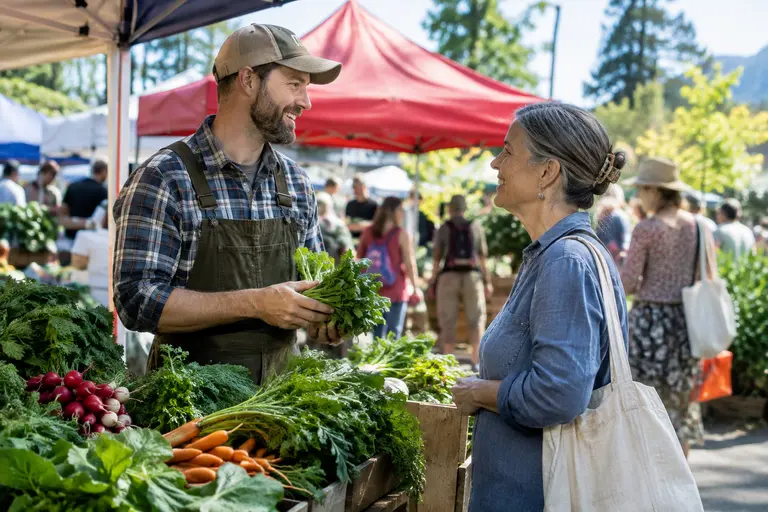
Community-driven strategies can make the difference between isolated trials and wider adoption. Farmers tend to weigh evidence from neighbors, local advisers, and trusted buyers more heavily than broad claims. This is rational. A practice that works on one soil type or crop rotation may not fit another.
Local Proof Reduces Uncertainty
Farmers need field-level proof before making costly changes. Shared budgets, side-by-side comparisons, and honest discussion of failures are especially valuable. If a transition requires several years before returns strengthen, producers need to know how others handled the early years, not just what the later returns looked like.
Community groups can also help smaller farms participate in markets that require documentation. Shared training, cooperative recordkeeping, and peer review can reduce the administrative load. These strategies are practical because they treat adoption as a social and economic process, not only a technical one.
Claims Should Stay Proportionate
The recent data supports real interest and measurable potential. It does not support blanket promises. Higher margins, lower input use, and wider corporate enrollment are positive signals, but results vary. Cautious language protects farmers from unrealistic expectations and helps buyers build programs that can withstand scrutiny.
Regenerative Agriculture And Farm Viability
The surge in regenerative agriculture is significant because it links sustainability goals with the financial future of farms. The evidence cited here suggests that better margins and lower input use are possible, while corporate programs are expanding the market channels available to producers. Yet the transition is still a business decision with timing risk.
For farmers, the best path is likely a staged approach: test practices on manageable acreage, track costs and yields, compare results over multiple seasons, and ask buyers for clear terms. For buyers and policymakers, the priority should be practical support during the early transition years. A system that rewards outcomes while respecting farm-level risk has a better chance of lasting than one built on broad claims alone.