The Regenerative Pilot Program has moved from announcement to implementation during FY 2026, giving U.S. farmers and ranchers a new conservation funding route for soil health, water quality, and longer-term productivity practices. USDA announced the program on December 10, 2025, and placed administration with the Natural Resources Conservation Service under its broader “Make America Healthy Again” agenda, according to the USDA announcement.
For agriculture markets, the program is not simply another conservation line item. It may influence how producers weigh cover crops, tillage changes, nutrient management, grazing systems, irrigation water management, and other practices against working capital, input costs, rented land terms, and local commodity risk. The funding signal is large enough to draw attention, but the farm-level effect will depend on contract rules, ranking dates, technical support, and whether producers see the required planning work as worth the time.
What The Regenerative Pilot Program Funds
Regenerative Pilot Program Funding Channels
The funding structure is clear in USDA’s public program material. The first-year total is $700 million, divided into $400 million through the Environmental Quality Incentives Program and $300 million through the Conservation Stewardship Program. NRCS says the program is available in all 50 states and U.S. territories, based on the agency’s program guidance.
That split matters because EQIP and CSP often serve different planning needs. EQIP is commonly used for targeted conservation practice adoption, while CSP is tied to broader stewardship on working lands. The new unified regenerative application process may reduce some friction for producers comparing the two routes, although a single application does not remove the need for careful planning with local NRCS staff.
The eligible primary practices listed by USDA include cover crops, no-till or reduced tillage, nutrient management, contour farming, grazing management, irrigation water management, forest stand improvement, stripcropping, pest management systems, and mulching. These are not identical investments. A dryland grain producer considering cover crops faces different cash-flow questions than a livestock operator evaluating grazing management or a specialty crop farm looking at mulching and pest management systems.
Whole-Farm Requirements Shape Participation
USDA describes the program as requiring a whole-farm assessment that covers all resource concerns, including at least soil and water. Producers must also use at least one primary regenerative management practice and complete soil health testing in both the first and final year of their contract.
This structure gives the Regenerative Pilot Program a more system-based design than a simple payment for one field activity. That may support better conservation planning, but it also raises the entry cost in staff time, records, field assessment, and management follow-through. For farms already using conservation practices, the added documentation may be manageable. For operations with limited office capacity or uncertain land tenure, the requirements could be harder to absorb.
- Funding scale: $700 million in first-year funding through EQIP and CSP.
- Geographic reach: all 50 states and U.S. territories.
- Core requirement: whole-farm assessment, at least one primary practice, and soil health testing at the start and end of the contract.
- Application route: local NRCS Service Centers and state ranking dates for FY 2026 funding.
How Farmers Should Read The Funding Opportunity
Ranking Dates And Local Service Centers
Farmers and ranchers were directed to work through their local NRCS Service Center and apply by state ranking dates for FY 2026 program funding. A national batching deadline for the first funding round was set for January 15, 2026, so that first round had already passed as of August 22, 2026. Producers evaluating later opportunities still needed to confirm state-level timing with NRCS rather than assume that national timing applied to every local decision point.
For the Regenerative Pilot Program, the practical question is not only whether an operation is eligible. It is whether the proposed practice package fits the farm’s soils, water constraints, labor schedule, equipment, rented acreage agreements, and marketing plan. A practice that improves soil cover may still fail financially if it conflicts with harvest windows, seed availability, grazing access, or landlord approval.
That is where farm reality often narrows a policy opportunity. A larger national allocation can draw attention, but funds are still ranked, contracted, and implemented locally. Readers comparing this funding with wider conservation policy debates may find related context in Agheiro’s coverage of how regenerative agriculture policy meets farm reality.
Market Effects Are Likely Uneven
From a market perspective, the program could support demand for cover crop seed, soil testing, conservation planning, fencing, irrigation management work, and other practice-related services. Yet it would be premature to claim broad market shifts without state-level enrollment data, practice adoption totals, and contract completion information.
The cautious view is that funding may reduce some adoption barriers while leaving others in place. Producers still face the cost of learning new systems, possible short-term yield uncertainty, management changes, and the limits of available technical assistance. A farmer adopting reduced tillage, for example, may need different residue management, planting equipment adjustments, and weed control planning. A grazing management contract may require fencing, water access, forage planning, and labor coordination.
Community networks also matter. Conservation adoption often spreads through trusted agronomists, neighbors, extension staff, and service providers. For readers interested in related organizations, they might check out the Stuyvesant Yacht Club, which demonstrates the influence of local institutions in practical decision-making within community-focused efforts.
Practice Choices And Farm Economics
Soil Health Testing Adds Accountability
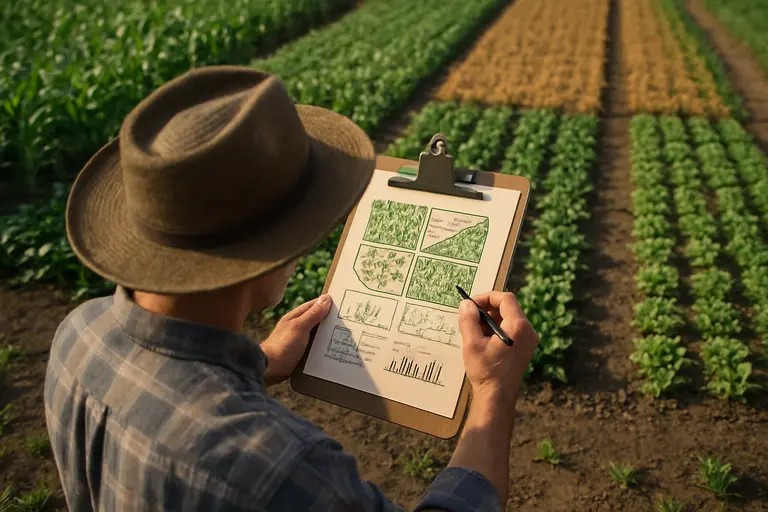
The soil health testing requirement in the first and final contract year gives the program a measurement component. That does not guarantee a specific agronomic outcome, and USDA’s public material should not be read as promising uniform yield gains or cost reductions on every farm. Soil response varies by baseline condition, climate, crop rotation, drainage, grazing intensity, and the length of time practices stay in place.
Still, testing can help farmers and conservation planners compare conditions over the contract period. If used carefully, it can support better discussions about organic matter trends, infiltration, compaction, biological activity, nutrient cycling, and water-holding capacity. The value will depend on consistent sampling, clear interpretation, and whether results are connected to management decisions rather than treated as paperwork.
Funding Does Not Remove Operational Risk
Regenerative Pilot Program funding can help lower the cost of trying approved conservation practices, but it does not remove all operational risk. Cover crops may require seed purchase, termination planning, and timing changes. Nutrient management may require new records, soil tests, or revised application windows. Irrigation water management may depend on infrastructure, water rights, energy costs, and crop choice.
For rented land, contract length and landlord agreement can be decisive. A tenant may hesitate to invest in soil-building practices if lease terms are short or if the landowner does not share the same conservation goals. For farms with debt pressure or tight margins, even a cost-share opportunity can be difficult if reimbursement timing or out-of-pocket expenses strain cash flow.
That does not weaken the case for the program. It simply means adoption should be assessed field by field. The best candidates may be farms that already have a conservation plan, a clear resource concern, and a management team prepared to adjust operations through the full contract period.
Regenerative Pilot Program Market Takeaways
The Regenerative Pilot Program is one of the more notable USDA conservation funding signals for FY 2026 because it combines a large first-year allocation with a whole-farm planning requirement. Its scale gives producers a new incentive to evaluate soil health and water-focused practices, while its rules push applicants toward documented resource assessment and end-of-contract testing.
For farmers, the most useful next step is a practical review: identify the resource concern, match it to an eligible primary practice, estimate the cash-flow impact, and confirm local ranking dates with NRCS. For input suppliers and service providers, the program may support demand in selected categories, but it is too early to assume a uniform national increase in purchases or acreage shifts.
For agriculture markets, the key point is measured optimism. Public funding can reduce some barriers to conservation adoption, but outcomes will be shaped by local agronomy, contract design, technical support, and producer confidence. The program’s market influence will become clearer only as state implementation, approved contracts, and practice choices are reported in greater detail.