Modern farming uses digital info to boost success and increase yields. Tools like GPS and remote sensing changed how we view fields in the late 20th century. They helped us understand soil health and plant needs better.
Today, precision farming tools help farmers make informed decisions daily. By checking field details, farmers use resources more wisely. This ensures every acre gets what it needs to grow well.
Digital systems have replaced old paper maps and bulky binders. These modern platforms manage digital data with advanced mapping. New technology offers a clear view of field health and growth patterns for better decisions.
Using analytics in precision agriculture crops management leads to better environmental results. Knowing your land’s exact conditions reduces waste and boosts efficiency. Modern innovation keeps improving American farming every year.
Sensors, Drones, and Field Mapping
Technologies like sensors, drones, and field mapping have changed farming. They help farmers manage their crops better. Now, they can collect and analyze lots of data.
Technologies Driving Precision Agriculture
Technologies Driving Precision Agriculture
Precision agriculture uses advanced tech to gather and understand data. Key technologies include:
- Sensors: They check soil moisture, temperature, and crop health.
- Drones: With cameras and sensors, drones give aerial views of fields. This helps farmers spot problems early.
- Field Mapping: Detailed field maps help farmers track crop health and soil conditions.
Role of IoT and Remote Sensing
The Internet of Things (IoT) and remote sensing are key in precision agriculture. IoT devices, like sensors, send data online for instant analysis. Remote sensing, including drones and satellites, lets farmers check big areas without being there.
Remote sensing has changed how farmers watch their crops. It helps spot pests, nutrient needs, and water issues early. This means farmers can act fast.
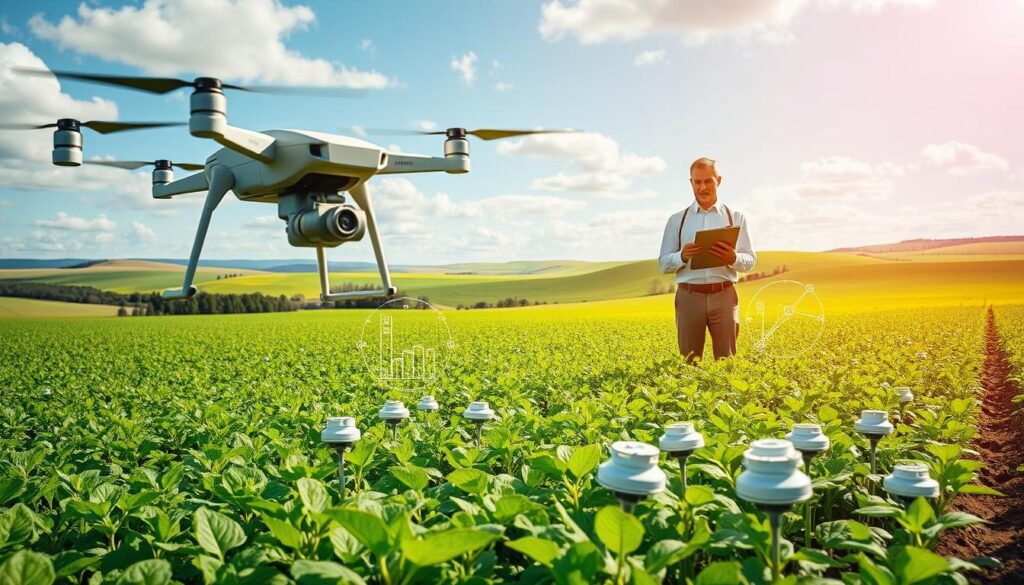
Together, these technologies help farmers make smart choices. This leads to better crop yields and less waste. As precision farming grows, we’ll see more cool uses of these techs.
Variable-Rate Applications
Precision agriculture helps farmers use resources better by applying them in variable rates. This method cuts down on waste and boosts efficiency. It tailors the use of fertilizers, pesticides, and water to each field area’s needs.
Farmers use crop data tools to check soil, moisture, and crop health. This info helps them know exactly what each part of the field needs. This way, every area gets the right amount of resources, leading to better crops and less harm to the environment.
Optimizing Inputs with Precision
Getting the most out of farming is key. Variable-rate applications let farmers use the right amount of inputs in the right spots. For example, areas with bad soil get more fertilizer, while areas with good soil don’t need as much.
This approach not only saves resources but also keeps the soil healthy. It also reduces the environmental impact of farming. Below is a table showing how variable-rate applications can make farming more efficient.
| Input | Traditional Method | Variable-Rate Application |
|---|---|---|
| Fertilizers | Uniform application across the field | Application based on soil nutrient levels |
| Pesticides | Blanket application | Targeted application based on pest presence |
| Irrigation | Uniform watering schedule | Watering based on soil moisture levels |
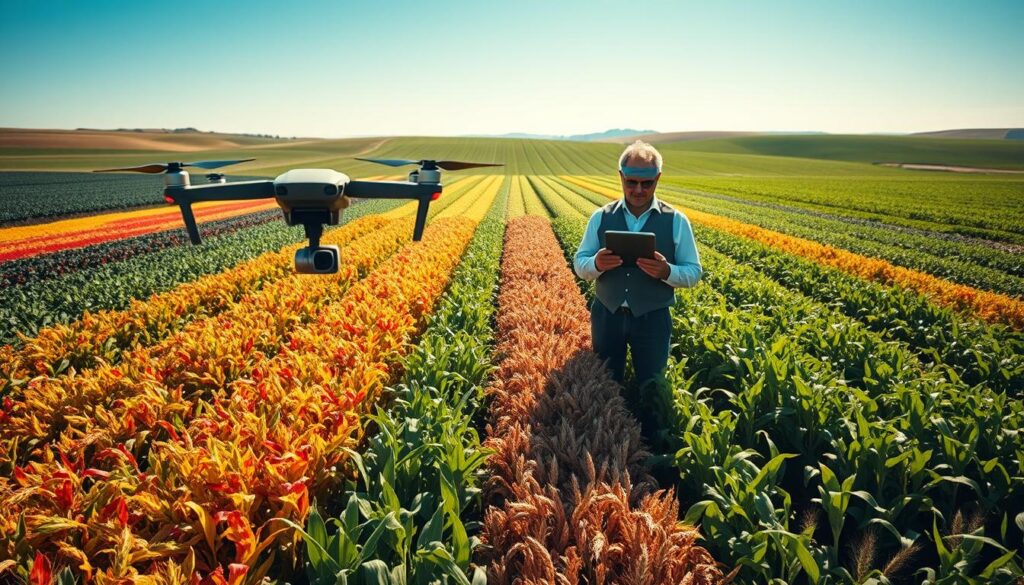
Using variable-rate applications is a big step towards better farming. By using detailed data, farmers can work more efficiently. This helps make farming more sustainable for the future.
Measuring Performance Across Acres
Farmers can now measure how well their land is doing with great accuracy. This is thanks to new technology.
Precision farming tools help farmers keep an eye on their crops better. Tools like Digital Twins, IoT sensors, UAVs, and AI help a lot in this area.
Monitoring and Analyzing Crop Performance
DTs use data from IoT sensors and UAVs to build detailed models of farms. This lets farmers predict and improve how their crops will do.
IoT sensors give farmers real-time info on soil and crop health. UAVs with cameras give them clear pictures of their fields.
| Technology | Function | Benefit |
|---|---|---|
| IoT Sensors | Monitor soil moisture, temperature, and crop health | Real-time data for informed decisions |
| UAVs | Provide high-resolution imagery of fields | Detailed insights into crop health and development |
| AI-driven Analytics | Analyze data from various sources | Predictive modeling and optimization of farming operations |
Together, these tools help farmers see how their crops are doing. They can spot where to improve and make smart choices for their farms.
Science-Based Decision Making
Precision farming has changed the way we farm. It gives farmers tools to make better choices. With data from sensors, drones, and maps, farmers can grow more and waste less.
Data-Driven Insights
Advanced tech in precision farming collects and analyzes lots of data. This data helps farmers plan better, making farming more sustainable and productive. For example, using precision irrigation cuts down on water waste.
Studies show precision farming boosts crop yields and saves resources. Precision agriculture can increase yields by 4% and lower pesticide use by 9%. By using science, farmers can keep improving and help our food system be more sustainable.