Farmers today live in a world where everything is connected. The prices at your local grocery store can change because of events far away. International trade is key to these changes.
When there are conflicts or problems with supply chains, farmers feel it right away. Farmers in Ontario and the US face ups and downs because of global issues. These problems can lead to a shortage of workers or high costs for farming.
Innovation is important to keep these systems working. By using a famine firewall, farmers can handle risks like diseases and bad weather. Resilience is what farmers aim for in today’s world.
We might need 60% more food by 2050. This big increase in demand will put more pressure on farms. Knowing how trade policies affect the industry is more important than ever.
Supply Chain and Shipping Factors Affecting Farm Prices
The world’s supply chains and shipping are complex and affect farm prices a lot. The farming world is very sensitive to supply chain problems. These issues can cause export demand to change, which then impacts farm prices.
The Canada-US trade relationship shows how complex supply chains can be. Tariffs and trade issues in the agriculture industry are big topics. The trade between these countries is very connected, with products often crossing the border many times. This connection makes them vulnerable to supply chain problems.
Integrated Supply Chain Challenges
Supply chains face many challenges, like logistics, rules, and tariffs. Tariffs can change trade costs, affecting farm prices. The article “Tariffs and Trade in the Agriculture Industry” talks about how tariffs can mess up supply chains. This can make farming and buying food more expensive.

Tariffs can affect supply chains in many ways. They can make imports more expensive, which can raise farm costs. Tariffs can also lead to other countries retaliating, making trade even harder.
To deal with these issues, expanding trade partnerships is a good idea. By trading with more countries, farms can avoid the bad effects of tariffs and supply chain problems.
| Factor | Impact on Supply Chain | Effect on Farm Prices |
|---|---|---|
| Tariffs | Increased costs, possible retaliatory actions | Higher costs, might lower demand |
| Logistical Issues | Delays, higher transport costs | Prices might change due to delays or higher costs |
| Regulatory Compliance | More complexity, possible non-compliance costs | Could lead to higher costs for farmers |
For more on how to improve farming, like soil testing, there are many resources. They offer tips and new ideas for farmers and those interested in agriculture.
Currency and Trade Policy Impact on Agricultural Markets
Trade policies and currency exchange rates deeply affect global agriculture markets. These factors can cause big changes in agricultural prices. This impacts farmers, consumers, and the economy all over the world.
The strength of a country’s currency is key to its agricultural exports. A weaker currency makes products cheaper globally, boosting exports. But a strong currency can make them more expensive, lowering demand.
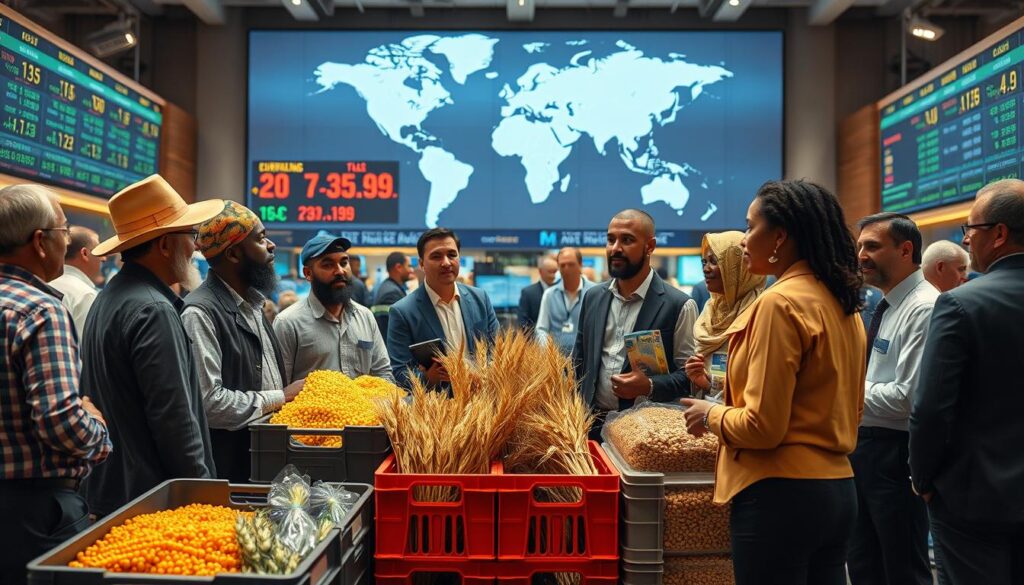
Trade Policy Uncertainty and Market Volatility
Uncertainty in trade policies also causes market ups and downs in global agriculture markets. Trade agreements and disputes can change agricultural prices. For example, tariffs on imports can raise prices and lower demand. On the other hand, export subsidies can lower prices, hurting producers in other countries.
The future of grains, oilseeds, and pulses is very sensitive to global trade issues. Trade deals that cut tariffs and barriers can stabilize markets. They improve access and reduce uncertainty.
- Trade agreements can reduce tariffs and other barriers, improving market access.
- Currency fluctuations can affect the competitiveness of agricultural exports.
- Market volatility can be triggered by trade policy uncertainty.
It’s vital for those in the agricultural sector to understand these factors. Farmers, policymakers, and consumers need to know about trade policy and currency changes. This knowledge helps them make better decisions and deal with market volatility risks.
Case Studies of Global Price Shifts and Their Local Impact
Global market changes can greatly affect local farm prices. This is shown in many case studies. Changes in export demand are key in setting prices for farm products.
Shifts in Global Demand: Canola and Pulses
The canola market shows how global demand changes can impact local prices. When China wanted more canola, Canadian farmers grew more. This change affected local prices.
Changes in demand for pulses, like lentils and peas, also cause price swings. These crops are grown in many places.
Trade policies, like tariffs, also play a big role. For example, tariffs on Canadian peas and lentils cut their export demand. This led to price changes in the local market.
It’s important for farmers and policymakers to understand these global factors. By studying these cases, they can make better decisions. This helps them deal with the ups and downs of global agricultural markets.