Imagine farmers wearing lab coats instead of overalls. That’s what’s happening in the seed tech world. 19th-century burlap sacks now sit next to smart seeds with microchips. It’s a big change from trading corn at county fairs.
Modern seed tech is growing fast, like a genetically modified soybean. But it’s not just about more crops. AI is now used in breeding, analyzing lots of data. It’s like a matchmaking service for agriculture.
Seed-X’s GeNee sorter is like a “Tinder for premium seeds.” It uses special imaging to find the best genetic matches. This is a big change from how seeds were chosen before. And yes, even plants have contracts now.
We’re starting a journey into the world of smart seeds. We’ll ask when seeds became tech products. How did early 20th-century hybrid experiments turn into DNA-encoded microcapsules? And why buying seeds is now so complicated? Let’s explore.
Seed Coating and Treatment
Imagine trying to sort M&M’s by color while wearing oven mitts. That’s how seed selection used to be before AI came along. Now, smart seeds get a high-tech makeover. They go from being sorted with old-fashioned sieves to being analyzed by neural networks in seconds.
The AI Makeover Your Seeds Deserve
Seed-X’s deep learning sorter is like a matchmaker for seeds and the right growing conditions. It’s like Tinder for soybeans, but it actually works. This is a far cry from the old days of seed sorting:
- Identifies microscopic defects invisible to human eyes
- Predicts germination success with 94% accuracy
- Customizes coatings based on soil pH and weather patterns
The real magic is in TMG’s soybean program. It combines Brazilian practicality with Silicon Valley speed. Their 30% faster development cycle makes improving crops feel like a software update.
From Guesswork to Genome Work
Microencapsulation technology now delivers nutrients and pesticides with precision. These tiny systems:
- Boost seedling survival rates by 40%
- Reduce chemical runoff by 55%
- Create self-regulating plant “microbiomes”
Remember Monsanto’s chemical cocktails? Today’s treatments are much more advanced. Modern seed innovations are like Swiss Army knives – they do many things well and are surprisingly elegant.
“We’re not coating seeds anymore – we’re programming them.”
As farming technology moves from brute-force chemistry to elegant genomics, a question remains. When will seed treatments become so advanced they start giving TED Talks?
Drought- and Pest-Resistant Genes
While politicians talk about climate policies, scientists are changing plant DNA to beat our new weather. Imagine crops that can handle droughts like camels and keep pests away like natural repellents. This isn’t science fiction; it’s today’s seed tech breakthrough.
CRISPR vs. Climate Change
Gene editors use molecular scalpels to fight climate change. For example, Solynta’s potatoes don’t need fungicides and can fight late blight naturally. In Africa, some fields are dry while others are flooded. CRISPR-modified sorghum can grow well in both dry and wet conditions.
Old GMOs are outdated. Today, plant genetics work like software updates, making small changes. Tropical Melgene’s soybeans are a great example, growing 23% more without adding foreign DNA. Critics who call this “Frankenfood” are like those who don’t like gluten-free options. We’re just improving nature’s recipe, not changing it.
The best part is when farming innovation meets nature. Now, crops have tiny bodyguards that keep pests away and protect against diseases. It’s a battle where only crop failure loses.
GMO vs. Non-GMO Innovations
Today’s seed aisle feels like a dating app: “Non-GMO, gluten-free, loves long walks in nutrient-rich soil.” The choice between conventional and engineered crops has turned into a battle of branding and science. It’s all about marketing, making it hard to keep up.
The Seed Aisle Identity Crisis
Equinom’s “Tinder for chickpeas” is a unique approach. They use algorithms to match plant traits, like a dating coach. CEO Gil Shalev jokes:
“We’re creating legumes that make tofu taste less like culinary penance.”
But traditional GMO wheat is like a toxic relationship. It has herbicide resistance profiles that are alarming.
Now, the question is: Has “non-GMO” become like “organic”? A label used to charge more? Solynta’s hybrid potatoes show a different path. They use precision breeding to fight diseases, preventing 19 million tons of crop loss each year. That’s a big win against Monsanto.
Breeding Beyond Binary
There are three key shifts in innovation:
- Startups are rebranding plant sex (sorry, “diploid hybridization”) as disruptive tech
- CRISPR babies get headlines while algorithm-matched chickpeas get results
- Farmers care more about yield than ideological purity
| Approach | Tech | Poster Child | Environmental Win |
|---|---|---|---|
| GMO 2.0 | CRISPR editing | Drought-proof corn | 30% less water use |
| Non-GMO+ | Algorithm breeding | Equinom’s chickpeas | 50% higher protein |
| Hybrid Hustle | Somatic fusion | Solynta potatoes | Zero blight chemicals |
Seed catalogs are now tech brochures. Farmers must weigh if the method matters if the results feed more people. The answer might come from this middle ground between lab science and heirloom romance.
Farmer Success Stories
Forget about blockchain tractors and NFT compost bags. The real change is happening in fields where farmers work hard. They use seed tech that really works. Let’s explore where theory meets reality.
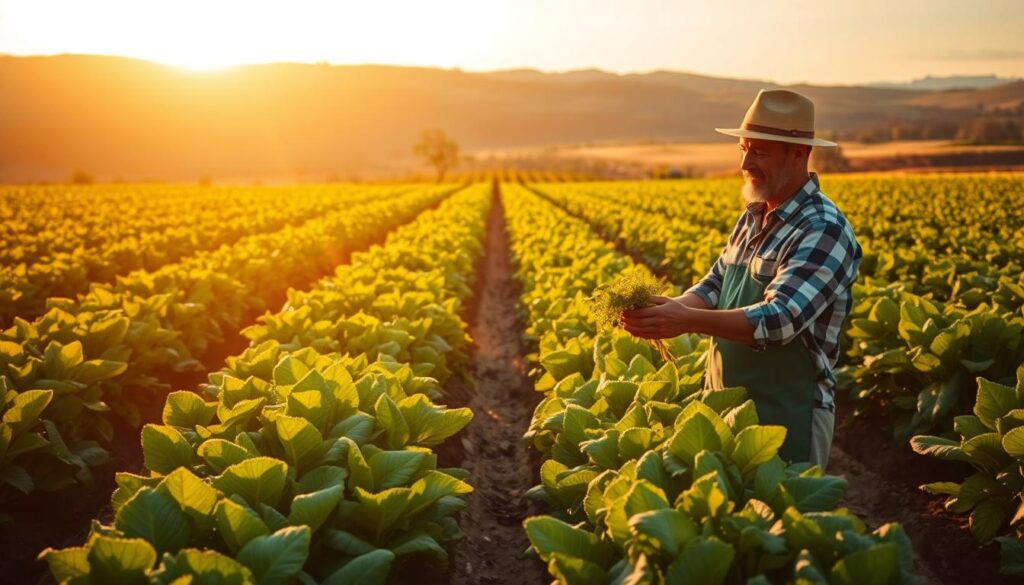
From Lab Coats to Overalls
Kenyan potato farmers showed us how farming innovation works. They used CRISPR-edited spuds that resisted late blight. Yields went up four times.
One farmer said, “These tubers don’t care about my Wi-Fi password – they just grow.” This success wasn’t in a lab. It was in real fields where growing is tough.
Yield Gains in the Trenches
In Nigeria’s maize belt, farmers got amazing results. They used seeds from top seed brands like Corteva and saw a 60% increase in yields. Despite unpredictable rains.
A grower said: “My grandfather’s almanac can’t predict climate chaos, but these seeds? They’re like little climate negotiators.”
Big food companies are also helping. Sabra uses drought-resistant chickpeas, and Roquette works with pea growers. It’s about making food production better without harming the environment.
“We don’t need apps to tell us when to plant. We need seeds that survive the planting.”
These stories show a funny truth. While tech talks about changing farming, farmers are already doing it. They’re using seeds that are tough and reliable. Progress is often simple, like a potato that keeps growing.
Cost and Availability
Buying seeds shouldn’t be hard. Yet, farmers face a $14 billion market with seed innovations held back. It’s like trying to get a Tesla to fit in a tractor parade.
The $14 Billion Seed Cache
Smart seeds hit the market fast, but getting them to fields is tough. The USDA’s crop approval process is slow, taking seven years. In Europe, pesticide debates spark protests, making Capitol Hill seem calm.
“We’re breeding drought-resistant crops faster than we’re breeding regulatory common sense.”
Why Your Tractor’s Smarter Than Your Regulations
Farming tech moves faster than policy. Sri Lanka’s 2021 fertilizer ban showed the dangers of politics over science. Our system is outdated.
| Region | Average Approval Time | Key Hurdles | Innovation Gap |
|---|---|---|---|
| United States | 5-7 years | EPA/FDA turf wars | 3 patent cycles |
| European Union | 8-10 years | Public protests | 5 seed generations |
| Asia | 3-5 years | Import restrictions | 2 climate zones |
Your John Deere uses AI, but regulators use fax machines. Are we making smart seeds for the future, or just keeping old rules?
Conclusion
We’ve reached the end of our journey into crop circles. No, it’s not about alien lawn art. The seed innovation revolution is real. It’s when lab experts and farmers work together.
Think of it like Tinder for farming. CRISPR technology helps crops resist drought and absorb nutrients better. This creates a perfect match for farmers.
But let’s not get too excited. The real story is not just about bigger, better crops. It’s about surviving in a world where climate change is a threat. Remember when “farm-to-table” was just about overpriced kale? Now, it’s about adapting to a changing world.
“We’re not playing God. We’re just reading the instruction manual.”
The numbers show why this is important. 14 billion reasons prove it’s not just talk. From Iowa to Kenya, the agricultural revolution is happening now. The most surprising part? It’s old-school teamwork.
So, what’s next? We face a future where food security could be a huge success or a big failure. The tools and players are ready. The only question is, will we nurture these innovations or let them fade away?
Remember, the next time you eat an apple, it might have more genetic engineering than your TikTok feed. Bon appétit, future.
The Germination of Progress
Seed tech is advancing faster than Congress can pass farm bills. AI-powered seed sorters and CRISPR-edited supercrops are like agriculture’s new heroes. They fight against extreme heat and pests, not Thanos.
The $14 billion smart seeds market is booming. It’s making money while regulators play catch-up. It’s like a cash machine for farmers.
Today’s seed innovations face slow regulations. Farmers can analyze a plant’s genome on an iPad but face long waits for approval. It’s like trying to get through a slow internet connection.
Charles Miller recently called for change. He said we’re not just planting seeds, we’re coding the future. He wants policies that match our tech goals.
Imagine CRISPR-edited wheat growing in Texas and AI-coated pumpkin seeds fighting pests. The future is bright, but we must overcome obstacles.
The real harvest is a world where tech meets farming. Monsanto and organic farms share ideas. Your tomatoes will even text you when they need water. The journey has started, but will we overcome challenges in time?