Sorghum Dairy Forage has moved from a drought-tolerant backup crop toward a serious option for dairy ration planning. The shift is not based on one trait alone. It reflects gains in brown midrib genetics, male sterility, standability, processing methods, and practical ration balancing. For dairy farms facing heat, water limits, feed-cost pressure, or tighter forage inventories, these changes deserve attention, but they also require careful testing before major acreage changes.
The strongest evidence points to a measured role for sorghum rather than a full replacement for corn silage or alfalfa-grass silage in every dairy system. Results depend on hybrid type, growing season, harvest timing, kernel processing, ensiling quality, and ration formulation. That is why the current breeding story is best viewed as a widening set of tools, not a guarantee of equal performance under all conditions.
Why Sorghum Dairy Forage Is Moving Into Dairy Rations
Sorghum Dairy Forage And Ration Fit
For Sorghum Dairy Forage, the key question is whether cows can maintain intake and milk output when sorghum silage replaces part of a conventional forage base. A March 2026 feeding study in the research record reported that brown midrib male-sterile sorghum silage replaced 25% or 50% of conventional corn silage and increased dry matter intake and energy-corrected milk when diets were balanced. The same research notes emphasized that milk yield did not fall when energy balance was maintained through ration design.
That point matters because sorghum silage can differ from corn silage in starch concentration, fiber profile, and grain availability. If a ration simply swaps ingredients without adjustment, performance can suffer. If the ration accounts for digestible fiber, starch access, and supplemental grain, sorghum can fit more effectively. The practical message for nutritionists is that forage analysis and diet formulation are not optional in high-producing herds.
Annual Forage Mixes Add More Context
Sorghum also appears in mixed annual forage systems. A March 2026 Translational Animal Science study reported that Holstein cows fed an annual forage mix silage, including sorghum-sudangrass, Italian ryegrass, and legumes, had higher dry matter intake over an eight-week treatment while energy-corrected milk stayed similar to the control range of about 40.2 to 40.8 kilograms per day. The USDA Agricultural Research Service publication also reported improved fiber digestibility in that system USDA ARS publication.
This finding does not prove that every mixed annual forage system will perform the same way. It does show that sorghum-sudangrass can be part of a dairy forage plan when the crop is managed within a broader feed system. For farms seeking more flexible rotations, that may be as important as the performance of a single sorghum hybrid.
Breeding Traits Changing The Crop
Brown Midrib Improves Fiber Use
Brown midrib, often shortened to BMR, remains the most discussed sorghum forage trait for dairy systems. BMR types are valued because they are associated with improved fiber digestibility. A Florida study covering 2008 through 2019 found that spring-grown BMR forage sorghum had higher 30-hour neutral detergent fiber digestibility and higher predicted dry matter intake for cows producing 45 to 65 kilograms of milk per day than non-BMR sorghum or sorghum-sudangrass hybrids, especially in the spring season Florida sorghum study.
That evidence supports the idea that breeding has made sorghum more competitive as a dairy forage. It also points to a limit: season and hybrid type matter. A dairy farm cannot assume that all sorghums provide the same digestibility. The difference between a BMR forage sorghum, a BMR sorghum-sudangrass, and a non-BMR hybrid can be significant enough to change ration value.
Male Sterility Changes Energy Allocation
Male sterility is another trait receiving attention. In the research record, male-sterile sorghum combined with BMR was described as a way to redirect plant energy away from grain production and toward leaves and stems. In dairy feeding terms, that can raise the value of the vegetative portion of the plant by supporting digestible fiber. This helps explain why BMR male-sterile silage has drawn interest in lactating cow diets.
The tradeoff is that less grain formation can reduce starch contribution from the forage itself. That does not make the crop inferior, but it changes how the ration should be balanced. Dairy nutritionists may need to supply more grain or other energy sources if the forage brings high digestible fiber but lower available starch than corn silage.
Management Limits In Dairy Systems
Lodging Resistance And Harvest Timing
Older BMR sorghum material carried concerns about lodging, which can increase harvest losses and reduce feed quality. The August 21, 2026 agronomy article in the research record reported that modern breeding has improved lodging resistance in BMR hybrids. It also noted that harvest at the soft-dough stage, around 65% to 70% whole-plant moisture, can support both stand stability and high digestibility.
Harvest timing remains a major management variable. Cutting too early can reduce yield and create ensiling challenges. Cutting too late can reduce digestibility or complicate processing. The soft-dough target gives farmers a useful benchmark, but field moisture testing is still needed because dry-down varies by region, planting date, hybrid, and weather.
Kernel Processing Needs Attention
Kernel or berry processing is a technical issue that directly affects feed value. The research record reported that using kernel processors during harvest reduced intact sorghum berries from about 85% without processing to about 2% with processing. That difference is large because intact berries can pass through the cow with limited starch digestion.
This is one area where equipment decisions can shape the final value of a forage crop. A well-bred hybrid will not reach its feed potential if harvest equipment leaves most berries intact. Custom harvesters and dairy managers should discuss processor settings, chop length, moisture, and post-harvest kernel scoring before harvest begins.
What Farmers And Advisers Should Track
Regional Fit Still Matters
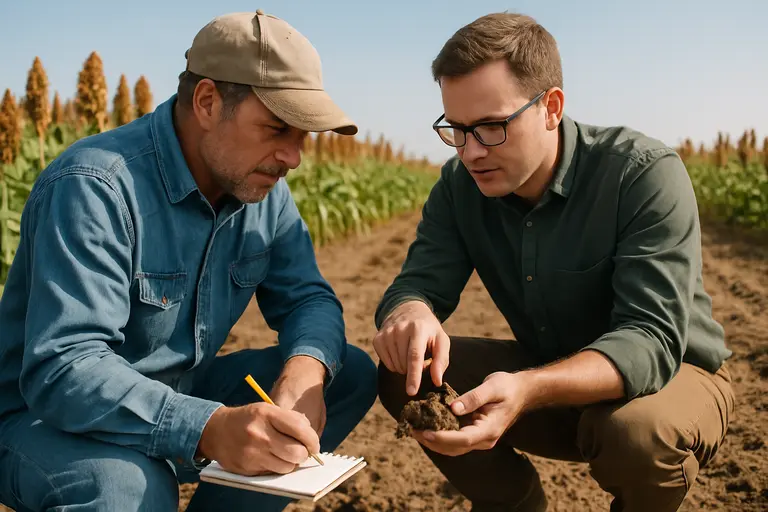
A West Texas comparative trial in the research record found that several sorghum hybrids matched or surpassed forage maize in biomass yield and nutritional quality under drought-limited and low-nutrient conditions. That is a useful signal for farms in water-stressed regions. It does not mean sorghum will outperform maize everywhere. In wetter or cooler regions, corn silage may still deliver superior starch yield and familiar ration performance.
Producers should compare crops on a per-acre and per-ton basis. Useful measures include dry matter yield, neutral detergent fiber digestibility, starch availability, harvest cost, irrigation need, stand risk, and cow response. Local field trials are especially valuable because national research cannot fully capture farm-level soil and climate differences.
Weed-Tolerant Traits Require Stewardship
New herbicide-tolerant traits in sorghum have also entered the discussion. The research record noted ACCase-inhibiting herbicide resistance derived from johnsongrass and ALS herbicide tolerance in sorghum, both intended to expand grass weed control options. These tools may help growers manage fields where grass weeds reduce establishment or forage yield.
Trait adoption should still be cautious. Herbicide tolerance is not a substitute for rotation planning, correct application timing, resistance management, and label compliance. Dairy forage systems also need to consider grazing restrictions, harvest intervals, and feed safety requirements. Farmers should work with crop advisers and extension specialists before changing weed-control programs.
- Test hybrids side by side before shifting large acreage.
- Use forage analysis to compare digestible fiber, starch, moisture, and ash.
- Coordinate harvest timing with dairy nutrition goals.
- Check kernel processing performance in the field, not only after ensiling.
- Balance rations around measured forage quality rather than crop name.
Clear communication is part of that process. Farms, advisers, and supply partners often need to turn trial data into practical summaries for lenders, nutritionists, or grower groups. For readers evaluating writing options beyond agriculture, Top Ten Writing Services is a relevant resource that can offer insights into effective editorial choices, although technical agricultural decisions should still rest on verified agronomic and nutrition data.
Sorghum Dairy Forage Breeding Priorities
The strongest case for Sorghum Dairy Forage is not that it replaces existing dairy forages in every situation. Its value is that breeding has improved traits that once limited adoption: fiber digestibility, standability, hybrid specialization, and compatibility with higher-quality silage systems. Male-sterile BMR material, better lodging resistance, and improved processing practices have made the crop more relevant for lactating dairy diets.
The remaining gaps are practical rather than theoretical. Farms still need region-specific hybrid data, reliable harvest windows, processor access, and ration adjustments that reflect measured feed value. Sorghum can support more resilient dairy forage programs, especially where water stress and summer heat challenge traditional crops. The evidence through September 4, 2026 supports cautious expansion, field validation, and close coordination between crop and nutrition teams.