Earning the USDA seal is no easy feat. It’s like a quest from a fantasy novel, full of trials and challenges. You’ll face guardians and a final judgment.
This is your guide to the organic certification process. It’s a five-act epic with its own drama and paperwork.
First, you’ll write a manifesto for your farm. Then comes the review and inspection day. And finally, the verdict.
The whole process takes three to six months. And remember, you’ll need to do it all again every year to keep your certification.
It’s not just about filling out forms. It’s about giving your farm a new identity. Your farm’s resume will shine.
Documentation & Audits
Think of your Organic System Plan as your farm’s story. It tells about your soil and how you manage pests. It’s not just paperwork; it’s your farm’s identity in a format that officials can understand. The organic certification process requires you to show you’re not just farming organically, but thinking organically.
Your OSP is the key document. It covers everything from how you till the soil to how you harvest. It’s like a business plan, an environmental statement, and a legal defense all in one. You’ll outline your pest control philosophy and the details of your buffer zones.

A certifying agent reviews this document first. They check if your story is complete and consistent. Does your narrative hold up? Are there gaps in your crop rotation story? This initial review is where many applications fail, not because of farming practices, but because of storytelling.
Then, the main event: the on-site audit. An accredited inspector comes with a clipboard. This isn’t just a casual field visit. It’s a detailed check of your entire operation’s farm compliance. They compare your OSP with what’s actually happening on your farm.
The inspector looks at three main areas. First, your fields, checking for banned substances and buffer zones. Second, your records, from every seed purchase to every compost application. Third, your practices, observing how you handle harvests and pests.
What are they really looking for? Consistency. They want to see your paperwork match your practices. They’re searching for any differences between your filed story and the farm’s daily life. A single unrecorded input can undo months of work.
The inspector’s report goes to a committee at the certifying body. This group decides whether your farm gets the organic seal. They’re the editors of your farm’s story.
Keeping detailed records isn’t just for audits; it’s your ongoing defense. Every input, practice, and sale must be documented. This creates a paper trail that proves continuous farm compliance. It turns record-keeping from a chore to a strategic advantage.
The process continues with annual reviews. Each year, you update your OSP and undergo another audit. This isn’t a one-time event; it’s a recurring process where consistency is key. The organic certification process becomes part of your farm’s rhythm.
For those in this process, resources like Canada’s operating manual for organic products offer valuable guidance. While U.S. rules differ, the need for thorough documentation is universal.
Successful farmers see documentation as their first defense. They keep records so detailed that audits become a validation, not an interrogation. Mastering this paperwork transforms a necessary task into valuable business intelligence.
Transition Challenges
Welcome to agricultural purgatory—a three-year waiting room. Your land detoxes, but your bank account doesn’t. This is the transition period, the mandatory gap before you can get organic certification. It’s like paying dues without seeing returns.
The rule is simple yet brutal: your land must be free from prohibited substances for at least 36 months before you can harvest your first organic crop. During this time, you’re following all the organic rules. You’re sourcing new inputs, establishing buffer zones, and changing practices your family might have used for generations.
But here’s the kicker: you can’t sell anything as “organic.” Not yet. You’re investing in farm compliance for a market that remains tantalizingly out of reach. The premium prices? Those are for farmers who’ve already run this gauntlet.
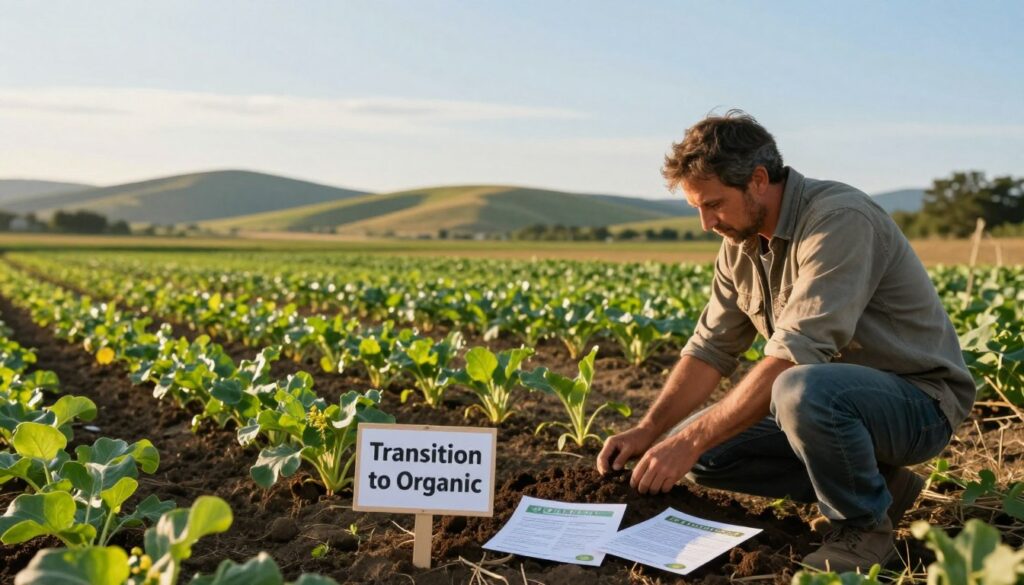
Let’s talk about the financial reality. You’re spending more on approved inputs—compost instead of synthetic fertilizer, beneficial insects instead of pesticides. Your yields might dip as you learn new pest management techniques. Yet your products sell at conventional prices. It’s like training for the Olympics while working a minimum wage job.
The operational hurdles are equally steep. Suddenly, you’re a detective, forensic accountant, and diplomat all at once. You must identify every area of non-compliance on your property. That old herbicide spill from 1998? It matters. That neighboring farm that sprays on windy days? You’ll need buffer zones.
Changing long-held practices tests more than just skill. It tests identity. How do you tell your grandfather that his weed control method—used since Eisenhower was president—is now prohibited? The learning curve for managing pests and fertility without synthetic aids isn’t just technical. It’s psychological.
Then there are the weeds. Oh, the weeds. You watch them creep across fields while your synthetic herbicide gathers dust in the shed. You learn new respect—and new frustration—for plants that don’t care about your organic certification process.
The social dynamics add another layer. Your conventional neighbor might view your buffer zone as wasted land. Conversations at the co-op take on new tension. You’re not just changing farming methods; you’re navigating community relationships.
This three-year stretch represents the ultimate test of patience and faith. You’re building systems, documenting everything, and hoping the market will still want organic when you finally emerge. Many farmers describe it as the hardest part of the entire organic certification process.
So how do you survive this limbo? Planning becomes your best friend. Financial reserves help. So does connecting with other farmers who’ve completed their transition. Resources like this guide on navigating these challenges can provide crucial support.
The transition period separates the committed from the curious. It’s where theory meets dirt, and good intentions get tested by stubborn reality. But for those who persevere, it forges a deeper understanding of what true farm compliance means—not just following rules, but fundamentally rethinking your relationship with the land.
Costs and Grants
Getting an organic seal is more than just a dream. It’s about the money you spend. The organic certification process is a big deal for your farm’s budget.
First, you’ll pay for the application and inspection, which costs $500 to $1,500. This is like your entry fee. Then, you’ll need to pay $400 to $1,000 every year to keep your certification. Yes, even the inspector’s travel costs are included.
The real costs are in the paperwork and lost time. You’ll spend hours on forms and paperwork. You’ll also face lower yields and lost sales during the transition. This is the hidden cost of going organic.
Is the higher price for organic produce worth it? The answer depends on your farm and market. The premium is real, but so is the initial cost.
But you’re not alone. There are grants to help with the costs. The USDA and states offer financial help. The USDA’s Organic Certification Cost Share Program can cover a lot of your expenses.
There are also free resources to learn more. The USDA’s Organic Integrity Learning Center offers free training. It’s like a free MBA for those who care about the environment.
Let’s look at the typical costs of organic certification. This table shows your investment.
| Cost Category | Typical Range | Notes & Considerations |
|---|---|---|
| Initial Application & Inspection | $500 – $1,500 | One-time fee for your first certification cycle. Includes inspector’s time and travel. |
| Annual Recertification Fee | $400 – $1,000 | Recurring yearly cost to maintain your certified status. |
| System Upgrades & Inputs | Varies Widely | Costs for new equipment, approved seeds, or organic fertilizers to replace conventional ones. |
| Management & Labor | Significant Time | Hours dedicated to record-keeping, new practices, and audit preparation. A major hidden cost. |
| Potential Grants/Cost-Share | Up to 75% reimbursement | Programs like the USDA OCCSP can offset certification costs directly, improving your ROI. |
Seeing organic certification as just an expense is wrong. It’s a smart investment in your farm’s future. Grants and cost-share programs help. The real question is, “What’s the cost of not investing in my farm’s future?”
Real Farmer Testimonials
The organic certification process is a blueprint. The real story is written in the soil. I’ve spoken with farmers who’ve lived it.
One farmer in Oregon told me his first inspection was a wake-up call. He thought his farm was in compliance. But, an inspector found a forgotten spray bottle from three seasons back. It wasn’t used, but it was a violation. “It was humbling,” he said. “The rules aren’t suggestions.”
A former software engineer in Vermont described her transition differently. She found the record-keeping familiar. Switching from code logs to harvest logs was easy. She says her carrots now taste sweeter and earthier. It’s like terroir, but it’s biology.
They followed the USDA’s steps to certification. They went through the three-year transition and used cost-share programs. Their journey shows a mindset shift. It’s not just avoiding bad stuff. It’s building a system.
This path requires dedication. The reward is a product you can stand behind and a community you join. Your farm’s story becomes part of a larger narrative. What will your first chapter be?