The U.S. Department of Agriculture has announced approximately $13.8 billion in gross farm safety-net payments for the 2025 crop year, creating a significant potential source of liquidity for American agricultural producers heading into the next production cycle. Agriculture Secretary Brooke L. Rollins announced the payments on October 7, 2026, through the Farm Service Agency’s Agriculture Risk Coverage (ARC) and Price Loss Coverage (PLC) programs. USDA described the total as the largest annual payout since the programs were established under the 2014 Farm Bill. USDA’s official announcement outlines the payment rules and the changes affecting eligible producers.
The announcement arrives as farmers manage harvest expenses, machinery payments, land rent, fertilizer bills, operating loans, and decisions about purchasing inputs for 2027. For farms facing narrow margins, a federal payment can help cover immediate obligations or reduce the amount of short-term borrowing needed to finance the next crop.
However, the $13.8 billion figure is a gross national estimate, not a promise that every farmer will receive money or that the entire amount will be available to producers without reductions. Eligibility, base acres, payment calculations, statutory limits, and sequestration all affect the amount ultimately received.
The economic importance of these payments therefore extends beyond the headline figure. Their effect will depend on where the money goes, when individual producers receive it, and whether farmers use the funds to reduce debt, rebuild working capital, or make additional investments.
USDA Is Delivering Its Largest ARC And PLC Payment Total
USDA announced the projected $13.8 billion in ARC and PLC payments on October 7. These programs provide a federal income safety net for producers of eligible commodities when market prices or farm revenue fall below established benchmarks.
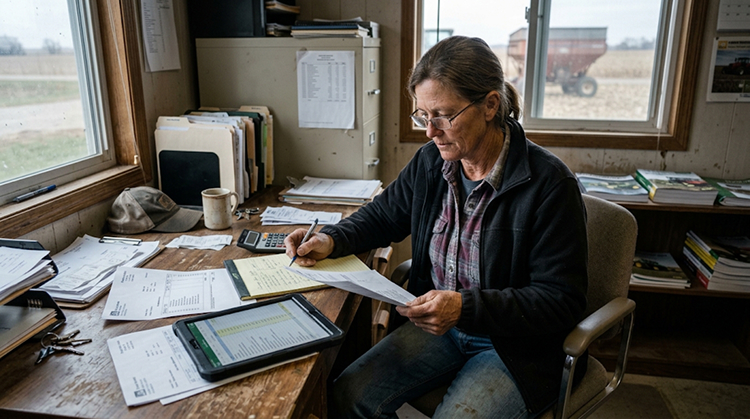
The programs operate differently. PLC provides support when the effective price of a covered commodity falls below its effective reference price. ARC provides support when actual revenue falls below a benchmark revenue level. Under ARC-County, calculations use county-level revenue; ARC-Individual evaluates revenue across the participating farm’s covered commodities.
The distinction matters because a farm can face disappointing yields or prices without qualifying for every type of support. Payments depend on the program’s rules and historical base-acre records rather than simply reimbursing a farmer for the cost of growing the current crop.
USDA said the 2025 crop year generated a payment total without precedent in the history of the programs since 2015. The Working Families Tax Cuts Act strengthened the safety net by increasing statutory reference prices and changing the effective reference price calculation beginning with the 2025 crop year.
For the 2025 crop year, producers will automatically receive the higher payment rate of ARC or PLC, regardless of their prior program election. That one-year provision differs from the normal program structure, in which producers make annual elections for eligible commodities.
The record payment estimate signals substantial federal support, but it should not be confused with a direct measure of farm profitability. A producer receiving a payment may still face high production expenses, weak commodity prices, lower yields, or debt obligations that exceed the assistance received.
Corn, Soybeans And Wheat Producers Are Among The Eligible Groups
USDA identified 16 commodities that triggered PLC payments for the 2025 crop year. The list includes corn, soybeans, wheat, canola, grain sorghum, dry peas, lentils, chickpeas, flaxseed, peanuts, rice, safflower, and seed cotton.
These commodities are important to agricultural economies across the Midwest, Great Plains, South, and other production regions. Their payment calculations depend on program-specific reference prices, effective prices, payment yields, and eligible base acres.
The presence of corn, soybean, and wheat among the covered commodities is particularly relevant to producers managing the 2026 harvest. Cash receipts from harvested grain may arrive at different times depending on storage decisions, delivery contracts, and local market conditions. Federal payments could provide another source of liquidity while farmers decide whether to sell grain immediately or retain some production for later marketing.
Nevertheless, ARC and PLC do not pay on every acre planted during the current season. The programs use eligible historical base acres and other statutory calculations. As a result, a farm’s current planted acreage and its payment eligibility may differ.
USDA also increased the payment limitation for ARC and PLC under the 2025 legislation. The limit rose from $125,000 to $155,000, with annual adjustments based on inflation. For the 2025 crop year, the applicable limit is $160,000.
These limits, along with eligibility requirements and sequestration, mean the final amount received by an individual producer may be substantially different from an estimate based on national totals alone.
Gross Payments Will Be Reduced Before Farmers Receive Their Final Amounts
The distinction between gross payments and actual disbursements is essential to evaluating the financial effect of the announcement.
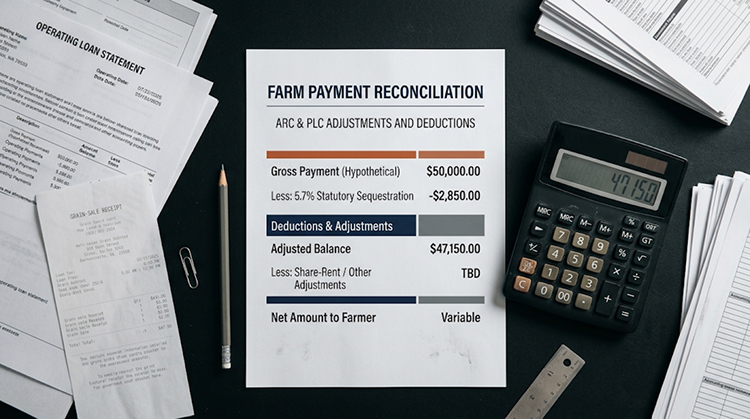
USDA explicitly stated that its $13.8 billion estimate does not account for payment limitation reductions or the 5.7% statutory sequestration rate applied to ARC and PLC payments. Sequestration is a legally required reduction, so the gross total should not be treated as the net amount reaching eligible producers.
For example, consider a hypothetical farm with a gross calculated payment of $50,000 that is fully subject to the 5.7% sequestration reduction and is not affected by other limitations or adjustments. The sequestration reduction would be $2,850, leaving $47,150 before any other applicable adjustments.
This example illustrates the difference between a calculated payment and the amount available for farm operations. It is not a prediction of what any specific producer will receive.
Farmers should use their Farm Service Agency records and official payment calculations to establish the amount they can reasonably expect. They should also avoid committing the entire projected payment to a major purchase before confirming the timing and net amount of the disbursement.
For farm managers, this distinction affects cash-flow forecasts. A budget that treats the gross payment estimate as guaranteed revenue can overstate the funds available to meet operating expenses, particularly when multiple obligations fall due during the same period.
Farm Payments Could Reduce Dependence On Operating Loans
Working capital is one of the most immediate uses for federal farm support. Producers often finance seed, fertilizer, crop protection products, fuel, labor, repairs, and other seasonal expenses before they receive revenue from harvested crops.
When cash receipts fall short of those obligations, farms may rely on operating lines of credit or supplier financing. Additional cash from ARC and PLC payments could help eligible producers cover outstanding bills, reduce balances on operating loans, or maintain access to credit for the next planting season.
The effect will differ by farm. An operation with manageable debt and sufficient grain revenue may use part of a payment to rebuild cash reserves. A more heavily leveraged farm may need most of the funds to satisfy existing obligations. Another producer may direct money toward essential machinery repairs or inputs required for the next crop.
The timing is especially important. A payment received before winter financing decisions may help a producer negotiate the next operating loan from a stronger position. A payment arriving after major obligations have matured may offer less flexibility, even if the amount is substantial.
Federal support can improve short-term liquidity, but it does not automatically resolve structural problems such as persistent low margins, high land costs, or debt that exceeds the farm’s sustainable repayment capacity. Producers should evaluate payments alongside expected crop revenue, input costs, and debt-service schedules.
Input Purchases And Machinery Decisions Could Change
The payments may also influence how farmers approach purchases for the 2027 growing season. Seed, fertilizer, crop protection products, fuel, and equipment repairs require cash before the next harvest generates revenue.
A producer with confirmed funds may be able to purchase selected inputs earlier, take advantage of supplier terms, or complete maintenance before spring fieldwork begins. Early purchasing can sometimes reduce uncertainty about product availability, although it does not guarantee a lower final cost.
Machinery decisions require particular care. A federal payment might help cover a repair or replace an essential component, but using a one-time payment to justify a large equipment purchase can create new repayment obligations that continue for years.
The best use of the money depends on the farm’s financial position. Farms with expensive short-term debt may benefit more from reducing interest-bearing balances than from expanding equipment capacity. Operations with strong liquidity and aging machinery may have a different set of priorities.
A disciplined approach begins with a cash-flow projection that compares expected receipts against bills due over the next 6 to 12 months. That process helps farmers separate essential expenses from discretionary investments and determine how much of the federal payment should remain in reserve.
New Base Acres Could Change Future Safety-Net Payments
The 2025 legislation also expanded the acreage base used in the ARC and PLC programs. USDA said the Working Families Tax Cuts Act added 30 million new base acres nationwide, the first such increase in two decades.
Because eligible acreage exceeded the nationwide cap, the Farm Service Agency applied a prorated reduction of 3.69% to newly allocated base acres. These additional acres affect ARC and PLC beginning with the 2026 crop year and future years, subject to program rules.
The expansion may increase eligibility for some farms, but the impact depends on each farm’s allocation, eligible commodities, program elections, and payment calculations. More base acres do not automatically guarantee a payment in a given year.
The change is relevant to long-term planning because the safety net now operates with revised reference prices and an expanded base-acre structure. Farmers should review their updated farm records to understand how those changes affect their potential coverage.
USDA’s ARC and PLC program guidance explains the programs, eligibility rules, and enrollment process. Producers should use their local FSA county office to clarify farm-specific questions, particularly when ownership, operator shares, or base-acre allocations have changed.
December 11 Is An Important Date For 2026 Enrollment
The record payment announcement concerns the 2025 crop year, but farmers must also make decisions about coverage for the 2026 crop year.
USDA opened the 2026 ARC and PLC election and enrollment period on September 16, with a deadline of December 11, 2026. Producers can select ARC-County or PLC on a covered-commodity basis, or ARC-Individual for whole-farm revenue coverage under the applicable rules.
The programs protect against different risks. ARC can provide revenue-based support when county or individual farm revenue falls below a calculated benchmark. PLC is linked to the effective price of an eligible commodity and its effective reference price.
The right election depends on the producer’s circumstances, including the crops covered, benchmark calculations, price expectations, and the level of protection offered by each program. A farm’s 2025 payment does not automatically determine which option is most appropriate for 2026.
USDA states that if producers do not submit a new 2026 election by December 11, the election remains the same as in 2025, but the farm will be ineligible for payments for the 2026 program year. Producers should verify their status with the county FSA office rather than assume an existing record is sufficient.
This enrollment window makes October and November important months for reviewing payment history, projected revenue, base-acre information, and other risk-management tools.
Federal Support Does Not Replace A Sustainable Farm Budget
The $13.8 billion announcement is a major development for the agricultural safety net, but the long-term health of farm businesses still depends on revenue, expenses, productivity, and debt management.
Payments can help farms meet near-term obligations, but their impact will vary across regions and commodities. Farms with larger eligible base-acre allocations or stronger payment calculations may receive more support than operations with limited eligibility. Producers facing high borrowing costs or weaker harvest revenue may use the money primarily to stabilize their balance sheets.
The national figure also does not reveal how much of the total will be used for input purchases, loan repayment, machinery maintenance, or savings. Those decisions will emerge as individual payments are calculated and farmers assess their financial positions.
For operators planning the next production cycle, farm cash-flow planning can help connect federal assistance with expected crop receipts, operating expenses, loan maturities, and investment decisions. The objective is to make the payment support a viable production plan rather than create spending commitments that exceed the farm’s capacity.
The record ARC and PLC total may provide meaningful financial relief for eligible producers as they prepare for 2027. Its lasting value, however, will depend on whether farms use the assistance to improve liquidity, manage debt responsibly, and maintain the capacity to produce through the next cycle of uncertain prices and costs.