The U.S. Department of Agriculture (USDA) acreage projections for 2026 reveal a significant shift in planting decisions across the Midwest, with farmers reducing corn acreage while increasing soybean production. The annual planting adjustment reflects changing commodity prices, input expenses, export expectations, and long-term soil management strategies across major agricultural states.
According to the USDA National Agricultural Statistics Service (NASS) June Acreage report, U.S. farmers planted approximately 95.3 million acres of corn in 2026, representing a decline from the previous year. Soybean acreage increased to approximately 84.8 million acres, continuing a broader trend of producers balancing profitability and operational costs between the two dominant Midwest crops.
States including Iowa, Illinois, Minnesota, Indiana, and Nebraska remain central to these planting decisions, as they represent some of the largest corn and soybean production regions in the United States.
The acreage shift reflects a complex interaction between commodity markets, fertilizer costs, crop rotation planning, and evolving agricultural technology adoption.
Midwest Farmers Adjust Crop Decisions Based On Market Conditions
Corn and soybean producers typically evaluate planting decisions months before seeds enter the ground. Market prices, fertilizer availability, weather forecasts, and projected demand all influence how farmers allocate available acreage.
During the 2026 planting season, soybean economics became more attractive for many producers as lower input requirements compared with corn created opportunities for improved margins. Corn production generally requires higher nitrogen fertilizer applications, increasing operating costs when fertilizer markets experience volatility.
Soybeans provide additional agronomic benefits through crop rotation systems. Rotating soybeans after corn can improve soil structure, interrupt pest cycles, and reduce disease pressure in fields managed through conservation practices.
The shift does not represent a complete move away from corn production. Corn remains one of the most important U.S. agricultural commodities, supporting livestock feed markets, ethanol production, and domestic supply chains. Instead, the acreage change demonstrates how producers adjust land allocation based on current economic signals.
Corn Acreage Decline Reflects Input Cost Pressures
Corn production requires precision crop management, fertilizer applications, pest management, and equipment operations. Rising production expenses have encouraged some farmers to reconsider corn-heavy rotations and increase soybean acreage.

Iowa and Illinois continue leading national corn production, but many operations across these states are reviewing field profitability on an acre-by-acre basis. Precision agriculture systems now allow producers to analyze historical yield performance, soil nutrient levels, and input efficiency before deciding which crop provides the strongest return.
Farm managers increasingly rely on digital field records that combine yield maps, soil sampling results, and weather data. These tools allow producers to identify fields where corn remains financially competitive and where soybeans may provide better resource efficiency.
The adoption of variable-rate fertilizer systems has also changed how farmers evaluate crop decisions. Fields with lower nitrogen efficiency may receive adjusted treatment plans, influencing whether producers choose corn or soybean rotations.
Soybean Expansion Across Iowa, Illinois, And Other Corn Belt States
Soybean acreage growth in 2026 reflects stronger producer interest across several major agricultural regions. Illinois and Iowa remain among the largest soybean-producing states, while Minnesota, Indiana, and Nebraska continue expanding soybean production capacity.
The increase is connected to both market demand and agronomic advantages. Soybeans require less nitrogen fertilizer because the crop forms a relationship with nitrogen-fixing bacteria in the soil said USDA Economic Research Service crop outlook. This characteristic reduces fertilizer dependence and can improve production economics.
| Crop | 2026 Estimated U.S. Acreage Trend | Primary Production Regions | Major Economic Factors |
|---|---|---|---|
| Corn | Decreasing | Iowa, Illinois, Nebraska, Minnesota | Fertilizer costs, ethanol demand, feed markets |
| Soybeans | Increasing | Iowa, Illinois, Indiana, Minnesota | Export demand, lower input costs, rotation benefits |
Soybean demand continues receiving support from domestic processing capacity and international markets. Expansion of soybean crushing facilities across the Midwest has increased demand for soybean oil and meal, creating additional market opportunities for producers.
Crop Rotation Strategies Influence Long-Term Farm Planning
Planting decisions are increasingly connected to long-term soil management goals. Many Midwest farms use corn-soybean rotations because the system provides production flexibility while supporting soil conservation objectives.
Continuous corn production can increase nutrient demand and create greater pest management challenges. Soybean rotations help producers distribute input requirements across multiple seasons while improving field management efficiency.
Climate variability has added another factor to crop planning. Changing rainfall patterns, extreme heat events, and shifting growing conditions require producers to evaluate which crops perform better under specific field conditions.
Farmers are combining historical production records with modern analytics to create more detailed planting strategies. Instead of applying the same crop plan across an entire operation, many producers are creating field-specific approaches based on soil characteristics and expected economic returns.
Precision Agriculture Supports More Efficient Acre Allocation
The acreage shift between corn and soybeans highlights the growing role of precision agriculture in modern farm management based on the article by USDA precision agriculture resources. Digital tools provide producers with detailed information before planting decisions are finalized.
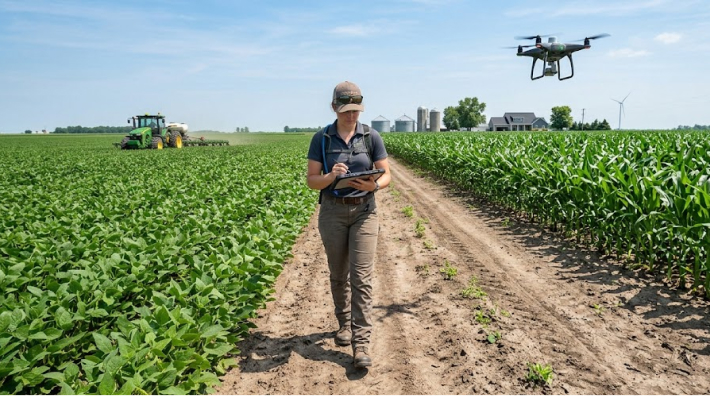
Satellite imagery, soil sensors, and yield monitoring systems help identify field variations that influence crop performance. A producer may determine that one section of a farm is better suited for corn because of nutrient availability, while another area may generate stronger returns with soybeans.
These decisions reduce unnecessary input spending and improve resource allocation. Precision agriculture platforms also support environmental goals by helping farmers reduce fertilizer loss and improve nutrient placement.
The integration of digital agriculture tools has become increasingly important as commodity markets become more competitive. Producers with access to detailed field data can respond more quickly to market changes and weather conditions.
Commodity Markets Respond To Changing Production Expectations
Changes in planted acreage influence commodity markets because production estimates affect supply forecasts. Lower corn acreage can influence future availability, while increased soybean acreage may affect export projections and processing markets.
Agricultural traders, food companies, and livestock producers monitor USDA acreage reports because they provide early indicators of potential supply conditions. A smaller corn planting area can affect feed costs, ethanol production projections, and global trade expectations.
Soybean acreage expansion creates different market considerations. Higher production potential may support domestic processing growth, but international demand remains a major factor in determining final prices.
Market conditions will continue evolving throughout the growing season as weather patterns influence yields. Final production outcomes depend on growing conditions, crop health, and harvest performance across major agricultural regions.
Midwest Agriculture Continues Moving Toward Data-Based Decisions
The 2026 USDA Acreage Report highlights how Midwest farmers continue adapting production strategies based on economic conditions, technology adoption, and resource management priorities.
The reduction in corn acreage and increase in soybean plantings reflect a broader transformation in agricultural decision-making. Farmers are combining market information with field-level data to determine the most efficient use of available land.
As precision agriculture systems become more accessible, planting decisions will continue shifting from traditional rotation patterns toward detailed analysis of soil conditions, production costs, and environmental performance.
The future of Midwest crop production will depend on balancing profitability with efficient resource management, creating a stronger connection between agricultural markets and technology-driven farm operations.