Water availability continues shaping agricultural decisions across the western United States as farmers invest in irrigation technologies that improve efficiency and protect long-term production capacity. New conservation funding programs from federal and state agricultural agencies are supporting producers who adopt precision irrigation systems, soil monitoring tools, and improved water management practices.
Farming regions across California, Arizona, Colorado, Washington, and Idaho depend heavily on irrigation infrastructure to maintain crop production. Specialty crops, vegetables, orchards, and high-value agricultural operations require reliable water systems, making efficient delivery methods increasingly important for producers.
The U.S. Department of Agriculture continues expanding conservation assistance through programs administered by the Natural Resources Conservation Service (NRCS). These initiatives help farmers install technologies that reduce water waste while maintaining crop performance.
Modern irrigation management combines field data, weather information, and equipment automation. Producers are moving away from uniform water applications and adopting systems that adjust irrigation based on soil conditions, crop needs, and environmental factors.
USDA Conservation Programs Support Advanced Irrigation Improvements
Federal conservation programs are providing financial assistance for farmers who upgrade irrigation infrastructure and adopt resource-efficient practices.
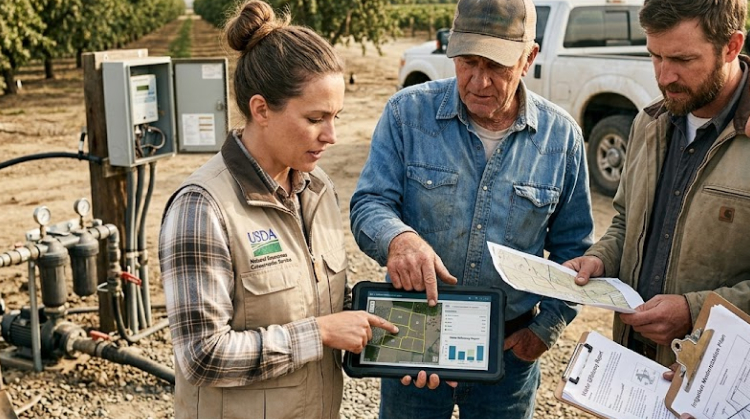
The USDA Natural Resources Conservation Service supports irrigation improvements through programs such as the Environmental Quality Incentives Program (EQIP) and other conservation initiatives. These programs help producers implement practices including micro-irrigation systems, irrigation scheduling improvements, and water management technology.
Farmers applying for conservation assistance often evaluate their current irrigation efficiency, water availability, and production goals before selecting upgrades.
The USDA irrigation conservation programs provide technical and financial support for agricultural producers implementing conservation practices.
Western agriculture faces unique challenges because many farming regions operate under limited water supplies and variable climate conditions. Improving irrigation efficiency allows producers to maintain productivity while reducing unnecessary water consumption.
| Irrigation Technology | Agricultural Application | Primary Benefit |
|---|---|---|
| Drip irrigation | Orchards, vineyards, vegetables | Direct water delivery to plant roots |
| Soil moisture sensors | Row crops and specialty crops | Real-time field condition monitoring |
| Variable-rate irrigation | Large-scale farms | Adjusted water application by field zone |
| Automated irrigation controls | Commercial operations | Improved scheduling and reduced waste |
These technologies allow farmers to match water applications with actual crop requirements instead of relying only on fixed irrigation schedules.
California Central Valley Farmers Increase Water Efficiency Investments
California remains one of the most important agricultural regions affected by irrigation challenges.
The Central Valley produces a significant share of the nation’s fruits, vegetables, nuts, and specialty crops. Counties including Fresno, Kern, Tulare, and Monterey depend on advanced water management systems to support agricultural production.
Farmers growing almonds, pistachios, grapes, tomatoes, and vegetables have increasingly adopted drip irrigation, automated controls, and field monitoring technology.
Precision irrigation allows producers to apply water based on crop conditions rather than using the same amount across an entire field. This approach can reduce overwatering in some areas while ensuring stressed plants receive adequate moisture.
The adoption of irrigation technology is becoming part of broader farm management strategies that include soil analysis, weather monitoring, and crop health tracking.
Western States Expand Technology Adoption For Water Conservation
Farmers across western states are adapting irrigation strategies as water availability becomes a central agricultural issue.
Arizona producers have invested heavily in irrigation efficiency because agriculture in the state operates within an environment with limited precipitation. Washington farmers use advanced irrigation systems for crops such as apples, potatoes, and specialty vegetables.
Colorado and Idaho producers are also improving irrigation infrastructure through conservation programs and technology upgrades.
Federal support programs often combine financial assistance with technical guidance. Farmers receive help evaluating irrigation systems, identifying improvement opportunities, and selecting conservation practices appropriate for their operations.
These investments support both agricultural productivity and resource management goals.
Soil Monitoring Improves Irrigation Decision Making
Water efficiency depends heavily on understanding conditions below the soil surface.
Soil moisture monitoring systems allow farmers to measure water availability around plant roots. These sensors provide information that helps determine whether crops require additional irrigation or whether existing moisture levels are sufficient.
The combination of soil data and irrigation automation creates more precise management decisions.
Farmers can monitor field conditions remotely, receive alerts about moisture changes, and adjust irrigation schedules without manually inspecting every section of a farm.
This approach is particularly valuable for large agricultural operations where field conditions can vary significantly.
Soil monitoring also supports crop health because excessive irrigation can create problems such as nutrient loss, root damage, and disease pressure.
Precision Irrigation Connects Water Management With Farm Data
The growth of digital agriculture has changed how farmers manage irrigation decisions.
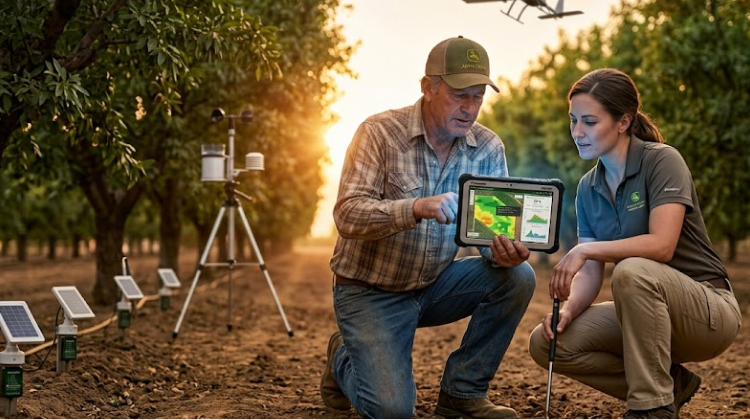
Modern systems collect information from multiple sources, including soil sensors, weather stations, satellite imagery, and crop monitoring platforms. Farmers can use this information to determine when and where irrigation is needed.
A large farm operation can contain significant differences in soil type, elevation, and drainage patterns. Traditional irrigation methods often apply identical water amounts across areas with different needs.
Precision irrigation systems address these differences by creating management zones. Each zone can receive different irrigation levels based on field conditions.
For example, sandy soils may require more frequent irrigation cycles because water moves through the soil faster. Areas with heavier soils may require different schedules to prevent excessive moisture.
This data-driven approach improves water management while helping farmers evaluate production costs.
Conservation Funding Helps Farmers Manage Rising Production Costs
Water efficiency investments require significant financial planning. Irrigation equipment, sensors, automation systems, and infrastructure improvements represent major expenses for agricultural producers.
Conservation funding programs reduce some of these financial barriers by helping farmers adopt technologies that may improve long-term operational efficiency.
For many producers, the value of irrigation improvements extends beyond water savings. Better irrigation management can support consistent yields, improve fertilizer efficiency, and reduce unnecessary operating expenses.
Agricultural markets remain unpredictable, making operational efficiency increasingly important for farm profitability.
Farmers evaluating irrigation upgrades often consider factors such as crop value, expected water savings, equipment lifespan, and available conservation incentives.
Future Western Agriculture Depends On Smarter Water Management
Precision irrigation funding represents a broader shift in agricultural management across the western United States.
Farmers are combining conservation programs, digital tools, and improved irrigation systems to respond to water challenges while maintaining production.
The expansion of financial assistance programs gives producers more opportunities to modernize irrigation infrastructure and adopt technologies that improve resource management.
Western agriculture will continue adapting as producers balance market conditions, environmental requirements, and changing water availability.
Precision irrigation systems provide farmers with more information about field conditions and create opportunities to make better decisions throughout the growing season. The combination of conservation funding and agricultural technology is becoming a key part of maintaining productive farming operations across water-limited regions.