The U.S. Department of Agriculture is expanding conservation efforts across American farmland as the Conservation Reserve Program (CRP) continues encouraging producers to protect environmentally sensitive areas while maintaining economic opportunities.
For 2026, the USDA Farm Service Agency accepted approximately 2.2 million acres into the Conservation Reserve Program, adding new acreage commitments focused on soil protection, wildlife habitat improvement, water quality preservation, and long-term land management.
The program gives farmers and ranchers financial incentives to remove environmentally sensitive land from agricultural production and establish conservation practices. Across states such as Iowa, Kansas, Nebraska, Missouri, Montana, and North Dakota, producers are evaluating how conservation contracts fit into broader farm management strategies.
The expansion reflects a growing connection between agricultural profitability and environmental stewardship. Farmers are increasingly using conservation programs alongside precision agriculture, soil monitoring, and improved crop management practices to strengthen long-term productivity.
USDA Expands Conservation Reserve Program Participation For 2026
The Conservation Reserve Program, administered by the USDA Farm Service Agency, has operated for decades as one of the country’s largest private land conservation initiatives.
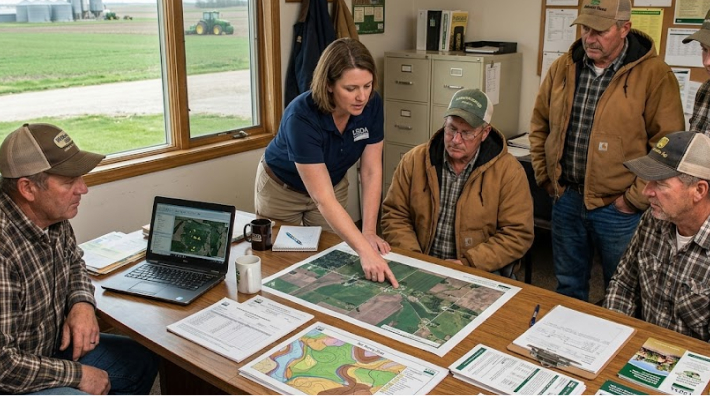
The program provides annual rental payments to producers who establish approved conservation practices on eligible farmland. These practices can include native grass restoration, tree planting, wildlife habitat development, erosion control measures, and water protection projects.
The 2026 enrollment period added approximately 2.2 million acres through multiple CRP options, including General CRP, Continuous CRP, and Grassland CRP agreements.
The acreage expansion represents an important component of federal conservation planning because agricultural land management directly affects soil quality, water systems, and biodiversity.
| Conservation Reserve Program Component | Primary Focus | Example Practices |
|---|---|---|
| General CRP | Long-term conservation contracts | Grass restoration, tree planting |
| Continuous CRP | Targeted environmental improvements | Wetland protection, buffer zones |
| Grassland CRP | Maintaining productive grass areas | Grazing management, habitat protection |
The different program structures allow producers to select conservation options that match their land characteristics and operational goals.
Farmers Balance Conservation Payments With Agricultural Production
The decision to enroll land in CRP involves evaluating both environmental benefits and farm economics.
Agricultural producers consider factors such as commodity prices, input costs, soil conditions, and future production plans before committing acreage to conservation agreements.
For some farmers, highly erodible land or areas with lower production potential can provide stronger economic returns through CRP payments than continued crop production. Other producers use the program to protect vulnerable areas while maintaining profitable production on their most productive fields.
States throughout the Midwest have historically represented significant CRP participation because of extensive row crop production and concerns related to soil erosion.
Iowa, Illinois, Missouri, Kansas, and Nebraska contain millions of acres of agricultural land where conservation practices can influence water quality and soil preservation.
Conservation decisions are becoming more data-driven as farmers use field maps, soil information, and yield records to identify areas where alternative management strategies may provide better long-term value.
Soil Protection Becomes A Major Focus Of Conservation Agriculture
Soil erosion remains one of the major agricultural challenges addressed through conservation programs. Wind and water erosion can remove valuable topsoil, reduce productivity, and increase nutrient runoff into surrounding waterways.
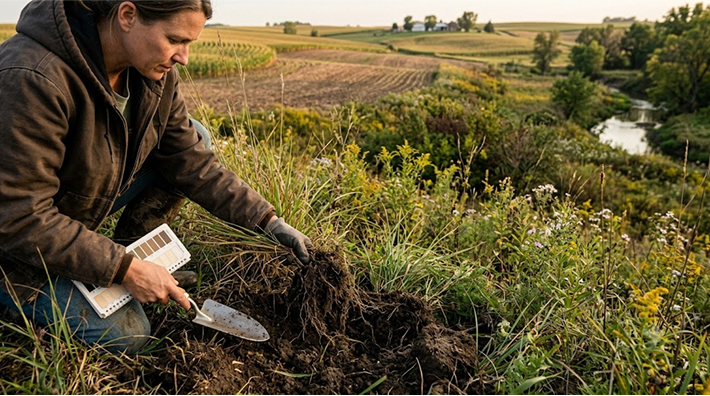
CRP practices help protect soil by establishing permanent vegetation coverage in areas vulnerable to erosion.
Grasslands, native plants, and tree systems create root structures that stabilize soil and improve water absorption. These practices can reduce sediment movement while supporting healthier agricultural ecosystems.
Farmers are also connecting CRP participation with other soil improvement strategies, including cover crops, reduced tillage, and precision nutrient management.
These approaches allow producers to maintain productive agricultural systems while improving soil conditions over multiple growing seasons.
Conservation Programs Support Water Quality Improvements
Water protection is another important objective behind CRP expansion.
Agricultural runoff can carry nutrients, sediment, and chemicals into nearby streams and rivers. Conservation practices established through CRP help create natural barriers that reduce these impacts.
Buffer zones near waterways are one example of how enrolled acreage can support environmental goals. Vegetation planted along streams can filter runoff before it reaches water systems.
The benefits extend beyond individual farms. Watershed improvements can affect entire agricultural regions by supporting cleaner water supplies and healthier ecosystems.
Farmers in states connected to major watersheds, including the Mississippi River Basin, continue evaluating conservation practices as part of broader water management strategies.
The relationship between agriculture and water quality has become increasingly important as producers face changing weather patterns and growing pressure to manage natural resources effectively.
Wildlife Habitat Restoration Expands Through Agricultural Land Programs
The Conservation Reserve Program also plays a significant role in wildlife habitat improvement.
Enrolled acreage provides environments for birds, pollinators, and other wildlife species that depend on native vegetation and protected landscapes.
The USDA works with conservation partners to identify practices that support habitat restoration while maintaining agricultural land value.
Grassland CRP has received increased attention because it allows producers to maintain grazing systems while supporting wildlife conservation objectives.
These conservation efforts create a connection between agricultural production and ecosystem management. Farmers participating in these programs contribute to broader environmental goals while receiving financial support for land management.
Precision Agriculture Improves Conservation Planning
Modern conservation programs increasingly benefit from agricultural technology.
Farmers can use satellite imagery, GPS mapping, and digital field records to identify areas where conservation practices may provide the greatest impact.
Precision agriculture systems help producers evaluate field variations, including erosion risk, soil characteristics, drainage patterns, and crop productivity.
This information supports more strategic decisions about which acres should remain in production and which areas may benefit from conservation enrollment.
The combination of conservation programs and agricultural technology represents a shift toward more targeted land management. Instead of applying identical strategies across every field, producers can make decisions based on specific environmental and production conditions.
Economic And Environmental Goals Shape Future Farm Management
The expansion of the Conservation Reserve Program demonstrates how agricultural policy continues connecting economic incentives with environmental objectives.
Farmers participating in CRP receive financial support while contributing to soil preservation, water protection, and habitat restoration efforts.
The 2.2 million acres accepted for 2026 represent thousands of individual decisions made by producers evaluating the future of their operations.
As agricultural markets continue changing, conservation programs provide another management option for farmers seeking stability while protecting valuable natural resources.
The future of American agriculture will increasingly depend on balancing production demands with responsible land management. Programs such as CRP show how conservation practices can become part of a broader strategy that supports both farm operations and environmental priorities.