The U.S. corn market received a significant new production signal on August 12, 2026, when the U.S. Department of Agriculture lowered its forecast for the national corn yield but raised its estimate for harvested acreage. The USDA now expects the 2026/27 corn crop to average 180.7 bushels per harvested acre, down from 183 bushels in its July projection. At the same time, projected harvested area increased to 88.6 million acres.
The acreage increase was large enough to offset the lower yield estimate in the production calculation. USDA now projects 16.013 billion bushels of U.S. corn production, about 13 million bushels above its July estimate. The agency described the crop as the second-largest U.S. corn harvest on record.
That combination creates a more complicated outlook for farmers, grain buyers and commodity markets. Yield expectations have weakened, but the larger harvested area keeps total production near historically high levels. The result is a corn market that must balance weather-related production risk against a substantial supply base.
August USDA Report Changes The Corn Yield Equation
The August Crop Production report carries particular weight in the annual corn market because USDA begins incorporating its first survey-based yield indications into the production outlook. The report was released on August 12, following months of weather observations, field development reports and acreage estimates. USDA’s official release calendar confirms August 12 as the scheduled 2026 Crop Production publication date.
The reduction from 183 to 180.7 bushels per acre represents a decline of 2.3 bushels per acre, or roughly 1.3%. That may appear modest when viewed against a national average, but multiplied across tens of millions of harvested acres, even small yield changes can affect the balance sheet by millions of bushels.
The acreage adjustment works in the opposite direction. USDA raised projected harvested acreage to 88.6 million acres, allowing total production to rise despite the weaker yield assumption.
| USDA 2026 Corn Projection | July 2026 | August 2026 |
|---|---|---|
| Yield per harvested acre | 183.0 bu. | 180.7 bu. |
| Harvested area | Lower | 88.6 million acres |
| Production | ~16.000 billion bu. | 16.013 billion bu. |
| Change in production | — | +13 million bu. |
The USDA Crop Production data remain the primary source for tracking these changes as additional field information becomes available.
The report does not eliminate uncertainty. August is still well before the final harvest estimate, and weather during late grain filling can influence both yield and quality.
Larger Harvest Area Cushions The Yield Reduction
The most interesting part of the August report is the relationship between harvested acreage and yield.
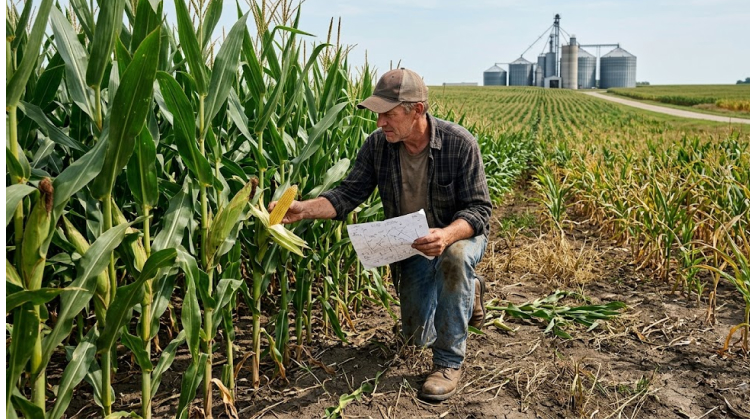
A lower yield normally points toward reduced production. Yet production is calculated by multiplying harvested acres by yield per harvested acre. When USDA increased the acreage estimate enough, the national production forecast moved slightly higher.
This creates an important distinction for the 2026 corn market. The USDA is effectively saying that the average amount of corn expected from each harvested acre has declined, but there are more acres expected to contribute to the final crop.
The result remains an enormous national harvest.
USDA’s August projection of 16.013 billion bushels would rank second among U.S. corn crops if realized, according to reporting on the new estimate.
That production level gives livestock feeders, ethanol plants, exporters and other corn users a large supply base to work with.
For farmers, though, the national figure can feel very different from conditions in an individual county. A producer with excellent soil moisture and strong crop development may still expect yields above the national average. Another producer dealing with heat, moisture shortages or storm damage could face a very different harvest.
The national acreage figure cannot capture those field-level differences.
Corn Supply Still Looks Large Despite The Forecast Cut
The lower yield estimate is significant, but it needs to be placed against the size of the projected crop.
A production forecast above 16 billion bushels gives the U.S. a considerable volume of corn entering the 2026/27 marketing year. That matters for domestic feed demand, ethanol production, exports and ending stocks.
The USDA’s earlier WASDE projections had already placed 2026/27 U.S. corn production near 16 billion bushels, with a projected season-average farm price of $4.40 per bushel in its June outlook.
The August production adjustment changes the physical supply estimate, but it does not automatically produce a bullish market.
Commodity prices respond to the relationship between supply and demand rather than production alone. A large crop can still support firm prices if demand is strong enough. A smaller-than-expected crop can have a limited effect if inventories and competing global supplies remain substantial.
That distinction will become increasingly relevant as USDA updates its domestic and international balance sheets.
Corn Futures Reacted Quickly To The New Number
Corn futures responded immediately after the August report.
According to market reporting, the most-active Chicago Board of Trade corn contract climbed 2.9% to $4.74 per bushel after the USDA release. The move reflected the market’s reaction to the larger-than-expected yield reduction.
The reaction shows how sensitive commodity markets are to changes in production expectations.
Traders had expected a yield estimate closer to 182.5 bushels per acre, according to a Wall Street Journal survey. The actual 180.7-bushel projection was lower than that expectation.
Yet the market also had to absorb the higher acreage estimate.
That creates a continuing debate over whether the August report represents the beginning of a larger production revision or simply a modest adjustment within an otherwise large crop.
The CME Group agricultural markets provide the futures market framework through which traders price corn, soybean and other agricultural commodities.
Weather Remains A Major Variable For Final Yields
The lower yield forecast arrives after an unusually active summer weather pattern across parts of the United States.
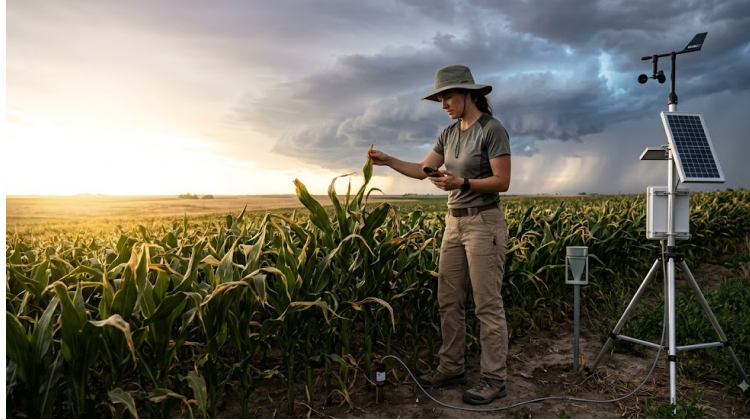
Corn yield potential depends heavily on conditions during pollination and grain filling. Temperature, soil moisture and rainfall timing all influence how effectively plants convert available resources into grain.
This makes the August estimate an important midpoint rather than a final assessment.
The USDA’s June projections used a weather-adjusted trend yield of 183 bushels per harvested acre for 2026 corn. The August figure of 180.7 indicates that the agency’s newer assessment is less optimistic about national yield potential.
That does not mean every Corn Belt state has experienced the same conditions.
Iowa, Illinois, Indiana, Nebraska, Minnesota and South Dakota can have substantially different rainfall patterns within the same growing season. Soil type, planting date, drainage and irrigation availability can further separate one farm’s yield prospects from another’s.
The USDA Weekly Weather and Crop Bulletin provides additional context on temperatures, precipitation and crop development across U.S. farming regions.
Farmers Face A Different Calculation Than Traders
For producers, the USDA’s national yield number matters, but farm-level economics matter more.
A farmer planning harvest sales must consider expected yield, basis, futures prices, storage costs, transportation expenses and local demand. A national production increase does not automatically translate into the same price or profitability outcome for every farm.
The acreage increase may also have a different significance depending on where those acres are located.
If additional harvested acres are concentrated in productive regions, they can add substantial grain to the national supply. If the acreage adjustment reflects better-than-expected survival or harvested-area assumptions in areas with weaker yields, the production effect may be more limited than the acreage number initially suggests.
This is where regional crop reports and field scouting become useful.
Agheiro’s precision farming coverage connects directly with this issue, since satellite imagery, yield monitors, soil sensors and field mapping can give farmers information that national averages cannot provide.
Ethanol Demand Adds Another Layer To The Outlook
Corn demand in the United States extends well beyond livestock feed.
Ethanol remains one of the largest domestic uses of corn, creating a direct connection between crop production and the energy market. Changes in fuel demand, ethanol margins and biofuel policy can influence how much corn processors purchase.
The USDA’s June WASDE projected 5.6 billion bushels of corn would be used for ethanol and associated by-products during the 2026/27 marketing year.
That demand base helps absorb a portion of a very large crop.
Export demand is another variable. The United States competes with major exporters such as Brazil, Argentina and Ukraine. Global production, currency movements, freight costs and purchasing decisions from major importers can all affect the competitiveness of U.S. corn.
A large U.S. harvest therefore does not operate in isolation. The final market balance will depend on what happens domestically and internationally.
Global Corn Supplies Could Limit The Price Impact
The global corn market provides another reason to avoid treating the lower U.S. yield estimate as an automatic supply shortage.
The USDA’s June outlook projected global 2026/27 corn production at approximately 1.295 billion metric tons, below the prior year’s record but still the second-highest level on record.
Brazil and China were among the countries expected to contribute to larger production, helping offset reductions in several other major producing countries.
That international supply matters for U.S. farmers because buyers can compare U.S. corn with alternative origins.
The U.S. remains a major exporter, but international buyers have options. If Brazilian or Argentine corn is competitively priced, U.S. export demand can weaken even when domestic production falls short of earlier expectations.
The USDA Foreign Agricultural Service’s August grain markets report continues to track production, trade and market developments across major exporting and importing countries.
Harvest Results Will Matter More Than The August Estimate
The August report represents an important change in the 2026 corn outlook, but the final answer will come from the fields.
The difference between 180.7 bushels per acre and the eventual harvested yield could become significant as the season progresses. Late-summer weather, disease pressure, stalk integrity and grain development can all influence the final result.
The USDA will continue updating production estimates in subsequent reports. September, October and November data will provide additional information as the crop moves from projected production toward measured harvest results.
For producers, the next stage is therefore less about the headline national number and more about monitoring individual fields.
For grain markets, the key question is whether the 88.6 million harvested acres can compensate for the lower yield estimate without creating a substantially larger supply-demand imbalance.
For consumers and downstream industries, the answer will influence feed costs, ethanol economics and grain prices.
Acreage And Yield Will Define The Next Market Move
The August USDA report changed the 2026 corn story without turning it into a supply crisis.
The national yield forecast fell from 183 to 180.7 bushels per acre, a meaningful reduction from the previous estimate. Yet harvested acreage rose to 88.6 million acres, allowing USDA to increase projected production to 16.013 billion bushels.
That combination is the central issue for the market.
A record-scale acreage base can offset moderate yield losses. At the same time, another round of yield reductions could have a much larger impact if the production estimate begins moving materially below 16 billion bushels.
The coming weeks will reveal which side of that equation dominates.
Corn growers across Iowa, Illinois, Nebraska, Indiana, Minnesota and the other major producing states will be watching field conditions through the final stages of development. Traders will track USDA updates, futures spreads, export sales and weather forecasts. Ethanol producers and livestock operators will monitor the cost of physical corn.
The 2026 crop remains exceptionally large by historical standards, but the August report has introduced a more cautious view of how much grain each acre may deliver.
That makes the next USDA production updates particularly important: the acreage story is already large, but the yield story is now moving in the opposite direction.