Fertilizer availability has become a major factor influencing agricultural profitability across the United States. Farmers depend on reliable access to nitrogen, phosphate, and potash products to maintain crop yields, but global supply disruptions and changing production costs have created uncertainty for agricultural operations.
The U.S. Department of Agriculture is addressing these challenges through expanded investment opportunities aimed at strengthening domestic fertilizer production. The Fertilizer Investment and Expansion for Long-Term Domestic Supply (FIELDS) Program provides financial support for projects that increase manufacturing capacity and improve competition within the fertilizer industry.
For corn, wheat, soybean, and specialty crop producers, fertilizer costs represent one of the largest annual expenses. Expanding domestic production could influence future input prices while creating additional supply options for American farmers.
The initiative reflects a broader effort to strengthen agricultural supply chains and reduce dependence on international fertilizer markets.
USDA FIELDS Program Supports Domestic Fertilizer Production
The USDA Rural Development Fertilizer Investment and Expansion for Long-Term Domestic Supply (FIELDS) Program was created to support projects that increase fertilizer manufacturing capacity in the United States.
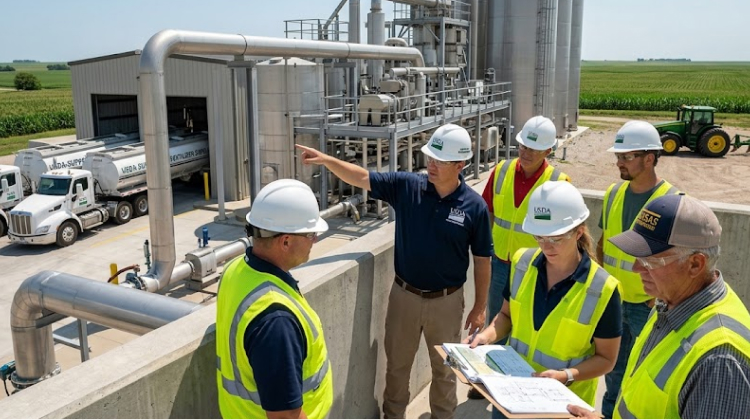
Through this program, USDA provides funding opportunities for businesses developing fertilizer production facilities, processing improvements, and supply chain infrastructure.
The USDA fertilizer investment program focuses on increasing competition and supporting innovative approaches to fertilizer production.
| Fertilizer Type | Agricultural Use | Major Crops Affected |
|---|---|---|
| Nitrogen | Supports plant growth and leaf development | Corn, wheat, rice |
| Phosphate | Supports root development and energy transfer | Corn, soybeans, vegetables |
| Potash | Improves plant strength and disease resistance | Corn, soybeans, specialty crops |
The program responds to concerns that farmers have experienced from fertilizer market volatility. Prices increased significantly during previous supply disruptions caused by international conflicts, transportation challenges, and production limitations.
Domestic fertilizer expansion could provide farmers with additional purchasing options and improve long-term market stability.
Fertilizer Costs Influence Farm Profitability Decisions
Fertilizer expenses directly affect farm management decisions. Producers evaluate input costs before selecting crops, determining planting strategies, and planning future investments.
Corn production is particularly sensitive to fertilizer prices because the crop requires significant nitrogen applications to achieve strong yields. When fertilizer prices increase, farmers must calculate whether expected grain prices justify higher production expenses.
The USDA Economic Research Service farm input cost analysis provides research on agricultural expenses and financial conditions affecting American producers.
A change in fertilizer costs can influence decisions across the entire agricultural economy.
For example, a farmer planning thousands of acres of corn may compare fertilizer expenses with expected revenue from grain sales. If fertilizer costs rise substantially, some producers may adjust crop rotations by increasing soybean acreage or reducing fertilizer-intensive crops.
These decisions affect commodity markets, regional production patterns, and agricultural supply forecasts.
Global Fertilizer Markets Create Supply Chain Challenges
The fertilizer industry operates through a global supply network. Many fertilizer products rely on international production, transportation systems, and commodity markets.
The United States imports significant amounts of fertilizer materials, particularly potash and certain nitrogen products. Global disruptions can influence availability and pricing for American producers.
Several factors have affected fertilizer markets in recent years:
- International trade restrictions
- Energy costs affecting fertilizer manufacturing
- Transportation limitations
- Global demand changes
- Regional supply disruptions
Natural gas availability also plays a major role in nitrogen fertilizer production. Manufacturing facilities use natural gas as a primary input for producing ammonia, a key component of many nitrogen fertilizers.
Domestic production investments could help create additional manufacturing capacity closer to American agricultural regions.
Midwest Farmers Monitor Fertilizer Availability Before Planting
The Midwest remains the center of U.S. row crop production, making fertilizer supply especially important across states such as Iowa, Illinois, Indiana, Minnesota, and Nebraska.
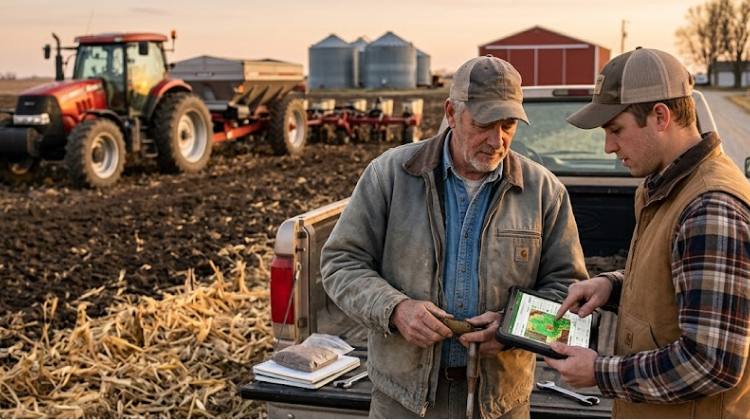
Corn Belt farmers typically plan fertilizer purchases months before planting. Supply availability, pricing forecasts, and storage capacity all influence purchasing decisions.
Farmers increasingly use soil testing and precision agriculture tools to improve fertilizer efficiency. Instead of applying identical amounts across entire fields, producers can use field data to determine where nutrients are needed most.
Agheiro’s previous coverage of precision agriculture systems highlights how technology is changing resource management decisions across American farms.
Combining fertilizer investments with precision application methods creates opportunities for farmers to improve productivity while controlling expenses.
Domestic Fertilizer Facilities Could Expand Rural Economic Activity
New fertilizer production projects can affect more than agricultural supply chains. Manufacturing facilities create construction activity, permanent jobs, transportation demand, and economic opportunities in rural communities.
USDA Rural Development programs often focus on strengthening rural economies by supporting businesses connected to agriculture.
Fertilizer plants require transportation networks, including rail systems, highways, and storage facilities. Locations near major agricultural regions can improve distribution efficiency and reduce transportation costs for farmers.
| Economic Impact | Potential Benefit |
|---|---|
| Manufacturing facilities | New rural employment opportunities |
| Transportation infrastructure | Improved fertilizer distribution |
| Local suppliers | Increased regional business activity |
| Farm access | Additional fertilizer purchasing options |
These investments connect agricultural production with rural economic development.
Precision Farming Changes How Producers Manage Nutrients
Fertilizer investment programs address supply challenges, but technology is changing how farmers use those inputs.
Precision farming platforms allow producers to apply fertilizer based on field conditions rather than applying uniform rates across all acres.
Soil sensors, satellite imagery, yield maps, and variable-rate equipment help farmers identify nutrient requirements in different areas of their fields.
This approach can reduce unnecessary applications while maintaining crop productivity.
For example, a field with strong nutrient levels may require less fertilizer than an area with depleted soil conditions. Farmers using data-driven systems can adjust applications according to crop needs.
The connection between fertilizer availability and precision farming creates a more efficient agricultural production model.
Sustainability Goals Influence Future Fertilizer Innovation
The fertilizer industry is also adapting to environmental concerns surrounding nutrient runoff, greenhouse gas emissions, and resource efficiency.
Agricultural researchers and companies are exploring improved fertilizer formulations, biological products, and application methods that improve nutrient absorption.
Domestic investment programs may support projects focused on increasing fertilizer availability while encouraging more efficient production methods.
Farmers are balancing several priorities:
- Maintaining crop yields
- Managing production costs
- Improving nutrient efficiency
- Protecting soil and water resources
These priorities are shaping future agricultural practices across the United States.
USDA Investment Reflects Long-Term Agricultural Supply Strategy
The USDA fertilizer investment initiative represents a broader effort to strengthen agricultural infrastructure and improve resilience across American farming regions.
Fertilizer availability remains closely connected to crop production, commodity markets, and farm profitability. Expanding domestic manufacturing capacity could provide farmers with additional supply options during periods of market uncertainty.
The success of these investments will depend on project development, production capacity, market competition, and adoption by agricultural businesses.
For producers across the United States, fertilizer access will remain a key factor influencing planting decisions, production costs, and long-term farm management strategies.